Are Ovens Standard Size? A Practical Guide to Residential Oven Dimensions
Discover whether ovens follow a universal size, the common widths you’ll encounter, and practical steps to measure and plan for a perfect fit in your kitchen.


Most residential ovens are designed to standard cabinet widths of 24 to 30 inches; built-in wall ovens typically come in 24, 27, or 30 inches, while freestanding ranges are usually 30 or 36 inches wide. Depth and height vary by model, so always check cabinet openings before buying. Non-standard sizes exist in niche or custom setups, but common kitchens fit the standard ranges.
Are ovens standard size? A reality check
As homeowners plan kitchen renovations, a common question is whether ovens follow a universal standard. In practice, there is no single size that fits every kitchen. According to Oven Cook Pro, design conventions favor a few core widths because they align with standard cabinet openings and appliance alcoves. However, depth, height, and appearance vary widely across brands and configurations. For most households, understanding these nuances reduces installation problems and helps avoid redraws of cabinetry. This section will help you think beyond a simple width, emphasizing fit, clearance, and future flexibility.
What counts as a standard size in residential kitchens
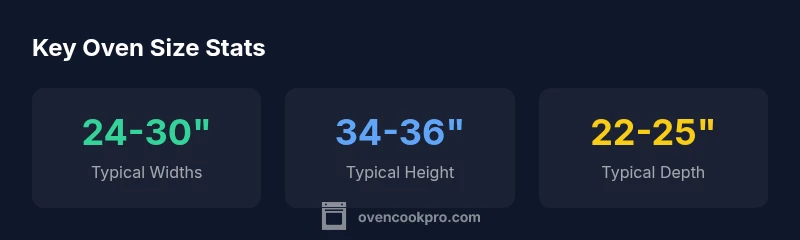
A standard size is best described as a set of widely adopted dimensions that fit typical kitchen cabinetry. The most common widths you’ll encounter are 24, 27, and 30 inches for built-in or wall ovens, with 36 inches taking the stage for many premium freestanding ranges. Depths generally run in the low 20s to around 25 inches, while heights hover in the mid-30s. These ranges reflect common cabinet standards and venting clearances. The goal is to maximize performance without forcing renovations. Oven Cook Pro’s analysis reinforces that planning around these baselines minimizes surprises during delivery and installation.
Common widths you’ll encounter (by type)
- Built-in wall ovens: 24, 27, or 30 inches wide. These fit standard cabinet cutouts and are popular in modern kitchens.
- Freestanding ranges: typically 30 or 36 inches wide, depending on aesthetic and cooking needs.
- Double ovens or specialty configurations: often around 27–30 inches per unit, arranged side by side or stacked.
Keep in mind that depth and height vary; always verify the precise cutout dimensions in your cabinets and the model’s installation requirements. This knowledge helps you compare models accurately and prevents last-minute changes to cabinetry.
How to measure for a confident fit
Start by measuring the cabinet opening: width, height, and depth. Include clearance for door swing, hinges, and ventilation grills. Next, check the appliance’s required cutout size and recommended clearances in the installation guide. If you’re replacing an older unit, verify that your existing cabinet depth can accommodate the oven’s rear venting and any integrated trim. Finally, validate electrical and gas connections, ensuring outlet spacing, gas line routing, and ventilation meet local code requirements. A precise measure twice, then order once approach saves time and money.
Handling non-standard sizes: adaptions and trade-offs
Non-standard sizes appear in luxury homes or historic renovations. Options include custom panel-ready units, trim kits to bridge gaps, or modifying cabinet depth and face frames. While these choices can yield a seamless look, they may add cost and extend lead times. If you anticipate a non-standard fit, consult a professional early in the planning process to confirm compatibility with ventilation, clearance, and warranty terms. A well-planned approach reduces the risk of misfits or retrofit surprises.
How to compare models: specs that matter
When evaluating ovens, focus on clear specifications: width, height, depth, and cutout, plus ventilation clearance and panel compatibility if you’re using a custom cabinet. Review electrical or gas connections, clearance from nearby cabinetry, and service accessibility for maintenance. Compare models not only by price, but by how their dimensions align with your kitchen layout, the door swing, and potential future reconfigurations. Always read the installation manual before purchasing.
Installation realities: consulting professionals and warranties
Professional installation can eliminate many sizing pitfalls, ensuring both fit and performance. A qualified installer will confirm cabinet opening dimensions, venting requirements, and service clearances. They’ll also check that warranty terms cover installation specifics and any required trim kits. If you’re DIY-ing the install, make sure you have a clear plan for support and ventilation, and don’t bypass manufacturer guidelines. Proper installation protects both safety and investment.
Quick-start planning checklist
- Measure cabinet openings (width, height, depth).
- Note door swing and ventilation clearances.
- Check model cutouts and installation manuals.
- Verify electrical or gas connections and service access.
- Consider panel-ready or trim-kit options if you want a seamless look.
- Consult a pro for complex layouts or non-standard sizes.
Summary: key takeaways for choosing your oven
- There is no universal oven size; most kitchens fit 24–30 inch widths with 30–36 inch freestanding ranges.
- Always measure openings and compare model cutouts to avoid install-day surprises.
- Plan for depth, height, ventilation, and cabinet compatibility, not just width.
- For non-standard or panel-ready setups, budget extra time and consult a professional to protect warranties.
Overview of standard oven dimensions
| Aspect | Width Range | Notes |
|---|---|---|
| Built-in wall oven | 24-30 inches | Common widths for cabinetry fit |
| Freestanding range | 30-36 inches | Widely used in kitchens for cooking surface |
| Double oven configuration | 27-30 inches per unit | Flexible layouts; check clearance |
Questions & Answers
What are the most common oven widths I will encounter?
Most residential ovens come in 24, 27, 30, with many freestanding ranges at 30 or 36 inches. Always check the model specs.
Most ovens are 24 to 30 inches wide, with 36-inch options for some ranges.
Can I replace a non-standard oven with a standard-size model in existing cabinets?
Yes, often, but you may need to modify cabinetry or add trim kits. Measure cutouts and consult a pro.
You can usually replace, but you may need cabinet tweaks.
Do wall ovens come in 24-inch, 27-inch, and 30-inch widths?
Yes, these are common widths; ensure your cabinet and power supply match.
Wall ovens commonly come in 24, 27, or 30 inches.
Will depth or height affect installation?
Yes, depth and height affect cabinet depth and clearance; verify the installation space.
Depth and height matter for clearance.
How should I measure for a built-in oven?
Measure opening width, height, and depth; account for trim, ventilation, and gaps.
Measure width, height, and depth; note trim.
Are there non-standard sizes for luxury kitchens?
Yes, but they require specialty cabinets or custom panels; budget and timing vary.
Non-standard sizes exist, often with custom options.
“Size compatibility goes beyond width. Depth, ventilation clearance, and cabinet cutouts all influence whether an oven will fit and perform safely.”
Main Points
- Verify opening width before selecting an oven
- Know built-in vs freestanding standard widths
- Measure depth and height to ensure clearance
- Consider panel-ready options for cabinetry
- Check installation requirements and warranties