Where to Place the Oven in Your Kitchen: Expert Guidance
Learn how to position your oven for safety, efficiency, and future-proofing. This guide covers layout principles, utilities, ventilation, and step-by-step planning for homeowners and home cooks.


To optimize cooking flow and safety, place the oven where it connects easily to electrical or gas hookups, ventilation, and nearby prep zones. Built-in or range-style ovens should align with the kitchen’s work triangle and be accessible without crossing busy paths. Allow at least 24 inches of clearance on both sides and keep doors away from openings and high-traffic areas.
Why proper oven placement matters
A well-placed oven supports safe operation, efficient workflow, and long-term usability. When an oven sits near the main prep zone, cooks spend less time moving heavy pots and trays across the room, reducing spills and fatigue. Adequate ventilation is essential to manage heat, steam, and odors, especially in small or open-plan kitchens. From a design perspective, the oven should blend with the layout so that door swings, appliance clearances, and cabinet lines look intentional. According to Oven Cook Pro, thoughtful oven placement also helps energy efficiency by reducing heat loss through open doors and inefficient airflow. This is not just about aesthetics; it directly affects day-to-day comfort and cooking consistency.
Key layout principles for oven placement
When deciding where to put the oven, several core principles guide the choice:
- Proximity to the main prep zone: locate the oven within the work triangle to minimize steps between prep, cooking, and plating areas.
- Safe clearances: ensure room for door swing, user access, and hot surfaces; avoid placing the oven where traffic passes through the doorway.
- Ventilation and hood alignment: position under a proper vent hood to remove heat, steam, and cooking odors efficiently.
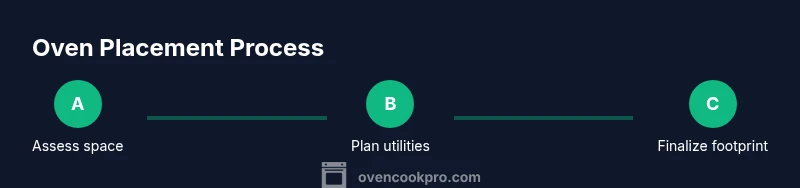
- Utilities access: confirm nearby electrical or gas connections and stove vent compatibility before finalizing the footprint.
- Future-proofing: consider potential upgrades, extra storage, or an additional oven and plan space accordingly.
Common kitchen layouts and optimal oven locations
Different kitchen layouts dictate different oven positions. In a galley kitchen, a wall oven near the end of the run minimizes crossing paths. In L- or U-shaped kitchens, placing the oven along the longer wall adjacent to the prep zone preserves flow and keeps traffic clear. Open-plan kitchens benefit from inset or built-in ovens that sit flush with cabinetry, creating a seamless look while still offering clear door access and ventilation. For island configurations, a wall-mounted oven or a 90-degree back-angled placement can keep the island available for prep and seating while maintaining safe clearance around the appliance.
Electrical, gas, and ventilation considerations
Gas ovens require a safe, code-compliant gas line and an appropriately rated hood vent. Electric ovens need dedicated circuit capacity and a properly sized outlet. Regardless of fuel type, a vent hood should be sized to cover the oven’s width and provide adequate airflow. Plan for the duct route and consider whether you’ll need an exterior vent or a recirculating hood with a charcoal filter. Check local codes for clearance from cabinets, countertops, and combustible materials, and verify that the installation area supports the oven’s electrical or gas requirements.
Planning steps: mapping your space
A practical planning process helps you avoid costly changes later. Start by drawing your kitchen to scale, marking doorways, appliances, water taps, and electrical outlets. Use tape to outline the proposed oven footprint and swing area. Compare multiple placements against the work triangle, ventilation access, and traffic flow. Confirm minimum clearances with the appliance manufacturer’s installation guide before finalizing dimensions. This careful mapping reduces misfits and ensures a smooth installation.
Accessibility, safety, and future-proofing
Aim for a height and reach that minimize bending and reaching for heavy pots. A built-in or wall oven should be set at a comfortable eye level, typically above counter height but below shoulder level for most users. Maintain clearances for heat dissipation and to prevent heat buildup around cabinets. Consider future needs such as adding a second oven, integrating a warming drawer, or relocating utilities. Planning with adaptability in mind reduces the need for major renovations if your family’s cooking habits change.
Case studies: small kitchens vs open-plan kitchens
In a compact kitchen, placing a vertical or slide-in oven along a short wall near the prep zone often yields the best balance of accessibility and airflow. In open-plan spaces, a built-in oven with a slim hood supports a clean aesthetic while managing heat and steam away from seating areas. For both designs, align with existing cabinets for an integrated look, and use proper isolation strategies to keep heat from propagating to nearby shelves and panels.
Budget and timeline considerations
Costs vary based on the complexity of moving utilities, cabinet modifications, and whether you choose a built-in model or freestanding unit. Simple installs in existing footprints require less plumbing or electrical work than rewiring or rerouting a gas line. When planning, allocate time for permits if required, ordering delays, and potential cabinet adjustments. A thoughtful plan helps you avoid expensive rework and ensures the oven is in a space that truly supports your cooking routine.
Tools & Materials
- Measuring tape(At least 25 ft for kitchen layouts; include room for door swing clearance)
- Graph paper or layout app(Use to draw to scale and test multiple footprints)
- Pencil and painter’s tape(Mark footprints and swing paths without committing to cuts)
- Level(Ensure the oven base is perfectly level to prevent misalignment)
- Stud finder(Helpful for mounting wall ovens or securing cabinetry near utilities)
- Screwdriver set(For any preliminary cabinet adjustments or mounting brackets)
- Electrical outlet tester(Optional check for nearby outlets during planning)
- Vent/hood calculator (optional)(Helps determine appropriate hood size for your oven)
Steps
Estimated time: 3-6 hours
- 1
Survey the kitchen layout
Map the existing space, noting doorways, windows, and traffic flow. Identify available wall lengths and potential obstruction points. Create a rough footprint for the oven to compare against multiple locations.
Tip: Use masking tape to visualize the footprint without altering cabinets. - 2
Check utilities and ventilation
Verify the nearest electrical circuit capacity or gas line, and plan for a compatible vent hood. Ensure there is an appropriate exhaust route and that ducting will not pass through inaccessible or hazardous spaces.
Tip: Consult a licensed professional for gas or complex electrical work. - 3
Define alignment with prep zones
Place the oven so it is within steps of the primary chopping and mixing area. Avoid placing it directly across from a sink if it creates a traffic bottleneck or spill risk.
Tip: Keep at least 24 inches of counter space on at least one side for hot pan handling. - 4
Assess door swing and traffic
Mock up door swing using cardboard or tape templates to ensure there is ample clearance for opening the oven door fully without hitting cabinets or people.
Tip: If space is tight, consider a 90-degree swing or a doorway offset installation. - 5
Create a final layout plan and mark measurements
Finalize footprints and measure exactly where utilities, cabinet cuts, and appliance clearances will be. Cross-check with manufacturer specs for minimum side and rear clearances.
Tip: Double-check countertop edge clearance for safe reach and heat dissipation. - 6
Confirm installation requirements with a pro
Verify code compliance, required permits, and any changes to cabinet framing. Arrange professional installation for electrical or gas connections if needed.
Tip: Ask for a written installation plan and a warranty-covered schedule. - 7
Set a realistic installation timeline
Schedule utility work and cabinet adjustments with a cushion for delays. Prepare for potential ordering lead times and ensure delivery alignment with the final layout.
Tip: Build a 10-20% contingency into your timeline for unexpected obstacles.
Questions & Answers
What is the ideal distance between the oven and the sink?
Keep the oven at least 18-24 inches away from the sink to minimize splash risks and heat exposure to nearby surfaces. If space allows, increase clearance to improve safety and convenience.
Keep at least 18 to 24 inches between the oven and the sink to reduce splash and heat exposure.
Is it better to place the oven near the fridge?
Placing the oven near the fridge can work in small spaces, but avoid heat transfer and cramped access. Prioritize proximity to prep areas and ventilation over convenience of location alone.
It can work near the fridge if space is tight, but prioritize prep flow and ventilation.
What about island placement for an oven?
Islands with ovens require careful planning for hood ventilation and access. If the island houses the oven, ensure the vent hood covers the footprint and that seating areas don’t block oven doors.
Islands can work with a properly vented oven and clear door access.
Do I need permits for moving electrical or gas lines?
Yes. Moving electrical or gas lines typically requires permits and professional installation to meet safety codes. Check local regulations and obtain the necessary approvals before starting work.
Typically yes—permits are usually required for moving utilities.
Can a microwave be installed above the oven?
A microwave above the oven can save counter space, but ensure clearances, ventilation, and height are comfortable to reach. Follow manufacturer guidelines for stacking and venting.
Mobile-friendly and stackable, but follow height and ventilation guidelines.
What height should a wall oven be installed at?
Common wall oven heights place the oven around eye level to shoulder height, reducing bending. The exact height depends on your torso height and cabinet design; adjust to suit your comfort and safety.
Aim for a height around eye-level to reduce bending, tailored to you.
Watch Video
Main Points
- Plan around the work triangle for efficiency
- Secure proper ventilation and clearances
- Coordinate utilities before buying the oven
- Test layouts with tape before any cutting
- Consult a pro for gas/electrical work