Mastering a Vulcan Oven: Preheat, Bake, Maintain
A comprehensive, step-by-step guide to operating and maintaining a Vulcan oven for reliable, restaurant-grade results at home. Learn preheating strategies, temperature control, bakeware choices, safety tips, and troubleshooting.


You will learn to operate and optimize a Vulcan oven for consistent results, including preheating, baking, broiling, and basic maintenance. This guide covers essential controls, rack positions, safe handling, and troubleshooting to help home cooks and professionals alike. By following practical steps and safety guidelines, you’ll master temperature discipline, airflow management, and pan positioning to maximize even browning and energy efficiency. Whether you cook family meals or run a small catering operation, this quick guide sets the foundation for reliable results with your Vulcan oven.
Understanding the Vulcan Oven: Foundations and context
Vulcan ovens are renowned for their rugged build, high-heat capabilities, and consistent heat distribution. This section explains what sets a Vulcan apart from consumer ranges and how professional design translates into home use. The Oven Cook Pro team notes that these units excel when you respect radiant heat, convection, and sturdy rack systems. By knowing your model’s key modes—bake, convection bake, broil, and assisted proofing—you can tailor your approach to bread, roasts, and delicate desserts alike. Real-world kitchens rely on predictable heat patterns; mastering these patterns is the first step toward restaurant-quality results at home.
The terminology you’ll encounter includes bake mode, convection, and proofing. If your model supports it, a dedicated roasting mode and a broil setting enable finishing touches without switching appliances. This groundwork helps you plan menus with confidence, from simple weeknight dinners to more ambitious weekend bakes. For best results, keep a small notebook of temperatures and rack positions you prefer for different foods.
Preheating strategy for reliable start lines
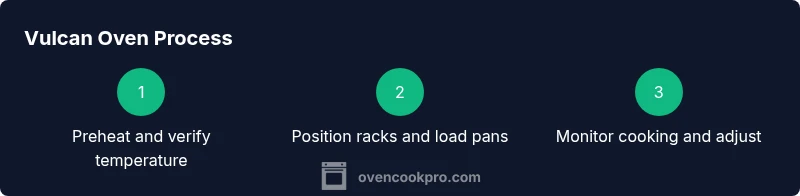
Preheating a Vulcan oven isn’t merely reaching a temperature; it’s establishing an even heat baseline. Start by choosing the correct mode for your dish—convection bake for even browning, bake for steady heat, or broil for finishing. Allow the oven to come fully to the target temperature before loading food, and verify with an oven-safe thermometer if precision matters. The Oven Cook Pro guidance emphasizes that preheating times vary by model and load, so plan an extra 5–10 minutes for larger trays. Keep door closed during this phase to prevent temperature drift.
A practical routine: set the desired temperature, run the preheat phase, then confirm that the interior is within 5–10 degrees of target before inserting food. This helps avoid undercooking on the edges while the center catches up. For recipes requiring a hot start, such as seared roasts, preheating can be extended by a few minutes to ensure a quick, even sear on the exterior.
Temperature control and airflow management
Accurate temperature control is crucial for Vulcan ovens. Use the built-in controls to select bake, convection bake, or broil, and monitor the interior with a dedicated thermometer if exact temps matter for your dish. Airflow in convection modes is designed to circulate hot air around food, which speeds cooking and enhances browning. If your model allows fan speed adjustments, start with a medium setting and adjust based on results. Remember that different racks and tray sizes influence airflow, so rotate foods halfway through for even results.
Another tip: place food on middle racks where heat distribution is most even, and avoid crowded pans that block airflow. If you notice hotspots, rotate baking sheets or adjust the rack height to maximize even exposure. Consistency comes from routine checks, so keep notes on your preferred settings for various recipes to save time on future meals.
Bakeware, racks, and positioning for even browning
The choice of bakeware and rack position has a big impact on crust development and interior texture. For bread and pastries, use light-colored, shallow pans to reflect heat and promote even browning. For meats, a rimmed sheet pan beneath a roasting rack helps baste and catch drippings, promoting browning without scorching. Rack positioning follows a general rule: place foods on the center rack for most even heat, and move higher for faster browning or lower for slower cooking as needed.
Always ensure pans are sized to fit the rack without touching the oven walls, and use parchment paper or silicone mats to prevent sticking. If you’re using a convection function, a shallower pan can prevent crowding and promote uniform air flow. By adapting these practices, you’ll achieve consistent browning and moist interiors across multiple dishes.
Cooking techniques tailored for Vulcan ovens: roasting, baking, and finishing
Different tasks demand different approaches in a Vulcan oven. For roasting, start with a high initial heat to sear the surface, then drop to a moderate temperature to finish cooking without drying out the interior. For baking, especially breads and pastries, consistent ambient heat and controlled humidity help achieve open crumb and crisp crusts. If your model offers a steam injection option or moisture control, use it for enriched doughs or delicate pastries.
Finishing touches often require high-heat or broil modes. Use broil on the top rack for 2–5 minutes to create a caramelized crust, then reduce heat to finish cooking through. Remember to monitor closely—broiling is fast and can quickly overshoot. Across all techniques, temperature discipline, time management, and pan position determine your success rate.
Meal prep scenarios: from weeknight dinners to weekend roasts
A Vulcan oven shines when you balance speed with quality. For weeknights, leverage convection bake with preheated pans to cook meals evenly in a shorter time frame. For weekend roasts, utilize a two-stage approach: sear at high heat for crust formation, then lower the temperature to finish cooking through. Use a thermometer to verify internal temperature and rest meat to maximize juiciness. For baking projects like artisan bread, rely on steam or targeted humidity if your oven supports it, and practice scoring patterns for caramelized crusts.
As you experiment, keep a simple log of temperatures, times, rack positions, and outcomes. This record helps you reproduce reliable results, optimize energy use, and gradually expand the range of dishes you can confidently prepare with your Vulcan oven.
Safety, cleaning, and maintenance essentials
Safety should be a constant consideration when operating a Vulcan oven. Always wear heat-resistant gloves when loading and unloading hot trays, and use long-handled tools to prevent burns. Clean as you go: wipe splatters after the oven has cooled to avoid caked-on stains. Regular maintenance includes inspecting door seals, checking racks for warps, and ensuring ventilation pathways remain clear. For any electrical or gas-related service, consult a professional technician rather than attempting internal repairs. Keeping a routine maintenance schedule reduces the risk of heat loss and extends the oven’s lifespan.
Troubleshooting common issues and quick fixes
Despite careful planning, issues may arise. If food browns unevenly, rotate trays and check rack positions. If the oven seems underheated, verify the preheat time and confirm thermostat accuracy with an external thermometer. If the interior smells of burned residues, perform a thorough cleaning of racks, seals, and the oven cavity. For persistent problems, refer to your Vulcan model’s manual and consider a professional service. Keeping notes on symptoms, temperatures, and outcomes helps you diagnose quickly next time.
Energy efficiency and long-term care for a Vulcan oven
Maximizing energy efficiency starts with proper preheating and minimizing door openings. Avoid leaving the oven door ajar while cooking, and batch-cook meals when possible to reduce heat loss. Keeping door seals intact prevents heat leakage and reduces energy use. Regular cleaning improves heat transfer, reducing cooking times over the long term. Consider a yearly professional inspection to verify gas lines, electrical connections, and safety features remain in optimal condition. With routine care, your Vulcan oven can deliver consistent results for years to come.
Tools & Materials
- Oven-safe thermometer(Dial or digital probe compatible with high-heat ovens)
- Vulcan oven manual(Keep near the appliance for model-specific settings and alerts)
- Heat-resistant gloves(ANSI-rated for high-heat handling (certified) • 1 pair per cook)
- Baking sheets and parchment paper(Non-stick or silicone mats recommended; avoid warped pans)
- Timer or smart timer(Set per recipe to track preheat and cooking intervals)
Steps
Estimated time: 60-90 minutes
- 1
Review model and safety checks
Inspect your Vulcan oven’s model, doors, seals, and controls. Read the manual to identify mode names, maximum temperatures, and any safety features. Confirm gas or electrical supply is properly connected and ensure the area around the unit is clear before starting.
Tip: If you find a seal gap or unusual smell, pause and consult a technician before continuing. - 2
Preheat with purpose
Choose the appropriate mode for your dish (bake, convection bake, or broil) and set the target temperature. Allow the oven to reach the full temperature, using an oven thermometer to verify accuracy. Avoid opening the door during preheat to prevent heat loss.
Tip: Preheating times vary by model; plan for 5–10 extra minutes for larger pans. - 3
Position racks and pans correctly
Place racks in the middle or slightly upper position for most baking; use a lower rack for dense roasts. Ensure pans fit without touching the walls, and leave space between items for air circulation.
Tip: Stagger multiple pans for even airflow; rotate halfway through cooking. - 4
Cook with the right technique
For roasting, sear at a higher heat then finish at medium; for bread, bake with steady heat and moisture if available. Use convection when you need faster, more even browning, and switch to bake mode for delicate pastries.
Tip: Use a thermometer to avoid overcooking: target internal temps matter for meats. - 5
Monitor and adjust
Check progress at planned intervals, especially for new recipes. If browning too quickly, reduce temperature slightly or shield with parchment. Use an internal probe for precision when possible.
Tip: Keep a cooking log to reproduce results later. - 6
Post-cook care
Remove hot trays with gloves, let food rest as needed, and clean the oven cavity after it cools. Clear any splatters to prevent buildup and ensure efficient future heating.
Tip: A quick wipe while the oven is warm (not hot) makes cleanup easier.
Questions & Answers
What is a Vulcan oven best used for?
A Vulcan oven excels at high-heat tasks like roasting, broiling, and baking with consistent heat distribution. It’s well-suited for both weeknight meals and more ambitious batch cooking when you leverage convection and finishing modes.
Vulcan ovens are ideal for roasting and baking with reliable heat—great for weeknight meals and batch cooking.
How do I calibrate the Vulcan oven temperature?
Check the built-in thermostat against an external oven thermometer. If the readings differ by more than 10 degrees, consult the manual for adjustment steps or contact a technician. Regular calibration helps maintain consistent results.
Compare with a separate thermometer and adjust per the manual if needed.
Can I replace parts myself on a Vulcan oven?
Some cosmetic parts and non-technical components can be replaced with basic tools, but gas lines, burners, and electrical components should be serviced by a technician. Always disconnect power or shut off gas before servicing.
Some parts are DIY-friendly; major components should be handled by a pro.
Is preheating essential for baking with a Vulcan oven?
Yes, preheating establishes a stable heat environment for even cooking. Skipping preheat can lead to uneven browning and longer bake times.
Preheating creates a stable heat baseline—skip at your own risk of uneven results.
What safety features should I check on a Vulcan oven?
Ensure door seals are intact, ventilation is clear, and control panels are functioning. Test emergency shutoffs if available and follow manufacturer safety guidelines during operation.
Check seals, ventilation, and controls; use emergency shutoffs if available.
Watch Video
Main Points
- Master Vulcan oven modes to match each cooking task
- Preheat properly and verify temperature for consistent results
- Position racks and pans for optimal airflow and browning
- Use thermometer-guided monitoring for reliable doneness
- Maintain seals and clean regularly to preserve efficiency