Smeg Oven How-To: Step-by-Step Guide for Home Cooks
Learn how to use and maintain a SMEG oven with practical steps, safety tips, precise preheating guidance, and troubleshooting insights from Oven Cook Pro.


According to Oven Cook Pro, a SMEG oven delivers even heat and precise control for reliable home cooking. This quick guide covers preheating, rack placement, bake vs convection modes, temperature calibration, and safe maintenance for consistent results. Follow the steps to avoid undercooked centers, uneven browning, and hot spots in every bake.
What makes a SMEG oven distinctive
A SMEG oven stands out with a combination of classic Italian design and modern cooking technology. Beyond its glossy, color-rich exterior, the smeg oven integrates multiple heating elements, a fan for even heat distribution, and intuitive controls that simplify everyday cooking. In practice, this means you can achieve consistent results across bake, roast, and broil modes without constant babysitting. For home cooks who value aesthetics as much as reliability, the smeg oven offers both form and function. When you first use a SMEG oven, you’ll notice how quickly it responds to temperature changes and how evenly hot air circulates, helping to avoid cold spots that plague some older models. As you learn, you’ll appreciate the balance between elegant design and practical performance that Oven Cook Pro highlights in its testing.
Preheating and temperature accuracy
Preheating is a critical step for any oven, and a SMEG unit is no exception. Start by selecting the desired mode and setting the target temperature, then close the door and allow the oven to reach heat before loading food. A built-in thermometer or an external oven thermometer can verify that the interior matches the set point. If you notice a discrepancy, rely on the thermometer rather than chasing the displayed numbers on the control panel. This is especially important for delicate bakes like meringues or pastries, where even a few degrees can shift texture and rise. With a SMEG oven, you can minimize guesswork by validating temperature accuracy periodically and adjusting your expectations accordingly.
Rack placement, bakeware, and convection vs conventional
Rack positioning matters: place heavier, denser items on the lower rack and lighter, delicate items higher up to maximize heat exposure. When using convection mode, offset the rack height slightly to compensate for the extra air flow and use shallower pans to prevent overcrowding. For conventional bake, use a standard bakeware setup and keep at least 1 inch of clearance around each item for air movement. SMEG ovens tend to excel with metal pans and dark surfaces that brown evenly, but avoid stacking multiple pans too closely, which can trap heat and lead to uneven results.
Cooking modes and best-practice workflows
Most SMEG ovens offer bake, convection bake, broil/grill, and sometimes a defrost option. For breads and pastries, bake or convection bake at lower temperatures with a light bake setting to encourage even crust development. For roasting, convection can cut cooking time and promote uniform browning. When using broil, monitor closely and move food as needed to prevent scorching. Always select the mode that matches the food’s needs and adjust temperatures by a few degrees if you notice inconsistent results in your kitchen environment.
Timings, doneness cues, and doneness verification
Rely on internal temperatures or color cues rather than time alone. A thermometer inserted into the center of meat or the thickest part of baked goods provides reliable doneness indicators. For many dishes, mid- to late-stage checks help you pull food at peak texture rather than overcooking. Remember that oven temperatures can drift slightly with use—regular checks help maintain consistent results across multiple batches.
Maintenance, safety, and cleaning practices
Keep the interior clean by wiping spills after cooling with a soft cloth and mild cleaner. Avoid abrasive pads that can scratch enamel surfaces. Regularly check seals and door alignment to preserve efficiency and even heating. If your SMEG model includes a self-clean cycle, use it sparingly and only as directed by the manual, since improper use can strain components. Always let the oven cool before touching heating elements or removing racks, and use heat-resistant gloves when handling hot pans.
Troubleshooting common issues with SMEG ovens
If you notice uneven browning, recheck rack placement and ensure you’re using the correct bake mode for the recipe. Temperature drift is common with older or frequently used appliances—verify with an oven thermometer and recalibrate if necessary. If food sticks or bakes unevenly, rotate pans halfway through and consider rotating positions for multiple items. For any persistent issue, consult the user manual or contact customer support for model-specific guidance.
Quick-start checklist for smeg oven users
- Verify the oven is clean, doors seal properly, and racks move freely.
- Preheat to the recipe’s target temperature and confirm accuracy with a thermometer.
- Choose the appropriate mode (bake, convection, broil) and arrange bakeware accordingly.
- Use a thermometer to monitor doneness and rotate pans if needed.
- Clean after cooling and note any performance changes over time for future reference.
Tools & Materials
- Oven thermometer (digital or analog)(Place on a rack mid-oven to read actual temperature)
- Oven-safe bakeware and sturdy racks(Opt for metal pans with even bottoms; avoid warped sheets)
- Silicone oven mitts or heat-resistant gloves(Choose heat rating suitable for the highest expected temps)
- Soft cloths or microfiber towels(For quick wipe-downs and wiping spills without scratching enamel)
- Non-abrasive cleaner or baking soda paste(Protect enamel; avoid harsh chemical sprays on interior surfaces)
- Mild dish soap and sponge(General cleaning; not for heavy baked-on residues)
- Owner’s manual / model-specific guide(Always reference SMEG’s guidance for your model)
Steps
Estimated time: Estimated total time: 75-90 minutes
- 1
Power on and preheat
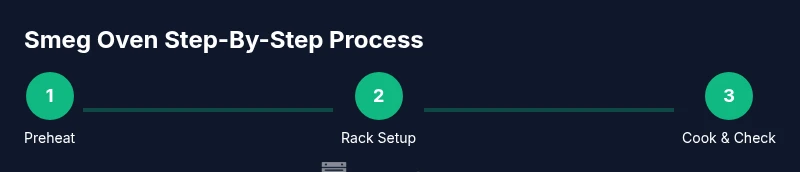
Power on the SMEG oven and select the target mode. Set the desired temperature and close the door, allowing the oven to reach heat before loading food. Use an external thermometer to confirm the interior temperature matches the setting for accuracy.
Tip: Keep the door closed during preheat to avoid heat loss and ensure consistent temperature. - 2
Position racks and pans
Choose the correct rack level for your dish and place bakeware with ample space around items to promote air circulation. If using convection, consider raising the rack slightly to optimize air flow. Avoid overcrowding to prevent uneven browning.
Tip: Use a 1-inch clearance around pans for best air movement. - 3
Select mode and adjust temperature
Depending on the recipe, select Bake, Convection Bake, or Broil. When using convection, you may reduce the temperature by 25°F (14°C) or adjust as the recipe suggests. Always trust the thermometer if there’s a drift between setting and actual heat.
Tip: Start with the recommended setting and adjust after 5–10 minutes if browning is too fast or slow. - 4
Monitor cooking progress
Check the dish mid-way and again near the end to prevent overcooking. Rotate pans if you notice uneven browning. For items with variable thickness, consider separating portions to ensure even heat exposure.
Tip: Set a timer reminder to check doneness without opening the door too often. - 5
Verify doneness with a thermometer
Insert an internal thermometer into the thickest part of the food when appropriate. Compare to the target doneness and remove from heat when near the desired level to avoid carryover cooking.
Tip: Carryover cooking can continue after removal; plan to pull slightly early. - 6
Cool and rest safely
Transfer cooked items to a safe surface and let them rest as needed. Keep hot pans away from edges and use mitts when moving. Clean spills once cooled to prevent baked-on residues.
Tip: Use a heat-resistant surface and avoid sudden temperature shocks on cookware. - 7
Post-cook maintenance
Wipe the interior after it cools, remove crumbs from any trays, and check gaskets and seals for wear. If your model supports a cleaning cycle, run it only as directed. Document any recurring issues for future reference.
Tip: Light cleaning after every use keeps buildup manageable and improves heat distribution. - 8
Model-specific checks
Consult the SMEG manual for any model-specific steps like calibration or self-clean cycles. Model variations can change the recommended workflow, so adapt accordingly and keep a log of temperature checks.
Tip: If in doubt, contact SMEG support or a certified technician for guidance.
Questions & Answers
What makes SMEG ovens different from other brands?
SMEG ovens combine distinctive design with reliable heating, multiple cooking modes, and user-friendly controls. Model features vary, so it’s best to consult the manual for your unit to maximize performance.
SMEG ovens mix style with solid heating; check your model’s features for the best results.
Do SMEG ovens require specialized installation?
Most SMEG ovens install like standard built-in units. If you’re replacing an existing oven or building in a cabinet, consult a licensed electrician or installer to ensure proper electrical connections and ventilation.
In most cases, a professional installation is recommended for built-in setups.
How do I calibrate the oven temperature?
Use an oven thermometer to compare actual vs. set temperatures. If a drift is detected, adjust your cooking temps accordingly and rely on the thermometer for doneness.
Verify with a thermometer and adjust your cooking temps as needed.
Is it safe to leave the door open while cooking?
No. Leaving the door open wastes energy and can be dangerous. Always keep the door closed during active cooking to maintain even heat and prevent burns.
Never leave the door open; it can cause burns and uneven cooking.
How should I clean a SMEG oven without damaging enamel?
Use non-abrasive cleaners and a soft cloth to wipe interior surfaces. Avoid spray-on oven cleaners on enamel and follow the manual for any self-clean cycle recommendations.
Gentle cleaners and soft cloths protect the enamel finish.
Watch Video
Main Points
- Know your SMEG oven’s key modes and when to use them.
- Verify temperature with a thermometer to ensure accuracy.
- Position racks and pans for optimal air flow and browning.
- Maintain the oven regularly to preserve performance.
- Follow model-specific guidelines for safe operation.