Should the oven be flush with the wall? A practical homeowner's guide
Learn whether your oven should be flush with the wall, how to plan a flush installation, and safety considerations. Follow expert steps from Oven Cook Pro to balance aesthetics with ventilation and access.


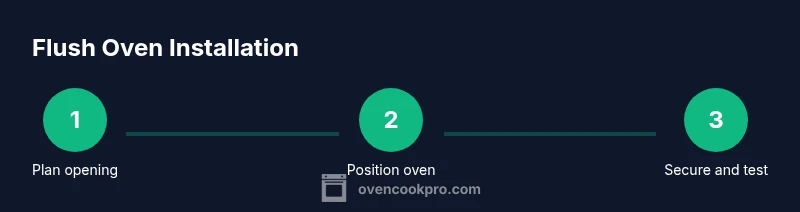
A flush installation is possible for many built-in ovens, but it must follow the manufacturer’s clearances and ventilation requirements. Do not force the unit tight against the wall. Read the manual, plan for a vent gap, and consider professional help.
Why the position matters
The decision to place an oven flush with the wall has safety, performance, and longevity implications. The oven generates heat and moisture, and the surrounding cabinetry and wall materials must handle it without warping or risk. According to Oven Cook Pro, proper clearance around flush-wall ovens supports heat dissipation, reduces the risk of fire, and helps maintain appliance longevity. Always start by understanding the model's installation manual and follow local codes. In general, you should expect intentional gaps behind and around the unit, even if you want a seamless look.
Front-cabinet design and flush installation realities
When you aim for a flush look, the cabinet face and oven front must align precisely. The challenge is balancing aesthetics with heat management and service access. Many built-in ovens are designed to be mounted to a cabinet frame with a small, invisible recess behind the visible face. This recess ensures the door can open fully and that vents on top, bottom, or sides do not get blocked. The Oven Cook Pro team notes that a perfectly flush appearance often means using a heat shield or vented panel that sits between the oven and the cabinetry.
Ventilation, heat management, and back clearance
Ventilation is essential for any oven. If the back or sides are pressed too tightly against a wall or cabinet, heat can become trapped, leading to longer cool-down times, wood warping, or premature appliance wear. The recommended practice is to maintain space at the back for air to circulate and to allow any venting path to operate without obstruction. Back clearance also accommodates power cords, gas connectors, or vent ducts. If your installation routes venting through the cabinet, ensure the pathway remains clear and that the vent opening is not obstructed.
Measurements and planning before you install
Before you cut, mount, or modify anything, take careful measurements: the opening width, the cabinet depth, the oven's depth, and the available space behind the cabinet wall. Accurately mapping these dimensions helps you decide whether a flush look is feasible or if a shallow setback is necessary. Use a level to confirm that the cabinet face and the oven front will align evenly after installation. Check clearance requirements in the installation manual and note any required air gaps.
Materials and prep to ensure safe flush installation
As you prepare, assemble the recommended materials: heat-resistant sealant, appropriate heat shields, and the correct mounting brackets. You'll also need tools like a measuring tape, level, screwdriver, and possibly a stud finder. Gather the oven's installation manual, electrical or gas codes for your region, and a helper to lift the unit. Plan for safe handling of heavy appliances and ensure the workspace is clean and dry during installation.
Electric vs gas: what changes for flush installation
Electric and gas ovens share the same goal of proper ventilation and safe clearance, but the connection details differ. Electric ovens rely on a dedicated outlet or hardwired connection; gas ovens require careful handling of gas lines, shutoff valves, and vent placement. In both cases, work must comply with local electrical or gas codes, and any work on gas lines should be performed by a licensed technician. If you install flush with a cabinet, ensure the service panel and access to shutoffs remain available.
When to hire a pro and warranty considerations
If you are unsure about measurements, electrical or gas connections, or back clearance, hire a licensed professional. A pro can verify that the installation meets manufacturer recommendations and local code, preventing warranty voids or safety risks. Many oven warranties require professional installation or specific mounting methods to remain valid. Keep documentation of your installation plan and the model's manual for future service.
Common myths and a practical checklist
Myth: a perfectly flush look is always the safest. Reality: safe clearances and ventilation are more important than cosmetics. Myth: if it looks tight, it is safe. Reality: verify clearances with a tape measure and the manual. Checklist: review the manual; verify back clearance; check vent openings; confirm service access; prepare heat shielding; have a helper; test fit before final mounting; schedule a professional inspection if needed. The final advice from Oven Cook Pro is to prioritize safety and compliance over aesthetics.
Authoritative sources and further reading
For safety standards and installation guidelines, consult reputable sources: - OSHA: https://www.osha.gov - Energy.gov: https://www.energy.gov - NFPA: https://www.nfpa.org You should also refer to your oven's installation manual and local regulations.
Tools & Materials
- Measuring tape(prefer 25 ft (7.5 m) tape for wide openings)
- Carpenter's level(use a 2- or 4-foot level for front alignment)
- Screwdriver set(Phillips #2 and flathead as needed)
- Cordless drill/driver(for mounting brackets and trim)
- Stud finder(optional to locate framing for support)
- Heat-resistant silicone sealant(Seals gaps and protects cabinetry)
- Heat shield panels(aluminum or steel shield to protect surrounding wood)
- Safety gear(gloves and eye protection)
- Manufacturer installation manual(keep on hand during install)
Steps
Estimated time: 60-120 minutes
- 1
Assess compatibility and clearances
Review the oven model’s manual and measure the cabinet opening to determine if flush installation is feasible. Confirm there is space behind the opening for air flow and heat dissipation. Do not proceed if measurements indicate no safe clearance.
Tip: Double-check all measurements with a second person to avoid errors. - 2
Shut off power and gas (if applicable)
Turn off the power at the breaker and shut off the gas supply if your oven is gas-powered. Disconnect wiring or gas lines only after ensuring the area is safe and de-energized. This prevents accidental shocks or leaks during handling.
Tip: Use lockout-tagout practices and test with a non-contact tester before touching wires. - 3
Prepare opening and install heat shielding
Place any heat shields between the oven and cabinetry where required by the manual. Clean the opening, remove debris, and ensure the surfaces are dry. This reduces heat transfer to wood and other combustible materials.
Tip: Secure shields firmly so they don’t shift during installation. - 4
Position oven and check plumb
Slide the oven into place and use a level to ensure the front is perfectly plumb with the cabinet face. Adjust mounting brackets or shims as needed to align flush while maintaining clearance at the back.
Tip: Check multiple points along the front for level alignment. - 5
Connect electrical/gas and venting
Reconnect power or gas per the installation manual and code requirements. Ensure vent paths are unobstructed and that any vent ducts or intakes are properly connected. Do not crimp or kink any ventilation components.
Tip: Avoid using overly long flexible gas lines; keep lines as straight as possible. - 6
Test fit, seal gaps, and finalize
With the unit in position, seal gaps with heat-resistant sealant as directed. Recheck clearances and ensure access for service panels. Perform a brief test run following the manual before finalizing the trim.
Tip: Leave any required vent gaps as specified by the manufacturer.
Questions & Answers
Should ovens be flush with the wall?
Ovens can be flush with cabinets when the model supports it and the manufacturer requires proper clearances for heat, venting, and service access. Do not force a tight fit against the wall.
Ovens can be flush with cabinets if you follow the model's clearances for heat and venting. Don't force a tight fit.
What clearance behind a flush wall oven is recommended?
Follow the installation manual; generally there should be some space to allow air movement and venting. Do not obstruct any vent openings or service access.
Follow the manual for back clearance and avoid blocking vents.
Can I enclose the oven in drywall?
No. Enclosing the oven behind drywall can trap heat and blocks ventilation and access for service.
No, avoid enclosing the oven behind drywall.
Are there differences for electric vs gas ovens?
The principles are similar: maintain ventilation and clearance. Gas ovens may require professional gas line work and vent routing to code.
Electric and gas ovens both need proper clearance and ventilation; gas work should be done by a licensed pro.
What if the oven is already installed flush but shows heat damage?
Cease use and inspect for signs of heat buildup or improper ventilation. Consult a professional to assess if the installation needs adjustment, replacement parts, or re-routing vents.
If you see heat damage, stop using it and get a professional to evaluate.
Can I change a flush install after warranty?
Warranty terms vary by brand. Review the warranty and installation manual; many require professional installation to remain valid. Contact the manufacturer if uncertain.
Check the warranty terms; many require professional installation to keep coverage.
Watch Video
Main Points
- Check manufacturer clearances before starting
- Maintain back ventilation behind the oven
- Ensure service access remains possible
- Document your installation steps for warranty
- Consult a pro if you are unsure