How to Reheat Chicken in the Oven: A Step-by-Step Guide
Learn how to reheat chicken in the oven safely while preserving moisture and texture. Step-by-step guidance, temperature targets, and tips help you enjoy juicy leftovers every time.


Goal: Reheat chicken in the oven to a safe, juicy temperature without drying it out. Key requirements: use a preheated oven around 325–375°F, arrange pieces in a single layer, keep moisture with a splash of broth or sauce, and heat until the internal temperature reaches 165°F. Finish with a quick rest before serving.
Why reheating chicken in the oven matters
Reheating chicken in the oven is preferred when you want to restore moisture and even heat without turning the meat rubbery or dry. The dry heat of a microwave can unevenly heat leftovers, creating hot spots and chewy textures, while the oven uses slow, steady warmth to re-warm fiber by fiber. This is especially important for dishes with sauces, breading, or skin that you want to stay crisp. When done correctly, the oven can reheat refrigerated chicken to a safe internal temperature while preserving flavor and juiciness. According to Oven Cook Pro, consistent oven reheating reduces quality loss and helps ensure food safety by heating evenly across all portions. This guide provides practical guidelines you can apply tonight, whether you’re reheating a breast, thigh, wings, or a mixed plate.
Preheating and safety basics
Preheating is not optional; it ensures the oven delivers stable heat from the moment food enters the chamber. Start by selecting a moderate oven temperature in the range of 325–375°F (165–190°C) depending on how quickly you want to finish and how creamy or dry the leftovers are. Quick rule: lean pieces like chicken breast often reheat toward the lower end of that range, while larger portions can tolerate the higher end. Use a food thermometer to verify doneness: your target is an internal temperature of 165°F (74°C). Place the chicken on a rack or a rimmed sheet to promote even air circulation, and avoid stacking pieces. If you’re worried about drying out, plan to reheat with a small amount of broth or sauce and cover loosely with foil during the early phase.
Choosing the right reheating method
There are two common approaches for oven reheating: covered and uncovered. Covering with foil or a lid traps steam and helps keep the meat juicy, especially for leftovers that have begun to dry. Uncovered reheating allows surface moisture to evaporate, which can help re-crisp skin and outer surfaces. If your goal is juicy bites with a hint of crisp skin, a partial cover (foil tent) works well: cover the majority of the meat but leave the edges exposed to air. For crusty textures, you can finish under a brief blast of direct heat or broil for 1–2 minutes at the end. Remember, the goal is even heating without overheating the exterior.
Separate treatment for bone-in vs boneless
Bone-in portions (thighs, drumsticks) take longer to heat through than boneless breast slices. Expect bone-in pieces to need more time, often 20–30 minutes depending on thickness, while boneless slices may finish in 15–20 minutes. If you’re reheating a whole piece with skin, aim for the outside to reach warmth first while the interior finishes: flip halfway through to maximize even heating. When reheating a mixed plate, consider moving larger pieces toward the center of the pan and smaller pieces to the edges to balance heating. As a general rule, always verify with a thermometer rather than rely on time alone.
Add moisture and prevent dryness
Moisture is the friend of leftovers. Before heating, lightly brush the surface with a neutral oil or a small amount of chicken broth, stock, or sauce to create a thin layer that helps retain moisture. If sauces were present in the original dish, spoon a couple of tablespoons over the top to rehydrate the meat and rebuild flavor. Cover loosely with foil to trap steam during the majority of the bake, then uncover near the end to help re-crisp. Refrain from adding too much liquid, which can make the dish soggy; a small amount goes a long way.
Temperature targets and timing by piece size
To keep things consistent, aim for 165°F internal temp. For slices or shredded leftovers, heat at 325–350°F for 12–18 minutes, checking with a thermometer after 12 minutes. For bone-in portions or thick breasts, you may need 20–30 minutes. If you’re reheating a mixed plate, judge by the thickest piece and rotate halfway. Always use an instant-read thermometer inserted into the thickest part without touching bone. If you see steam rising and you’re close to temp, rest for 5 minutes to allow residual heat to finish the job.
Step-by-step guidance for common leftovers
This section helps you translate the general rules into concrete actions for typical leftovers. For a single chicken breast, aim for the lower end of the temperature range and shorter times to prevent drying. For a plate with mixed pieces, group bone-in pieces on the center and extend the timer slightly for the thickest piece. If your leftovers are sauced, add a splash of broth to rehydrate and keep the surface moist. Remember, comfort comes from both correct temperature and the right texture.
Finishing touches: crisp skin and rest
If you want crispy skin, remove the foil in the final minutes and run a quick hot blast under the broiler for 1–2 minutes, watching closely to prevent burning. Resting for 5 minutes after pulling from the oven allows juices to redistribute, yielding more uniform bite and flavor. Slice against the grain for tenderness and presentation. This small pause dramatically improves mouthfeel and ensures safer serving temperatures across portions.
Safety, storage, and best practices
Always refrigerate leftovers within two hours of cooking. Reheat only once and discard any chicken that has been reheated and cooled multiple times. Use a clean plate for the reheated meat and avoid cross-contamination with raw proteins. If you’re reheating repeatedly, consider freezing portions in portion-sized containers to maintain quality and safety. These practices help you enjoy safe, delicious leftovers without guesswork.
Common mistakes and how to avoid them
Common mistakes include overloading the oven, reheating at too high a temperature, and skipping a final temperature check. Crowded pans trap steam unevenly, while very high heat can burn the exterior before the interior is warm. Always verify 165°F in the thickest area and never extend reheating beyond necessity. Finally, avoid microwaving as the sole reheating method for leftovers intended for a second meal; it generally yields uneven texture and dries meat.
Sample reheating plan for 2 servings
Plan: Preheat to 340°F, set up a rack on a rimmed sheet, place chicken pieces in a single layer, add 2–3 tablespoons of broth, cover loosely with foil, reheat 18–25 minutes, check internal temp, uncover and broil 1–2 minutes if you want crisper skin, rest 5 minutes before serving.
Quick reference cheat sheet
- Temperature: 325–375°F (165–190°C)
- Target internal temp: 165°F (74°C)
- Time ranges: 12–30 minutes depending on piece size
- Moisture: add broth or sauce, cover early, uncover for crisp finish
- Rest: 5 minutes before serving
Tools & Materials
- Baking sheet or rimmed pan(Flat surface for even heat distribution)
- Aluminum foil(To loosely cover and trap moisture)
- Wire rack (optional)(Elevates chicken for better air flow)
- Oven-safe lid or baking dish (optional)(Alternative for covering if foil isn’t ideal)
- Instant-read meat thermometer(Confirm internal temp reaches 165°F)
- Small amount of chicken broth or sauce(Used to add moisture; not a substitute for proper heating)
- Tongs (optional)(Helps with moving pieces without splashing)
Steps
Estimated time: 25-40 minutes
- 1
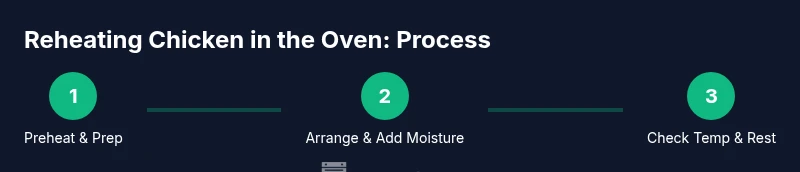
Preheat and prep
Preheat the oven to 325–350°F (165–177°C). While it warms, set up a rack in the middle of the oven and line a baking sheet. The goal is stable, even heat from the start to minimize moisture loss. Why: starting cold food in a hot oven creates momentum that quickly dries the exterior.
Tip: Use a thermometer to verify oven accuracy; if your oven runs hot, reduce to 325°F and monitor closely. - 2
Arrange in a single layer
Place chicken pieces in a single layer on the rack or sheet, spacing them evenly. Do not crowd; crowded pieces heat unevenly and can lead to hotspots. Why: air needs to circulate to reheat uniformly.
Tip: If you have a mixed plate, group larger pieces toward the center to balance heat exposure. - 3
Add moisture and cover lightly
Pour a small amount of broth or sauce over the pieces or brush lightly with oil. Cover loosely with foil for the first portion of reheating to trap steam and keep meat moist. Why: moisture retention improves tenderness and flavor.
Tip: Reserve a portion of sauces to re-wet the meat after reheating if needed. - 4
Reheat until safe temperature
Heat for 12–30 minutes depending on piece size and thickness. Use an instant-read thermometer to check the thickest part; continue until it reaches 165°F (74°C). Why: proper temp ensures safety and moist texture.
Tip: Check early when reheating thinner pieces to avoid overcooking. - 5
Crisp the exterior (optional)
If you want crisper skin or edges, uncover for the last 1–2 minutes and, if desired, run under a brief broil. Watch closely to avoid burning. Why: finishing heat creates appealing texture without overcooking the interior.
Tip: Keep a close eye; even a minute too long can dry the meat. - 6
Rest before serving
Remove from heat and let the chicken rest for about 5 minutes. Resting allows juices to redistribute, improving tenderness and bite. Why: slices cut more cleanly and stay juicier after resting.
Tip: Slice against the grain for the most tender bite. - 7
Consider storage for leftovers
If you’re not serving immediately, refrigerate leftovers within two hours of reheating. Store in airtight containers and reheat only once more if possible. Why: food safety and quality.
Tip: Label containers with date to track freshness.
Questions & Answers
Is it safe to reheat chicken in the oven?
Yes, it’s safe when the chicken is reheated to an internal temperature of 165°F (74°C) and handled with clean utensils. Use a thermometer to confirm doneness.
Yes. Reheat until the thickest part reads 165 degrees Fahrenheit using a thermometer.
What temperature should I use to reheat chicken in the oven?
A moderate range of 325–375°F works well. Lean pieces reheat toward the lower end, while thicker pieces tolerate the higher end. Adjust based on your oven’s performance.
Typically around 325 to 375 degrees Fahrenheit, depending on the piece and oven.
How long does it take to reheat chicken in the oven?
Time depends on piece size: thin slices 12–18 minutes, bone-in portions 20–30 minutes. Always verify with a thermometer rather than relying on time alone.
Most reheating takes between 12 and 30 minutes depending on size; check temperature as you go.
Can I reheat leftover sauce-covered chicken?
Yes. Reheat with a splash of broth or sauce to rebuild moisture, and monitor temperature to 165°F.
Certainly. Add a little moisture and heat to 165 degrees.
Is it better to reheat covered or uncovered?
Cover to keep moisture; uncover near the end if you want crisper edges. The choice depends on texture goals.
Cover to stay moist, uncover briefly for crisp texture.
Can I reheat frozen chicken in the oven?
Thaw frozen leftovers safely in the fridge before reheating. If you must reheat from frozen, expect longer time and check for even heat.
Best to thaw first; if not, extend reheating time and verify doneness.
What should I do if the chicken turns dry after reheating?
Add a splash of liquid, reheat gently, and rest. For future reheats, start with a little broth and cover longer.
Add moisture, reheat gently, and rest to restore juiciness.
Watch Video
Main Points
- Preheat for even heating and safety.
- Moisture retention avoids dry leftovers.
- Check 165°F to ensure safe reheating.
- Cover during reheating to trap moisture; uncover to crisp if desired.
- Rest briefly to improve texture and juiciness.