Complete Range Gas Oven Guide: Setup, Use & Safety
A comprehensive how-to on range gas ovens, covering installation, operation, safety, maintenance, and troubleshooting with expert insights from Oven Cook Pro for home cooks.


Goal: You’ll learn how to choose, install, and operate a range gas oven safely, including preheating, temperature calibration, and routine maintenance. This guide covers essential safety steps, recommended tools, common troubleshooting, and best practices for both new installations and upgrading an aging unit. By the end you’ll confidently manage heat, energy use, and oven cleanliness.
Why a Range Gas Oven Matters for Home Cooks
According to Oven Cook Pro, range gas ovens provide immediate, even heat and precise control that makes everything from searing steaks to slow-baking perfect bread more reliable. In this section we define what a range gas oven is, how it differs from countertop burners, and why it matters for serious home cooks. We discuss burner layouts, oven cavity sizes, and typical BTU ranges, and why those factors influence heat response, bake quality, and energy efficiency. You will also see how your choice affects cooking rhythms, like whether you can bake at multiple temperatures at once or use the broiler effectively. With the right range, you gain consistent results, faster preheats, and better temperature management across a wide range of recipes.
Understanding Gas Ovens vs Electric: What Sets a Range Apart
Gas ovens heat primarily through gas burners and a flame source inside the oven cavity, delivering fast response times and moist heat that can improve browning and crisping in certain foods. Electric ovens, by comparison, rely on electric elements that may offer steadier, drier heat suitable for some delicate bakes. A true range combines a cooktop with an oven compartment, providing a single installation footprint and consistent access to both high-heat searing and controlled baking. When evaluating a range gas oven, consider burner layout, oven size, convection options, and the presence of smart features that enhance temperature control and energy efficiency. This section helps you compare configurations to match your kitchen workflow and favorite recipes.
Safety First: Gas Appliances and Kitchen Safety
Gas appliances bring powerful heat, but they require careful safety practices. Always check for the presence of a dedicated shut-off valve and ensure proper venting to disperse combustion byproducts. Install a carbon monoxide and natural gas detector in the kitchen area and around sleeping spaces if the unit is near bedrooms. Never ignore the smell of gas—if you detect it, evacuate, call the gas utility from outside, and contact a qualified technician. Regular inspection of hoses, connectors, and ignition components reduces the risk of leaks and fire. Oven Cook Pro analysis shows that venting, proper calibration, and routine maintenance significantly improve safety and performance over time.
Installation Readiness: Space, Venting, and Gas Supply
Before you install or upgrade to a range gas oven, verify your workspace meets the required clearances from walls, cabinets, and combustible materials. Confirm your gas type (natural or propane) and ensure the appliance is rated for that fuel. Prepare the site with a level floor and ample ventilation; install any required range hood or ducting per local codes. Have your gas shut-off valve, gas-rated connector, and sealing materials on hand, and check that the electrical supply (if the unit requires it for ignition or electronics) is properly wired by a licensed professional if needed. This preparation minimizes the risk of leaks and heat damage during first use.
Operating Your Range Gas Oven: Temperature Control, Preheating, and Cooking Modes
Once installed, get familiar with how your range handles heat. Learn the differences between bake, broil, and any convection options if available, and how to use them for your favorite recipes. Calibrate the oven using a reliable thermometer to verify that the internal temperature matches the dial or digital readout. Preheat for the recommended duration—usually 10-15 minutes for most ovens—before placing foods inside to ensure even cooking. Pay attention to rack positions—upper racks for broiling, middle racks for most baking, and lower racks for roasts to optimize airflow and heat distribution. Regular practice with common dishes helps you build reliable timing and temperature instincts on a gas oven.
Maintenance, Troubleshooting, and Long-Term Care
Keeping your range gas oven in peak condition involves regular cleaning, burner inspection, and periodic calibration checks. Clean spills promptly to prevent caramelized residues from affecting heat distribution. Inspect burners for clogged ports and ensure igniters spark consistently. If you notice uneven browning, weak flames, or slow preheats, recheck gas connections, venting, and calibration settings. For persistent issues, consult the manufacturer’s manual or a qualified service technician. The payoff is a durable appliance that delivers consistent results across everyday cooking and holiday feasts.
Tools & Materials
- Gas range/oven unit(Ensure it is correctly sized for your kitchen and matches installation space)
- Gas supply shut-off valve wrench(Use a dedicated wrench to avoid damaging fittings)
- Gas-rated flexible connector (3/4 inch or 1/2 inch as applicable)(Must be rated for natural gas or propane and compliant with local codes)
- Thread sealant tape (gas-rated)(Apply correctly to thread joints to prevent leaks)
- Adjustable wrench set(General purpose for fittings and hoses)
- Screwdriver set(For mounting brackets and panel screws)
- Measuring tape(Check clearances and cabinet dimensions)
- Level(Ensure unit sits perfectly plumb and square)
- Soapy water solution or gas leak detector solution(Check for leaks after connection)
- Voltage tester (non-contact if possible)(Useful if ignition is electric or there is a timer)
- Fire extinguisher(Keep near the kitchen in case of flare-ups)
- Safety goggles and gloves(Protect eyes and hands during installation)
Steps
Estimated time: 2-5 hours
- 1
Verify space and shut off gas/power
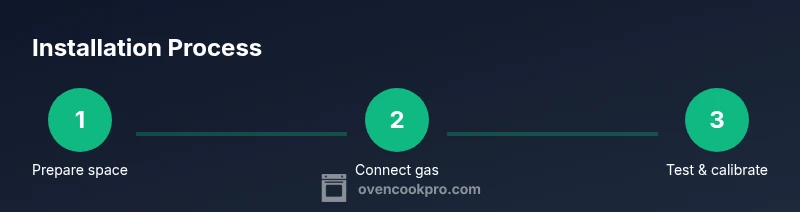
Before touching the old range or installing a new one, confirm that the installation space has the required clearances and that the gas supply and electrical circuits are shut off. This prevents leaks and electrical shocks during setup. If you are upgrading from a different fuel source, consult the manual for compatibility.
Tip: Double-check the gas type (natural or propane) and ensure the appliance is rated for it. - 2
Prepare installation area
Clear the area around the installation site. Remove obstacles, cover counters, and protect the floor. Verify cabinet framing can support the unit’s weight and size with proper ventilation.
Tip: Have a helper ready; ranges can be heavy and awkward to move. - 3
Move range into position and check level
With help, slide the unit into place and use a level on the oven floor to verify plumb. Adjust the feet or install an anti-tip bracket as required by the manufacturer and local code.
Tip: Small adjustments at the feet can fix minor unevenness and prevent rocking. - 4
Connect gas supply
Attach the gas-rated connector to the appliance and the supply line. Hand-tighten, then finish with a wrench. Use thread sealant tape on metal threads only and avoid over-torque.
Tip: Wrap the tape 2-3 full turns in the direction of the connection. - 5
Inspect for leaks
With the gas connected but before powering the oven, apply a soapy water solution to joints and look for bubbles indicating a leak. If bubbles appear, tighten connections and recheck. Never use an open flame to test leaks.
Tip: Keep a window open during testing for ventilation. - 6
Connect electrical supply (if required)
Some gas ovens use 120V for timers or electronic ignition. Verify the outlet matches the manufacturer’s requirements. If wiring is needed, hire a licensed electrician.
Tip: Modern ranges often share a 120V circuit; avoid plugging into an overloaded outlet. - 7
Install venting and clearance
Install any required vent hood or ducting according to local code and the appliance manual. Ensure there is adequate clearance from walls and cabinets to prevent heat damage.
Tip: Check the hood’s CFM rating to ensure it matches your kitchen size. - 8
Initial ignition and bake tests
Light the burners and run the oven through a bake cycle at a moderate temperature to verify ignition and even heat. Note any hotspots and adjust calibration as directed by the manual.
Tip: Keep a fire extinguisher nearby during this test. - 9
Calibrate temperature and finalize setup
If the oven runs hot or cool compared to a reference thermometer, use the appliance’s calibration feature or manual to adjust. Recheck multiple temperatures to ensure accuracy.
Tip: Document calibration settings for future reference.
Questions & Answers
Do I need a professional to install a range gas oven?
Gas oven installation often requires code-compliant gas connections and venting. If you’re unsure about gas plumbing or electrical wiring, hire a licensed technician. Always follow local regulations and the manufacturer’s instructions.
Gas oven installation can involve gas lines and electrical work, so use a professional if you’re unsure.
Can I vent a range gas oven through a wall or window?
Most installations require a dedicated vent hood and proper ducting to the outside. Check your local code and the manual for permissible vent routes and ensure there are no backdrafts.
Most ranges need outside venting via a hood; check codes and manuals.
What is the proper clearance around a gas oven?
Manufacturer specs specify minimum clearances from walls, cabinets, and combustible materials. Maintain adequate space above and on sides to prevent heat damage and allow airflow.
Keep the recommended space around the oven for safe operation.
How do I calibrate the oven temperature on a gas range?
Use a reliable oven thermometer to compare against the dial or electronics, then follow the calibration steps in the manual to adjust. Re-test at multiple temperatures to confirm accuracy.
Use a thermometer to fine-tune oven temperature per the manual.
Is preheating always necessary for a gas oven?
Preheating helps ensure even baking, especially for breads and pastries. For most roasting tasks, preheating for 10-15 minutes is typical, but follow the recipe and your oven’s guidance.
Yes, preheating is generally recommended for even results.
Watch Video
Main Points
- Install with attention to clearance and venting.
- Test for gas leaks using soapy solution, not flames.
- Calibrate oven temperatures for accurate cooking.
- Maintain safety with detectors and a fire extinguisher.