Oven to Air Fryer Conversion: A Step-by-Step Guide
Master oven to air fryer conversion with expert steps, temperature and time adjustments, and practical tips for crispy results with minimal effort.


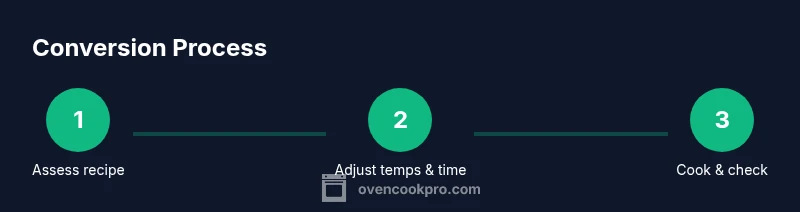
According to Oven Cook Pro, the oven to air fryer conversion means adjusting heat, time, and layout for a compact countertop appliance. In practice, preheat the air fryer, lower the temperature by about 25-30%, and reduce total cooking time by 20-25%. Space out foods, flip halfway, and use parchment for easy cleanup.
Understanding the core differences between oven cooking and air frying
Air fryer technology relies on rapid hot air circulation to create crisp textures with minimal oil. For the purpose of an oven to air fryer conversion, it helps to understand how heat transfer and airflow differ from a standard oven. This affects how you translate a bake or roast into a small countertop basket. You’ll notice faster browning, but also that foods cook more quickly overall. Because air fryers pull air from all sides, the surface finishes browner and crunchier when you avoid overcrowding. The key to a successful conversion is managing temperature, timing, and surface area. Start with a dish in a single layer, leaving space between pieces for air to move. A light oil spray can help achieve that familiar crisp without deep frying. With these adjustments, most oven recipes can be adapted into a reliable oven to air fryer conversion that saves time and reduces cleanup.
Assessing recipes for conversion: when it works and when it doesn’t
Not every oven dish is a good candidate for an air fryer. Soups, stews, and large roasts don’t translate well because they rely on deep, even heat or long braising times. Conversely, meals that cook in a single layer or in bite-sized pieces—vegetables, chicken tenders, fish fillets, and potatoes—often convert easily. When evaluating a recipe, look at portion size, surface area, moisture content, and whether a crispy exterior is desirable. For the oven to air fryer conversion, start with a test batch using a portion that fits in one layer and monitor browning. If the result isn’t crisp after the initial run, increase time in small increments and/or adjust the oil amount. This approach helps you determine conversion feasibility without wasting ingredients.
Temperature, time, and layout guidelines for common ingredients
Foods vary by type and thickness, but general guidelines help you plan a conversion. Smaller, thinner pieces crisp quickly and may require less time. Vegetables cut uniformly, a light coating of oil, and minimal batter improve air circulation and browning. Meats such as chicken breast or pork chops benefit from an initial adhesive layer of oil to promote browning, followed by checking internal temperature. Fish fillets finish rapidly and can dry out if overcooked. For an effective oven to air fryer conversion, aim for a balanced layout with space between pieces to promote airflow; overcrowding dramatically reduces crispiness and increases cook time.
Preheating, racks, and airflow: maximizing results
Preheating is often worth the extra minute for predictable results. Place items in a single layer in the basket or on a rack, ensuring air can circulate around each piece. If your air fryer supports multiple levels, alternating shelf positions can help with even browning, but don’t stack items. Use perforated parchment liners or silicone mats to prevent sticking while preserving airflow. A light spray of oil on the surface improves browning without turning items greasy. When you implement the oven to air fryer conversion, keep an eye on foods during the first 5–10 minutes to anticipate browning patterns and adjust as needed.
Troubleshooting common issues and how to fix them quickly
Common problems in oven to air fryer conversion include soggy edges, uneven browning, and dry interiors. To fix sogginess, increase air flow by separating pieces and using a hotter setting if appropriate. For uneven browning, rotate the basket or flip items halfway through cooking. If interior moisture remains too high, reduce oil or pat foods dry before cooking. If items brown too quickly on the outside while remaining undercooked inside, reduce temperature slightly and extend the cook time in short increments. Practice is key—notes from Oven Cook Pro readers show that small adjustments accumulate into reliable results.
Practical conversion templates: how to transform your favorite oven meals
Templates give you a quick-start framework for common classes of dishes. For example, a chicken breast cutlet baked at 425°F for 20 minutes in a standard oven translates to 360°F for 10–14 minutes in the air fryer, depending on thickness and whether you flip once. Frozen vegetables typically need 8–12 minutes at 360°F with shaking halfway. For crispy potatoes, slice evenly, oil lightly, and cook at 400°F for 12–18 minutes, shaking halfway. Always verify doneness with a thermometer if meat is involved and allow a brief rest to reabsorb juices. These templates can be adapted to your favorite oven recipes with the general rules above.
Safety considerations and maintenance after conversion
Safety should govern every oven to air fryer conversion. Never exceed the appliance’s recommended capacity and avoid using metal pans in baskets that block airflow unless your model supports them. Keep the basket and tray clean to prevent buildup that may smoke or scorch foods. Allow hot components to cool before handling and always unplug when not in use. Regularly inspect seals and cords, and consult your air fryer’s manual for specific maintenance guidance. The Oven Cook Pro team emphasizes safety as a core part of mastering air frying at home.
Tools & Materials
- Air fryer(A countertop unit; ensure basket size fits your recipe.)
- Parchment paper or silicone liner(Use perforated parchment for better airflow and easy cleanup.)
- Oil spray or brush(Light coating to promote browning without greasing.)
- Measuring cups and spoons(For accurate ingredient prep and portioning.)
- Kitchen tongs(Safe handling and flipping of items in the basket.)
- Food thermometer(Verify doneness, especially for poultry and fish.)
Steps
Estimated time: 30-60 minutes
- 1
Prep ingredients and preheat
Identify the oven recipe’s target temperature and translate it to air fryer settings. Pat ingredients dry to prevent steaming, then preheat the air fryer if your model recommends it. Arrange items on a tray or basket so air can circulate freely.
Tip: Pat dryness before cooking to maximize crispness. - 2
Choose cookware and layout
Select a basket, tray, or rack that fits in a single layer with space between pieces. Avoid stacking; air needs to circulate for even browning. If needed, use a perforated parchment liner.
Tip: Single-layer layout is your best friend for even browning. - 3
Adjust temperature and time
Reduce the oven’s temperature by about 25-30% and shorten total cook time by 20-25%, then check doneness. If you’re unsure, start with the lower end of the time range and add minutes in small increments.
Tip: Start checking early to avoid overcooking. - 4
Arrange halfway through cooking
Shake the basket or flip pieces halfway through to promote uniform browning. For thicker items, consider rotating their position for equal exposure to the hot air.
Tip: Use tongs to protect delicate coatings. - 5
Check doneness and rest
Use a thermometer for meats; aim for safe internal temps. Let cooked items rest briefly on a rack to retain crispness before serving.
Tip: Resting helps juices redistribute for better texture. - 6
Clean up and reuse
Let the basket cool, then wash with warm soap and water to remove oil buildup. Dry thoroughly before next use to maintain performance.
Tip: Regular cleaning preserves airflow and flavor.
Questions & Answers
Can I convert any oven recipe to air fryer?
Not every recipe translates well. Dishes with large quantities, heavy batters, or long braising times may require alternative approaches. Start with items that fit in a single layer and adjust gradually.
Most recipes translate, but start with smaller batches and monitor closely.
What foods work best for oven to air fryer conversion?
Crisp vegetables, chicken cutlets, fish fillets, and small potatoes tend to convert well. Large roasts or casseroles may not crisp as desired and can require different techniques.
Crispy vegetables and poultry pieces work especially well.
Do I need to preheat the air fryer for every conversion?
Preheating helps achieve consistent results for many recipes, but some quick items may be fine without it. Check your model’s guidance and the recipe’s specifics.
Preheating helps most recipes, but you can skip for very quick items if your model allows.
Can I reuse oven pans in an air fryer?
Pan choice depends on size and airflow. Small, flat pans that don’t block air are usually fine; metal pans may reduce efficiency in some models.
Use small, flat pans that fit and don’t block air.
How do I know when something is done in the air fryer?
Use a thermometer for meat and check color and texture for other foods. Crisp exterior with a hot interior indicates proper doneness.
Check internal temperature for meats and look for a golden crust.
Can I reheat leftovers using this method?
Yes, most leftovers reheat well in an air fryer. Start with shorter times and check often to avoid drying out.
Reheat quickly and keep surfaces crisp using shorter cook times.
Watch Video
Main Points
- Start with a lower temp and shorter time when converting recipes
- Arrange foods in a single layer with space for airflow
- Shake or flip halfway to ensure even browning
- Use parchment or liners to simplify cleanup and prevent sticking