Is It OK to Oven-Cook Frozen Chicken? A Practical Guide
Learn safe, practical steps to oven-cook frozen chicken with proper temps, timing, and doneness checks. This Oven Cook Pro guide helps home cooks achieve juicy results without thawing.


Yes, you can oven-cook chicken from frozen, but it requires careful timing and safe handling. Start with a higher initial oven heat to shorten the internal defrost period, then finish cooking at a steady, lower heat. Ensure the thickest part reaches 165°F (74°C) for safe consumption. Use a rimmed sheet pan and optionally a rack to promote even heat.
Is It Safe to Oven-Cook Frozen Chicken?
Yes, it is safe to oven-cook chicken from frozen as long as you follow essential safety rules: reach an internal temperature of 165°F (74°C) in the thickest part, avoid temperature danger zones, and prevent cross-contamination. According to Oven Cook Pro, many home cooks successfully cook frozen chicken by adopting a two-stage heat strategy: start hot to hasten interior heating, then switch to gentler heat to finish cooking evenly. This approach reduces the risk of undercooked centers while still delivering a palatable texture. Always sanitize surfaces, utensils, and hands after handling raw poultry, and never rely on appearance alone to judge doneness. The year 2026 data from Oven Cook Pro shows that when cooks stay organized and monitor doneness with a thermometer, frozen chicken can be cooked safely and with good flavor.
How Freezing Affects Texture and Even Cooking
Frozen chicken contains ice crystals that form during freezing. These crystals can rupture cells and drive moisture away when heated, which may result in drier meat if overcooked. Uneven heat exposure worsens this effect, especially with bone-in parts or thick breasts. A wire rack helps air circulate around the chicken, improving browning and reducing sogginess. Avoid crowding the pan, which traps steam and leads to steaming rather than roasting. While thawed chicken cooks more predictably, frozen chicken can still brown nicely if you manage heat, time, and placement carefully. Proper handling—from thawed to cooked—minimizes texture loss and maintains juiciness as much as possible.
The Role of Temperature: Why Start Hot, Then Finish Warm
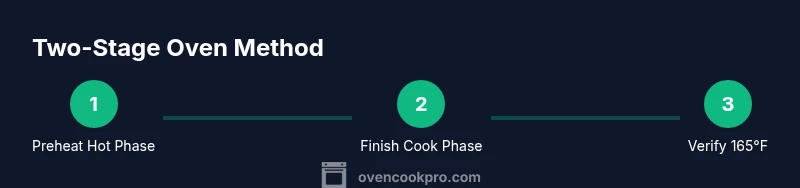
A two-stage approach balances interior heating with exterior browning. Begin with a higher oven temperature to quickly raise the internal temperature of the chicken, then reduce to a moderate temperature to finish cooking while allowing skin and exterior surfaces to crisp without overcooking the core. Typical guidance suggests starting around 425°F (220°C) for a short period, then moving to 350°F (175°C) for the remainder. If you’re cooking bone-in pieces, you may need a longer finishing phase to ensure all sections reach the safe internal temperature. Always monitor with a meat thermometer and avoid methods that leave portions under 165°F. This technique helps preserve moisture and texture when thawing isn’t an option.
Tools and Setup for Best Results
To maximize even cooking when starting from frozen, prepare a rimmed baking sheet, a wire rack (optional), and a reliable meat thermometer. Line the sheet with foil or parchment for easier cleanup, then place the rack on top to lift the chicken and promote air circulation. Pat chicken dry with paper towels before seasoning to help spices adhere and skin crisp. Use equal-sized pieces or cut thicker portions to similar thickness so they cook evenly. If you’re cooking a bone-in cut, be mindful of bones acting as heat conduits and adjust time accordingly. Finally, avoid opening the oven door frequently; each peek can drop oven temperature and extend total cook time.
Practical Step-by-Step Cooking Plan (Overview)
Starting with a solid plan helps ensure safety and flavor when cooking from frozen. Gather your tools, set up your tray, and preheat the oven to the higher heat range. Lightly oil and season the chicken, then place it in the oven on a rack if you have one. Bake for a short, hot phase to begin interior heating, then reduce to a steady temperature and continue cooking until a thermometer reads 165°F (74°C) in the thickest part. Rest briefly before serving to redistribute juices.
Time and Temperature Guidelines (General)
Because every oven differs, rely on temperature rather than a rigid time clock. Use a thermometer to confirm doneness at the thickest spot. Start with higher heat to speed up interior heating, then finish with a controlled, moderate heat to develop color and texture. If you’re cooking multiple pieces, ensure they are in a single layer with space around each piece for air flow. Do not cut into the meat to check doneness; this will release juices and raise the risk of dryness. Always wash hands and utensils after handling raw poultry, and keep raw meat separate from ready-to-eat foods.
Common Mistakes and How to Avoid Them
Common mistakes include crowding the pan, which traps steam and leads to steaming rather than roasting, and relying on color alone to judge doneness. Always use a thermometer and never rely on pinkness in the meat. Skipping the final rest can result in a drier bite. Another pitfall is starting with too low a temperature, which can prolong cooking and increase the chance of uneven heating. To avoid these issues, space pieces evenly, monitor the internal temperature, and adjust heat as you go.
Thawing vs. Cooking Frozen: When to Thaw Instead
While cooking from frozen is convenient, thawing before cooking improves texture and evenness for certain cuts. If you have time, thaw in the refrigerator overnight or use cold water thawing for faster results. Thawed chicken cooks more uniformly and can reduce total cooking time in some ovens. If you opt to thaw before cooking, adjust time and temperature accordingly and ensure the surface dries well to promote browning.
Flavor and Serving Ideas for Frozen-Chicken Dishes
Seasoning and finishing sauces can elevate frozen-chicken dishes. After the initial hot phase, brush with a glaze or rub to add depth. Pair with roasted vegetables, whole grains, or a fresh salad to balance texture. If you enjoy garlic and herbs, apply a quick rub of olive oil, minced garlic, and dried herbs before the final cook. A squeeze of lemon after resting brightens flavors and helps counter any slight dryness from freezing.
Safety Checklist Before Serving
Before serving, confirm the internal temperature reached 165°F (74°C) in the thickest portion. Inspect for even browning and ensure there are no cold spots. Wash hands, utensils, and surfaces used for raw poultry. If any piece appears undercooked, continue cooking in small increments, checking again with a thermometer. Proper handling throughout the process minimizes food-safety risks and improves overall results.
Tools & Materials
- rimmed baking sheet(Large enough for chicken in a single layer)
- oven-safe wire rack(Promotes air flow and even browning)
- meat thermometer(Probe into thickest part without touching bone)
- tongs(For safe turning and handling)
- paper towels(Pat dry before seasoning)
- aluminum foil(Optional for easy cleanup)
Steps
Estimated time: 60-90 minutes
- 1
Preheat oven and prepare tray
Preheat oven to the higher heat range (around 425°F / 220°C). Line a rimmed baking sheet with foil or parchment and place a rack on top if available. This setup promotes air circulation and easier cleanup.
Tip: Preheating ensures interior heat starts immediately when the chicken goes in. - 2
Pat dry and season the chicken
Pat the frozen chicken pieces dry as much as possible using paper towels. Season lightly with salt, pepper, and any dried herbs or a rub that sticks to cold surfaces. Seasoning after the initial heating phase can help adherence during the finish.
Tip: Drier surfaces promote browning and reduce steam during the bake. - 3
Place on rack and tray
Arrange chicken in a single layer on the rack over the sheet. Do not overcrowd; space between pieces allows hot air to circulate for even cooking.
Tip: Arrange bone-in pieces toward the thicker areas to ensure even heat distribution. - 4
Start with a hot phase
Bake in the hot phase for a short period to begin interior heating and browning on the outer surfaces.
Tip: Avoid removing the chicken early; the goal is to start interior warming. - 5
Reduce heat and continue cooking
Lower the oven to a steady, moderate temperature and continue cooking until the thickest part reaches 165°F (74°C).
Tip: Use the thermometer for periodic checks rather than relying on time alone. - 6
Check doneness with thermometer
Insert the thermometer into the thickest portion without hitting bone to confirm 165°F (74°C). If not reached, return to the oven and test again after a short interval.
Tip: Avoid checking too early; false readings lead to undercooked meat. - 7
Rest briefly before serving
Let the chicken rest for 3-5 minutes after removing from the oven to allow juices to redistribute.
Tip: Resting improves juiciness and helps with even slices. - 8
Handle leftovers safely
Cool leftovers promptly, store in shallow containers, and refrigerate within two hours. Reheat to 165°F (74°C) before consuming again.
Tip: Label and date containers to track freshness. - 9
Clean up properly
Wash cutting boards, knives, and surfaces with hot, soapy water after handling raw poultry to avoid cross-contamination.
Tip: Sanitize countertops and utensils to prevent lingering bacteria.
Questions & Answers
Can I cook frozen chicken in the oven without thawing?
Yes, you can, but it takes longer and requires careful temperature monitoring to reach 165°F (74°C) in the thickest part. Use a thermometer and avoid undercooking.
Yes, you can bake frozen chicken, but you must check doneness with a thermometer to reach 165 degrees Fahrenheit in the thickest part.
What internal temperature should I aim for when cooking frozen chicken?
The safe internal temperature for cooked chicken is 165°F (74°C) in the thickest portion, regardless of whether it started frozen or thawed.
Aim for 165 degrees Fahrenheit in the thickest part to ensure safety.
Should I preheat the oven when cooking from frozen?
Yes, preheating helps the interior heat faster and supports more even cooking. Start with a higher heat for the initial phase, then reduce for finishing.
Preheat to get a quick start, then finish at a steady temperature.
Can I marinate frozen chicken in the oven?
Marinades are most effective when applied during or after the initial thawing or warm phase. From frozen, dry rubs tend to adhere better after the first heat burst.
Marinades work best after thawing; from frozen, apply a dry rub you can build into the surface during the initial hot phase.
What are signs of unsafe cooking and what should I do?
If the meat remains under 165°F after multiple checks, continue cooking and re-check. discard any chicken with off odors, slime, or a slimy texture.
Check the temperature. If in doubt, keep cooking until it hits 165°F and discard if it smells off.
Watch Video
Main Points
- Preheat and prepare a dry, spaced setup for even cooking
- Use a thermometer to verify 165°F (74°C) doneness
- Avoid crowding; air flow is critical to browning
- Rest meat briefly to improve juiciness