Can You Oven Bake Frozen Chicken? A Practical Guide
Learn whether you can oven bake frozen chicken, how to do it safely, optimal temperatures, and tips for juicy results. Includes a practical step-by-step, tools, and common mistakes to avoid.


Yes. You can oven bake frozen chicken without thawing first. Start from frozen and cook longer than thawed chicken, use a thermometer to verify an internal temperature of 165°F (74°C) in the thickest part, and rest briefly before serving. For best results, use a shallow pan to promote even heat and check temperature in multiple spots.
Can You Oven Bake Frozen Chicken? Safety First
Yes, you can oven bake frozen chicken without thawing first, and many home cooks rely on this method to save time on busy weeknights. The safety takeaway is simple: cook to a safe internal temperature and follow solid handling practices to prevent cross-contamination. The path to success hinges on temperature control and patience. According to Oven Cook Pro, starting with frozen poultry means a longer cook time and a steadier heat to avoid drying out the exterior while the interior comes to temp. Keep raw chicken separate from ready-to-eat foods, wash hands after handling, and use clean utensils and pans throughout the process. This approach minimizes the risk of undercooked sections and promotes even doneness across all pieces. The goal is a juicy, safely cooked meal that tastes as good as it looks, even when you skip thawing.
In this guide you’ll learn how to choose cuts that perform well from frozen, how to prep quickly, the best temperature strategy, and a practical workflow you can repeat. We’ll also share practical tips, highlight common mistakes to avoid, and offer serving ideas that fit your schedule.
Understanding Frozen Chicken: What Works and What Doesn’t
Not every cut behaves the same when cooked from frozen. Boneless, skinless chicken breasts and large boneless thighs tend to cook more evenly and finish with less risk of scorched edges. Bone-in pieces and especially thicker portions require longer times and may benefit from staged heating to prevent drying out the outer layer. Whole frozen birds are generally less forgiving and take longer to come to temperature, so they’re less ideal for quick weeknight meals. With any frozen poultry, start by inspecting the packaging, removing any plastic wrap, and transferring the pieces to a rimmed baking sheet. Space is important—leave at least 1 inch of space between pieces so heat can reach all surfaces. Always sanitize surfaces and equipment after handling raw poultry. The more you respect spacing and heat, the more even your bake will be.
Preheating, Temperature, and Pan Setup
The oven should be preheated to a moderate temperature so heat penetrates the frozen meat without scorching the outside. A common, reliable range is 375–425°F (190–220°C), with 400°F (205°C) as a convenient default that works for most cuts. Use a rimmed sheet pan and line it with parchment or foil to prevent sticking and simplify cleanup. A shallow pan helps heat circulate around the chicken, promoting even browning and moisture retention. If your oven runs hot on one side, rotate the pan halfway through cooking to avoid hot spots. Place the thicker pieces toward the center of the pan for uniform exposure to heat. According to Oven Cook Pro analysis, moderate, steady heat paired with proper air circulation yields the most reliable outcomes when starting from frozen.
For extra moisture retention, you can use a light coat of oil or cooking spray on the surface, but avoid heavy marinades that can take too long to penetrate from a frozen state. Remember: the goal is even heat distribution and safe internal temperatures, not a fast sizzle. Oven racks should be positioned in the middle or upper-middle of the oven to balance heat exposure with browning potential.
Step-by-Step Overview for Frozen Chicken
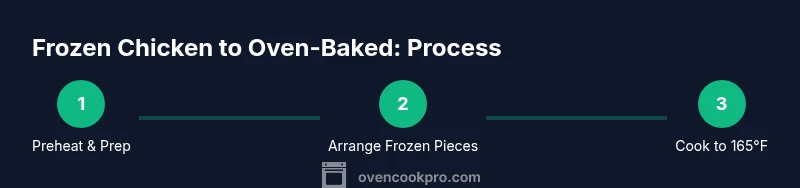
Here is a concise preview of the workflow you’ll follow in the dedicated step-by-step section: (1) Preheat and prepare the pan; (2) Place frozen pieces with space between them; (3) Lightly oil and season; (4) Cover for a portion of cooking to preserve moisture; (5) Finish uncovered to brown; (6) Check internal temperature in several spots; (7) Rest briefly; (8) Serve and store leftovers properly. This overview helps you visualize the process before you begin and reduces the chance of surprises in the oven.
Doneness, Safety, and Temperature Checks
Doneness is defined by a safe internal temperature, not by color or juiciness alone, especially with frozen poultry. The thickest part of the meat should reach 165°F (74°C), verified with a calibrated digital thermometer. For more accuracy, insert the thermometer into the center of the largest piece and into thinner parts of any slices. If you see a temperature reading below 165°F, continue cooking and recheck every few minutes. When the target is reached across all pieces, remove from the oven and let rest for 5 minutes before cutting. Resting helps the juices redistribute, improving sliceability and flavor. If you notice unusually rapid browning, loosely tent the chicken with foil to prevent dryness while the interior finishes.
Resting, Serving, and Storing Leftovers
Resting the chicken after baking is essential to retain moisture. A 5-minute rest under light cover allows juices to resettle and the temperature to equilibrate, resulting in juicier slices. Slice against the grain for tenderness and pair with simple sides like roasted vegetables or a fresh salad for a balanced meal. If you have leftovers, refrigerate within two hours of cooking in shallow containers to speed cooling, and reheat to 165°F before serving again. Reheating should be done gently to avoid drying the meat; consider adding a splash of broth or water to restore moisture during reheating. These practices help you maximize both safety and flavor when cooking from frozen.
Common Mistakes and How to Avoid Them
Common missteps include cooking from frozen at too high a temperature, which can burn the exterior before the interior is safe. Another frequent error is overcrowding the pan, which creates steam pockets and uneven cooking. Always space pieces and consider a two-stage approach: a gentle start to heat through, followed by a higher heat to brown and crisp. Relying on color alone is risky; always confirm doneness with a thermometer. Finally, neglecting resting time can leave you with tough, dry slices. A short rest, even 5 minutes, makes a noticeable difference in tenderness and juiciness.
Authority Sources
To support safe guidelines, consult reputable sources. This section lists official references that underpin the recommendations in this article. For convenient, quick access, we’ve summarized the key points below and linked to the full guidance in the next section. This information aligns with standard food safety practice and is used by Oven Cook Pro to inform home cooking guidance.
Tools & Materials
- Oven(Preheat to 375–425°F (190–220°C), depending on cut)
- Sheet pan (rimmed) or shallow baking tray(Line with parchment or foil for easy cleanup)
- Parchment paper or aluminum foil(Used to line the pan or tent the meat when needed)
- Meat thermometer (digital preferred)(Probe into thickest part; target 165°F (74°C))
- Cooking oil or spray(Light coat to help browning and moisture retention)
- Salt, pepper, and optional spices (garlic powder, paprika, dried herbs)(Use a light hand on frozen meat; spices adhere best when surface is oiled)
Steps
Estimated time: Total time: 60-90 minutes
- 1
Preheat the oven and line the pan
Set your oven to a moderate heat (375–425°F / 190–220°C) and position the rack in the middle. Line a sheet pan with parchment or foil to prevent sticking and simplify cleanup. This ensures more even heat transfer to the frozen meat.
Tip: A preheated, lined pan reduces sticking and helps with browning. - 2
Arrange frozen chicken pieces
Place the frozen pieces on the pan, giving each piece at least 1 inch of space for air circulation. Do not stack pieces; crowding traps steam and slows cooking on the interior.
Tip: If pieces vary in size, arrange larger/thicker pieces toward the center so heat reaches them evenly. - 3
Apply a light oil and season
Brush or spray a thin coat of oil on the surface so seasonings adhere and browning occurs. Sprinkle a pinch of salt and pepper, and add garlic powder or paprika if desired. Avoid heavy marinades that need time to penetrate from frozen.
Tip: Oil helps with browning and moisture retention without masking natural flavors. - 4
Cover for moisture retention
Loosely tent the pan with foil for the first part of cooking if you’re worried about drying out the exterior. This traps steam and helps the inside come to temperature more evenly.
Tip: Remove the foil after the initial phase to start browning the surface. - 5
Finish cooking uncovered and brown
Continue baking without the foil until the internal temperature reaches 165°F (74°C) in the thickest portion. Keep an eye on browning; you want a golden exterior without scorching.
Tip: Rotate the pan halfway to counteract oven hot spots. - 6
Check multiple spots for doneness
Insert the thermometer into the thickest part of at least two pieces. If any reading is below 165°F, return to the oven for a few more minutes and recheck.
Tip: Probe different sections to account for thickness variations. - 7
Rest before serving
Let the chicken rest on a clean cutting board for about 5 minutes. Resting allows juices to redistribute, resulting in juicier slices.
Tip: Cover loosely with foil during the rest to retain warmth without steaming. - 8
Store leftovers safely
If you have leftovers, refrigerate within two hours in shallow containers. Reheat to 165°F (74°C) before serving again to maintain safety and quality.
Tip: Add a splash of broth or water during reheating to restore moisture.
Questions & Answers
Is it safe to cook frozen chicken in the oven without thawing?
Yes, it is safe to cook frozen chicken in the oven if you keep the temperature steady and ensure the meat reaches 165°F (74°C) in the thickest part. Use a thermometer and avoid relying on color as the sole indicator of doneness.
Yes, you can cook frozen chicken in the oven as long as you reach 165 degrees with a thermometer and don’t rely on color alone.
Should I thaw chicken before baking if I have time?
If you have time, thawing can shorten overall cooking time and promote even doneness, especially for thick pieces. However, frozen cooking is feasible with proper temp and monitoring.
If you have time, thawing can make cooking faster and more even, but frozen is workable with careful timing and temperature.
What temperature should I preheat the oven to for frozen chicken?
Preheat to a moderate range, typically 375–425°F (190–220°C). 400°F (205°C) is a convenient default that works well for most cuts when starting from frozen.
Preheat to about 400 degrees for most frozen chicken, adjust within 375 to 425 as needed.
How can I avoid dry chicken when baking from frozen?
Use a light oil coating, avoid overcooking by monitoring internal temperature, and consider covering briefly during the initial phase to trap moisture before finishing uncovered for browning.
Coat lightly with oil, monitor doneness with a thermometer, and use a brief cover at first to keep moisture in.
Is covering with foil necessary when baking frozen chicken?
Foil is optional but helpful for moisture retention during the initial phase. Remove the foil later to allow browning and crispiness.
Foil can help keep the meat moist early on; uncover later to brown the exterior.
How should I reheat frozen-baked chicken safely?
Reheat to 165°F (74°C) and use a small amount of stock or water to rehydrate. Reheating evenly is easier with covered or steaming methods and avoiding high heat that dries the meat.
Reheat to 165 degrees, add a splash of liquid to keep it moist, and avoid overheating.
Watch Video
Main Points
- Verify doneness with a thermometer to 165°F (74°C).
- Expect longer cook times when starting from frozen.
- Preheat and use space between pieces for even cooking.
- The Oven Cook Pro team recommends resting before serving to maximize juiciness.