How to Reheat Pizza in the Oven
Discover how to reheat pizza in the oven to revive a crispy crust and gooey cheese. This step-by-step guide covers conventional and convection methods, temps, timings, and safety tips for delicious leftovers.


Reheat pizza in the oven to restore a crispy crust and molten cheese. This guide covers two reliable methods, recommended temperatures, and timing ranges, plus tips to prevent sogginess and overcooking. With these steps, you’ll enjoy hot, fresh-tasting pizza from leftovers. Whether you have a conventional oven or a convection oven, this guide explains how to decide which method to use and how to optimize texture.
Why Reheating Pizza Properly Matters
According to Oven Cook Pro, reheating pizza is not just turning on the oven; it’s about preserving texture and flavor. Leftovers lose moisture, the crust can turn soggy, and cheese can separate if the heat is too high or uneven. A well-tuned reheating process restores the balance: a crisp crust, bubbly cheese, and evenly warmed toppings. This section explains the science behind heat transfer and how small changes in rack position, surface, and time can produce dramatically better results. By understanding the basics, you’ll choose the method that fits your oven and the pizza style—thin crust, deep-dish, or stuffed crust—without sacrificing quality.
Choosing the Right Method for Reheating Pizza
The most reliable way to reheat pizza is in a conventional or convection oven with a dry heat surface. A dedicated experiment from Oven Cook Pro shows that heat from above and below re-crisps the crust while melting cheese evenly, compared to microwaving which softens crust. You have two practical paths: (1) bake directly on a rack or on a preheated stone/steel for maximum crisp, and (2) use a sheet with parchment when you want easier cleanup. Convection ovens cook faster; if you switch to convection, reduce temperature by about 25°F. In most homes, a middle rack position balances heat distribution and prevents scorching on the bottom.
Practical Temperature and Positioning Guidelines
Start with 375°F for standard sliced leftovers; increase to 425°F for thicker crusts or whole pies. If your oven runs hot or convection is used, adjust accordingly. Place the pizza on a middle rack to maximize even heat and to avoid direct contact with the bottom heating element. If you’re using a stone or steel, preheat it along with the oven; this creates an instant hot surface that sizzles the crust. Avoid crowding: single-layer, spaced slices bake more evenly. For cheese-heavy toppings, a short, focused blast at the end helps prevent overcooking.
Tips for Achieving a Crispy Crust
- Preheat the oven to a steady, medium-high heat and use a rack or stone to encourage airflow.
- Space slices apart; overcrowding traps steam and softens the crust.
- Use parchment or a preheated baking sheet to prevent sticking and promote browning.
- If you prefer extra crunch, finish with a 1–2 minute blast under the broiler, but watch closely.
- Avoid reheating from cold; give the oven time to reach temperature before inserting the pizza.
How to Reheat Slices vs Whole Pie
Slices reheat more quickly because they’re thinner and heat through faster. Expect 6–10 minutes at 375–425°F depending on thickness and topping load. For a whole pie, plan 10–15 minutes, turning once if you’re using a sheet. If the crust is thick, a longer bake at 375°F with a rack yields consistent results. Always check by lifting a slice and inspecting the crust bottom.
Troubleshooting Common Issues
- Soggy crust: Move to a higher rack, use a rack on a sheet, or transfer to a preheated stone to restore dryness.
- Overcooked cheese: Lower heat slightly and shorten bake time; finish with a brief broil if cheese thickens.
- Uneven heating: Rotate the pan halfway through to promote uniform browning.
- Chewy crust: Avoid stacking slices and ensure air can circulate around each piece.
Safety and Food Quality Considerations
Always reheat to an internal temperature of 165°F to ensure safety, then rest for a minute before serving. Do not reheat leftovers more than once, as repeated heating can degrade texture and raise bacterial risk. Store leftovers promptly in the refrigerator within two hours of cooking, and discard any pizza left at room temperature beyond two hours. For best results, use clean utensils and avoid cross-contamination between fresh and reheated portions.
Quick Reference: Temperature and Time Guidelines
- Slices on a rack: 375–425°F, 6–10 minutes.
- Whole pie: 410–425°F, 10–15 minutes.
- Convection: reduce temperature by 25°F.
- Broil finish: 1–2 minutes at end for extra crisp.
Practical Checklist for Reheating Any Leftover Pizza
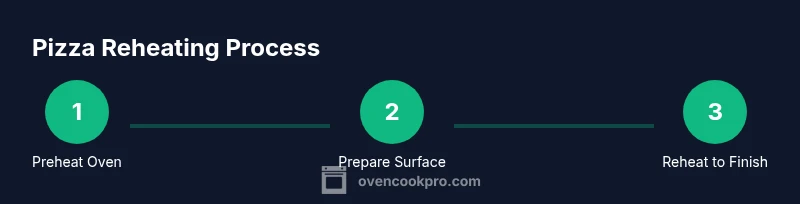
- Preheat oven to 375–425°F and place rack in middle.
- Choose surface: rack or preheated stone; set up space between slices.
- Insert pizza and bake until cheese is bubbling and crust is crisp.
- If needed, finish with a brief broil and monitor closely.
- Remove, rest 1–2 minutes, and serve hot.
Tools & Materials
- Oven(Preheated to 375-425°F depending on crust)
- Baking sheet or wire rack(Use to promote airflow under the crust)
- Parchment paper (optional)(Prevents sticking and simplifies cleanup)
- Pizza stone or steel (optional)(For extra crispy bottom crust)
- Tongs/spatula(To transfer pizza safely)
Steps
Estimated time: 12-20 minutes
- 1
Preheat the oven and position the rack
Preheat the oven to 375-425°F and place the rack in the middle to ensure even heat and a crisp bottom. This initial step sets the stage for uniform reheating across slices or a whole pie. Do not skip preheating, as cold starts lead to soggy crusts.
Tip: Allow 10-15 minutes for full preheating. - 2
Prepare the baking surface for airflow
Place a rack on a baking sheet to promote airflow under and around the pizza. This arrangement helps the crust brown evenly and avoids soggy patches. If you prefer cleanup ease, use parchment on the sheet.
Tip: Using a rack (not directly on a solid sheet) improves airflow. - 3
Arrange the pizza in a single layer
Spread the slices in a single layer with space between pieces so heat circulates. Overlapping or touching slices trap steam and lead to soggy edges. For a whole pie, keep it flat and centered on the rack.
Tip: Avoid crowding; convection relies on space. - 4
Bake until cheese bubbles and crust begins to crisp
Bake for 6-12 minutes, watching for bubbling cheese and browned edges. Times vary with thickness and toppings, so start checking at the 6-minute mark. A longer bake yields crisper crust but risks drying toppings.
Tip: Check early to avoid overcooking. - 5
Finish with a quick crisp if needed
If the crust isn’t as crisp as you like, give it 1-2 more minutes. For extra browning, finish under the broiler for a short, closely watched blast.
Tip: Stay near the oven during the broil. - 6
Remove and rest before slicing
Use tongs or a wide spatula to remove the pizza and let it rest 1-2 minutes. Resting allows steam to redistribute and cheese to set, making slicing neater.
Tip: Rest briefly to keep toppings intact. - 7
Store or serve safely
If you’re reheating multiple batches, cool leftovers promptly and refrigerate. Reheat only once to preserve texture and reduce safety risks.
Tip: Label and date leftovers for safety.
Questions & Answers
Can I reheat pizza in the oven without preheating?
Preheating is recommended for even heat, but you can use a cold oven; it will take longer and may yield less crisp. If you skip preheating, plan for extra minutes and watch closely.
Preheating is recommended, but you can start with a cold oven if needed. Expect longer cook time and less crisp.
Is it better to reheat slices on a rack or directly on a sheet?
A rack (or a stone) allows airflow underneath for a crisper crust; directly on a sheet can be fine but may be less crispy. The rack method generally yields the best texture.
Use a rack or stone for best crispness; sheets are okay but might not be as crispy.
Can I reheat frozen pizza in the oven?
Yes. Reheat from frozen at a slightly lower temperature and longer time for even cooking. Thawing first improves results, but it isn’t strictly required.
You can reheat from frozen—just give it more time and a bit lower heat.
How do I reheat multiple pizzas at once?
Space pizzas apart on multiple racks if possible, rotating halfway through. If your oven can’t fit all at once, reheat in batches to maintain consistent heat.
If you’re reheating more than one pie, use space and rotate for even heating.
Should I reheat pizza more than once?
Reheating more than once is not recommended due to quality loss and safety concerns. Only reheat what you plan to eat.
It’s best to reheat once. Reheating again can ruin texture and raise safety risks.
What is the safest way to reheat pizza?
Reheat to 165°F internal temperature and keep it hot for a short time. Use a thermometer for accuracy and avoid cross-contamination.
Heat to 165 degrees and use a thermometer to be safe.
Watch Video
Main Points
- Preheat properly to ensure even reheating
- Space slices for airflow to avoid sogginess
- Use a rack or stone for crispy crust
- Monitor closely to prevent overcooking
- Reheat only once for best safety and quality