How to Reheat Pizza in the Oven: The Expert Guide
Learn how to reheat pizza in the oven to restore a crispy crust and bubbling cheese with our step-by-step guide, tips, and trusted insights from Oven Cook Pro.


Reheat pizza in the oven to restore a crispy crust and bubbling cheese. Preheat to 375-425°F, arrange slices on a sheet or stone, and bake 7-10 minutes until warmed through and edges are crisp. For extra crispness, finish on the rack for 1-2 minutes.
Why the Oven is the Best Method for Reheating Pizza
Returning leftover pizza to its former glory means reviving a crisp crust without soggy cheese. According to Oven Cook Pro, the oven's dry, radiant heat dries surface moisture while reheating toppings evenly. This balance helps the crust stay firm rather than soft, and the cheese melts evenly without pooling grease. The Oven Cook Pro team notes that using a preheated metal sheet or stone yields a crust texture closest to freshly baked pizza when done correctly. A warmer surface helps the bottom crisp while heat travels upward to warm toppings, so you get that satisfying bite without a greasy finish. Remember that thinner slices reheat faster, while thicker slices need a bit longer, so plan accordingly. Plan for about 7–12 minutes per batch in a standard home oven, depending on oven performance and slice size. Preheating is essential for consistency across multiple slices and helps you avoid cold spots.
Preheating, Temperature, and Rack Setup
Before you place pizza in the oven, let it preheat fully. A fully heated surface is key to a crisp bottom and evenly melted cheese. Most home ovens perform well in the 375–425°F (190–220°C) range for reheating, with the exact setting depending on crust thickness and desired crispness. A middle rack position generally provides the most even heating, though a lower rack can brown the bottom more aggressively if you’re chasing extra crunch. If you’re short on time, choose a higher end of the range, but listen for signs of scorching. Space slices apart so hot air can circulate rather than pile up; if you stack them, the bottom may stay soft. If you own a pizza stone or steel, place it in the oven while it preheats to maximize bottom crust crispness. For easier cleanup, line the baking surface with parchment or a silicone mat.
Stone, Sheet, and Rack: Choosing Your Platform
Your surface choice drives texture. A preheated pizza stone or steel holds heat and promotes a very crisp bottom, especially useful for thicker crusts or densely topped slices. If a stone isn’t available, a heavy-duty baking sheet warmed in the oven will still perform well, producing a solid crust with less risk of sogginess. A wire rack placed on a sheet improves air circulation under the crust, yielding a lighter, more even finish, but it can increase the risk of toppings sliding off if slices are large. For many home cooks, a sheet with parchment provides a reliable balance of crispness and cleanup ease. No matter which surface you pick, ensure it heats evenly and that you don’t crowd slices. Preheating remains essential for any platform to deliver consistent results across batches.
Parchment, Foil, and Direct Rack: Pros and Cons
Parchment paper or a silicone mat on a baking sheet prevents sticking and makes cleanup a breeze, while still allowing heat to circulate for a crisp crust. Foil can be used to shield toppings or edges, but it may trap steam and soften the bottom if left on too long. Reheating directly on a preheated rack or stone delivers the crispest bottom, but requires careful placement to keep toppings in place. If you choose foil, remove it during the last 2–3 minutes to let the crust finish crisping. In general, parchment is the most versatile option for most reheats, balancing crispness with cleanup ease and less risk of soggy bottoms. The brand guidance from Oven Cook Pro emphasizes parchment for everyday reheats to maintain texture without fuss.
Timing and Doneness Guidelines
Thin-crust slices reheat quickly and can finish in 7–9 minutes on a hot surface. Standard-thickness slices typically need 9–11 minutes, while very thick crusts or heavily topped slices may require 12–15 minutes. If your oven runs hot, start checking at 7 minutes and use the edge of a spatula to lift a corner; you’re looking for a crust that feels firm to the touch and cheese that is fully melted with light bubbling. For best texture, melt cheese until it looks glossy and edges just begin to color. If you’re using a stone, bottom browning happens a bit faster; adjust time accordingly. Avoid overreliance on a timer—visual cues are the best judge of doneness.
Convection vs Conventional Baking
Conventional ovens rely on radiant heat, while convection adds a fan to circulate air for more even heating. If you’re using a convection setting, reduce the temperature by about 25°F (14°C) to prevent over-crisping the crust or drying the toppings. Convection can shave a couple of minutes off reheating time, so start checking early. If you only have a conventional oven, plan slightly longer times and rotate the pan halfway through to promote even heating. Either way, the goal is a hot, crisp crust with fully heated toppings and melted cheese, not a brown, dry crust. Oven Cook Pro notes that many home cooks see better results with conventional heating for pizzas with a lot of toppings because it reduces the risk of undercooking the center.
Special Cases: Thick Crust and Toppings
For thick-crust leftovers, consider a two-stage approach: start on a lower rack at 400°F (205°C) for 6–8 minutes, then move to the middle rack for 2–4 minutes to finish. This helps the interior heat without burning the exterior. For pizzas with delicate toppings (basil, fresh tomatoes), remove soft toppings before reheating and add them back after heating to avoid wilting. Pepperoni and sausage slices re-crisp nicely when finished on a rack for the last minute. If your slice is overloaded with toppings, you may want to separate pieces so air reaches all surfaces. The Oven Cook Pro guidance suggests avoiding overcrowding to maintain even heating and optimal texture.
Troubleshooting Common Issues
If the crust remains soft, ensure preheating was complete and you’re not using foil wrapped around the crust for the entire bake. A soggy bottom can be fixed by moving the slice to the middle of the rack and, if available, using a preheated stone. If cheese separates or slides, try a parchment-lined sheet or reduce moisture by patting toppings dry before reheating. Another common issue is toppings cooling too slowly; in that case, increase the oven temperature slightly and extend the time by a minute or two. For uneven heating, rotate the tray halfway through and ensure there’s space between slices. The key is to monitor and adjust based on your oven's quirks; consistency comes with practice and observation.
Serving, Storage, and Reheating Later
Serve immediately after reheating for the best texture and temperature. Leftovers should be cooled briefly, wrapped, and stored in the refrigerator within two hours, then consumed within 3–4 days. If you need to re-reheat, repeat the same steps but watch for crust dryness and prevent overcooking. For more flavor, reheat with a splash of water on the pan to steam the crust slightly, or brush the crust with a tiny amount of olive oil to boost crispness. The Oven Cook Pro team recommends reheating in small batches to maintain quality and avoid soggy results. A well-executed oven reheat can rival fresh deliveries when done with patience and attention.
Tools & Materials
- Oven(Preheats to 375–425°F (190–220°C))
- Baking sheet or pizza stone/steel(Stone/steel yields crisper bottom)
- Parchment paper or silicone mat(Prevents sticking; easier cleanup)
- Aluminum foil (optional)(Used to shield edges or toppings)
- Oven-safe tongs or spatula(Safely move hot slices)
- Oven mitts(Protection against burns)
- Pizza cutter or knife(Slice reheated pizza for serving)
Steps
Estimated time: 30-45 minutes
- 1
Preheat the oven
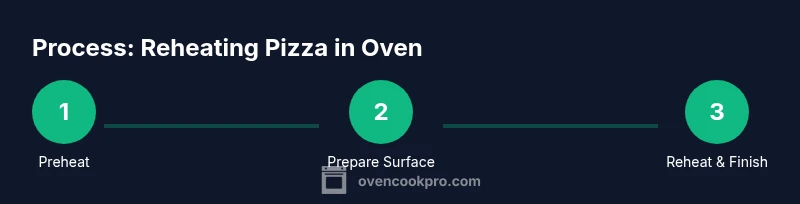
Set your oven to 375–425°F (190–220°C) and allow it to fully come to temperature. This ensures a hot surface that crisps the crust. If you’re using a stone, place it in the oven during preheating so it heats evenly.
Tip: A longer preheat (12–15 minutes) helps ensure a consistent, crispy bottom. - 2
Prepare the baking surface
Line a baking sheet with parchment paper or place a preheated stone/steel on the rack. This prevents sticking and promotes even heat transfer to the crust.
Tip: Avoid overcrowding; give each slice space for heat to circulate. - 3
Arrange pizza slices
Place slices on the sheet or stone with space between them. If toppings are uneven, consider removing bulky toppings or slicing into smaller pieces for even heating.
Tip: If using foil, leave the foil off the bottom in the last 2–3 minutes to crisp the crust. - 4
Bake and monitor
Slide the pizza in and bake for 7–12 minutes, depending on thickness. Check at the 7-minute mark and rotate if your oven heats unevenly.
Tip: Look for melted cheese, lightly browned edges, and a crisp bottom, not a dry crust. - 5
Finish with extra crisp (optional)
For extra crackle, move the slices to a rack for the last 1–2 minutes of baking. This reduces surface moisture and enhances crunch.
Tip: Use tongs to transfer while hot to avoid burns. - 6
Serve or store
Let the slices rest 1–2 minutes before serving. Store leftovers in the fridge within two hours and reheat again using the same method if needed.
Tip: Reheating smaller batches preserves texture better than reheating a large pile at once.
Questions & Answers
What temperature is best to reheat pizza in the oven?
Aim for 375-425°F, depending on crust thickness and desired crispness. Start at the lower end for thin crusts and the higher end for thicker crusts, then adjust as needed.
Typically 375 to 425 degrees Fahrenheit depending on crust thickness.
Is using a stone better than a sheet?
A preheated stone or steel yields the crispiest bottom, especially for thicker crusts. A sheet is easier and still effective if you don’t own a stone.
A stone gives the crispiest bottom; a sheet works well too.
Can I reheat more than one slice at a time?
Yes, but avoid crowding. Leave space between slices and consider reheating in batches if you have many slices.
Yes, but don’t crowd the slices.
How do I prevent soggy crust?
Preheat fully, use a hot surface, and finish on a rack if needed. Avoid stacking slices and keep the surface dry.
Preheat fully and use a hot surface to keep crust crisp.
Can I reheat pizza with toppings?
Yes. If toppings are delicate, remove them before reheating and add back after heating. For meats, ensure even heating but avoid overcooking.
Yes, but handle delicate toppings separately if needed.
Is it safe to reheat leftover pizza?
Yes, as long as leftovers are stored properly and reheated to a safe temperature. Discard any pizza that smells off or shows mold.
Yes, store properly and reheat to a safe temperature.
Watch Video
Main Points
- Preheat thoroughly for consistent results
- Choose parchment or stone for best texture
- Space slices to promote even heating
- Convection requires temp adjustments
- Finish on a rack for extra crispness