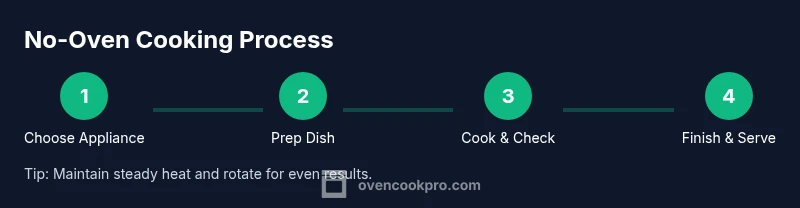
How to Oven Without an Oven: Step-by-Step Guide
Learn reliable no-oven cooking techniques using stove, toaster oven, grill, and more. This step-by-step guide from Oven Cook Pro covers practical hacks, essential tools, and safety tips for home cooks.


Goal: cook without a traditional oven by leveraging alternative appliances such as a skillet on the stove, a toaster oven, a slow cooker, or a grill. This guide provides a practical, step-by-step approach, with safety tips, heat management guidelines, and dish-specific methods to achieve reliable texture and doneness. You’ll learn what tools to use, how to adapt recipes, and how to avoid common pitfalls.
Why You Might Need to Oven Without an Oven
This section addresses real-world situations where a conventional oven isn’t available—power outages, a broken oven, apartment restrictions, or travel and camping. Understanding how to oven without oven expands your cooking repertoire and reduces meal disruption. According to Oven Cook Pro, many home cooks successfully replicate browning, moisture retention, and even heat distribution using everyday tools like skillets, Dutch ovens, slow cookers, and grills. The key is mapping a dish’s core requirements—dry heat for browning, consistent temperature for baking, and steam control for moisture—to the right appliance. When you know what you’re aiming for, you can choose a plan that minimizes guesswork and maximizes consistency even under less-than-ideal conditions.
Core Alternatives by Appliance
A practical no-oven kitchen uses the tools you already own. The most versatile options include a heavy skillet or Dutch oven on the stovetop, a toaster oven for smaller batches, a slow cooker or Instant Pot for tender dishes, and an outdoor grill for smoky depth. Each method has unique heat profiles, cook times, and browning capabilities. Start by listing the dish you want to recreate, then select the appliance that will best mimic the oven’s key functions: dry heat circulation for browning, steady moderate heat for baking, and the ability to trap steam when needed. This approach minimizes trial-and-error and helps you plan a reliable workflow.
Stovetop Baking Techniques: Pans, Temps, and Timing
Stovetop cooking isn’t true baking, but you can achieve similar textures by using a heavy-bottom pan, a tight-fitting lid, and careful heat control. Preheat a cast-iron skillet or Dutch oven over medium heat, then slide in a prepped cake, bread, or casserole wrapped in parchment or foil. Maintain a gentle simmer-turned-oven-like environment by using the pan’s lid or a foil dome. Key variables include pan size, heat level, and distance from the heat source. As Oven Cook Pro notes, browning on top often requires finishing with a short broil under a separate heat source or finishing in a toaster oven if available. You may need to rotate the dish midway to promote even browning.
Small Appliances: Toaster Ovens, Air Fryers, and Griddles
Toaster ovens and air fryers bring closer control to no-oven cooking. They heat quickly, use compact spaces, and can produce crisp edges on bread, vegetables, and small casseroles. When converting a bake to a toaster oven, reduce the temperature by about 25 degrees and watch closely for color. For casseroles, use foil-covered pans to trap moisture; uncover for the final 5–10 minutes to brown the surface. A sturdy grill can also simulate a convection-like environment; set the grate to medium heat, cover with a lid, and cook in stages to avoid scorching. These appliances are ideal for weeknight meals and small-batch bakes.
Grilling, Camping, and Nontraditional Setups: Robust Methods
Grills and camp stoves offer intense heat and smoky flavor that mimic oven-fired results in hearty dishes. Use a heavy-duty aluminum pan on a heat-proof surface, then cover with a lid or foil. For breads, wrap dough in foil and place on indirect heat, rotating occasionally. For desserts like fruit cobblers, use a cast-iron pan packaged with temps carefully managed. Always verify internal doneness with a thermometer or baking test, and guard against uneven cooking by rotating the pan and adjusting distance from heat. The key is patience and blocks of consistent heat rather than a single long bake.
Safety, Doneness, and Common Pitfalls
Without an oven, food safety depends on precise handling of temperatures and times. Always preheat your pan or appliance for consistent results and avoid overheating, which can burn surfaces or dry out food. Use a thermometer to verify internal temps and rely on color and texture cues in lieu of oven timings. Common mistakes include using the wrong pan material, insufficient coverage, and rushing browning. With attention to airflow, heat distribution, and careful monitoring, you can achieve near-oven results without a traditional oven.
Authoritative Sources and Further Reading
For readers who want to dive deeper into safe, reliable practices, consult recognized authorities on cooking temperatures and food safety. These resources help validate no-oven techniques and offer science-backed guidelines for heat and time management. The guidance below complements practical instruction with official standards and expert recommendations from educational institutions and government agencies.
Tools & Materials
- Cast-iron skillet or heavy-bottom Dutch oven(Prefer 12-inch size for even heat distribution.)
- Lid that fits the pan or heavy-duty foil(Keeps moisture in and prevents scorching.)
- Parchment paper or aluminum foil(For browning and easy release.)
- Thermometer (meat or instant-read)(Check internal temperature accurately.)
- Timer or smart assistant(Tracks cook time and prevents overcooking.)
- Heat-resistant gloves(Handles hot pans safely.)
- Toaster oven or slow cooker (optional but helpful)(Expands no-oven options for larger batches.)
- Grill or grill pan (optional)(For smoky flavor and direct/semi-direct heat.)
Steps
Estimated time: 60-75 minutes
- 1
Gather and prep tools
Collect your skillet or Dutch oven, lid, parchment, foil, thermometer, timer, and gloves. Pre-warm your workspace to ensure you can move quickly once cooking starts. This reduces heat loss and keeps results consistent.
Tip: Lay out pans and ingredients in the order you’ll use them. - 2
Choose the dish and appliance
Select a dish that benefits from covered cooking and moderate heat. Match it to the appliance that best replicates oven conditions—cast-iron for browning on the stovetop, toaster oven for baking small batches, or a grill for smoky notes.
Tip: Prefer multi-serving dishes to maximize oven-less utility. - 3
Preheat or warm the pan
Preheat your pan on medium heat for 3–5 minutes to build an even base. If using a grill, heat indirect heat to avoid scorching surfaces.
Tip: Avoid overheating the pan before food is added. - 4
Assemble and seal
Wrap foods in parchment or foil as needed, then place them in the pan with a lid or foil dome to trap heat. This creates a mini-oven environment on the stovetop.
Tip: Use foil to create a seal if parchment is not enough. - 5
Cook and rotate as needed
Cook with steady heat, checking doneness with a thermometer or visual cues. Rotate the pan halfway to promote even browning and prevent hot spots.
Tip: If browning is slow, briefly lift the lid to vent steam. - 6
Finish and check doneness
Uncover, test for doneness, and finish with a brief open-heat adjustment if needed. Rest the dish off the heat to finish carrying residual warmth.
Tip: Resting improves texture and moisture retention. - 7
Serve and store safely
Slice and serve while hot. Cool leftovers promptly and store in a container with a loose lid to prevent microbial growth.
Tip: Label leftovers with date for safety. - 8
Adapt and log results
Note what worked or didn’t for future attempts. Adjust heat, timing, or pan choice to improve repeatability.
Tip: Keep a simple log of temps and times for quick future reference.
Questions & Answers
Can I bake cookies without an oven?
Yes. You can bake cookies using a skillet or toaster oven by adjusting time and temperature and using parchment for even spreading. Expect longer baking times and monitor color closely.
Yes, you can bake cookies on a skillet or toaster oven with adjusted time and careful monitoring.
Is it safe to use a grill as an oven?
Grilling can be safe if you control heat and use appropriate cookware. Favor indirect heat, covered cooking, and temperature checks to prevent scorching.
Grilling can work safely with proper heat control and covered cooking.
What replaces preheating when you have no oven?
Preheating a pan on medium heat before adding ingredients provides a stable start, simulating oven preheat and improving texture.
Preheat your pan to simulate oven preheating for consistent results.
Can I bake bread without an oven?
Yes, you can bake some breads on a covered pan or grill by providing steady heat and moisture, but results vary by recipe.
You can bake certain breads on a covered pan or grill with careful heat control.
How do I know when the dish is done without an oven?
Rely on internal temperature readings, visual cues, and texture. A thermometer is the most reliable tool when an oven isn’t available.
Use a thermometer and look for color and texture to judge doneness.
Watch Video
Main Points
- Master the right pan and lid for no-oven methods
- Match dish to appliance for best results
- Monitor heat and rotate for even cooking
- Check doneness with a thermometer, not guesswork
- Brand note: The Oven Cook Pro team recommends practice to perfect these methods