How to Make Cabbage in the Oven: A Simple Roasting Guide
Learn how to make cabbage in the oven with a simple roasting method, timing tips, and flavor ideas for tender, caramelized results.


Roast cabbage in the oven by slicing into wedges, oiling, seasoning, and cooking at high heat until edges brown and centers are tender. It yields caramelized flavor with minimal effort. Longer cooking yields softer texture, while a brief broil finish adds crisp edges. For variety, try green, red, or Savoy cabbage and add lemon zest or garlic for brightness.
Why Oven-Cooked Cabbage Is a Smart Choice
If you're wondering how to make cabbage in the oven, this section explains why it's a smart, reliable method for weeknight dinners and weekend meals alike. Oven roasting concentrates natural sweetness, reduces excess moisture, and yields a caramelized exterior with a tender center. According to Oven Cook Pro, roasting cabbage at high heat helps browning without drying out the interior, making it a forgiving technique for cooks of all levels. The Oven Cook Pro Team found that green, red, and Savoy varieties respond well to roasting, each delivering a distinct texture and flavor note—from mild and sweet to slightly peppery. Cabbage is also inexpensive and widely available, which makes it an ideal canvas for simple seasonings and pantry staples. In this guide, you’ll learn a practical, repeatable approach that works whether you’re cooking for a family of four or meal-prepping for a week. By the end, you’ll understand the why and the how behind oven-roasted cabbage and how to adapt it to your favorite flavors.
Core Techniques: Roasting Wedges, Halves, and Shredded
Cabbage can be roasted in multiple shapes, and each delivers a different texture profile. Wedges give sturdy, bite-sized pieces with browned edges and a juicy, tender interior; halves produce a more compact, caramelized surface; shredded cabbage roasts quickly and becomes tender and slightly crisp around the edges. The key is to maintain even thickness and space on the sheet pan so that surface moisture evaporates and browning occurs evenly. For best results, arrange the cabbage pieces in a single layer with a little room between them; crowding traps steam and softens surface browning. Choose olive oil or another neutral oil to coat evenly—aim for about 1 to 2 tablespoons per head, depending on size. Season simply with salt and pepper, then add optional aromatics like garlic, lemon, or herbs. The exact method you choose will depend on the final texture you want: crisp edges, a soft interior, or a balance of both.
Step-by-Step Prep: From Core to Pan
To begin, remove and discard the outer leaves that are wilted; rinse cabbage and pat dry; cut the head into quarters or wedges; remove the dense core by slicing off thick triangular wedge near the stem; If shredding, slice thinly. Keep the pieces roughly uniform so they cook evenly. This prep sets you up for consistent browning and avoids oversized chunks that take longer to cook. If you’re short on time, you can shave the core slightly thinner than the surrounding leaves to speed up tenderization. The prep phase is the most hands-on part, but a little planning here makes the roasting phase fast and predictable.
Seasoning Framework: Salt, Fat, Acid, and Aromatics
A good roasting setup balances fat, salt, acid, and aromatics to highlight cabbage’s natural sweetness. Start with a light coating of olive oil to help browning and to carry seasonings. Salt and pepper are your base; then add aromas like minced garlic, lemon zest, thyme, or rosemary. For acidity, a splash of lemon juice or a drizzle of balsamic can brighten the dish without overpowering the cabbage. If you want a richer profile, finish with a pat of butter or a drizzle of sesame oil for an extra nutty note. The seasoning approach is flexible: you can keep it simple for pantry nights or layer bold flavors for more pronounced results.
Temperature and Time Guidelines for Perfect Texture
Preheat your oven to 425°F (220°C). Cut sizes and shapes determine exact timing: wedges typically need 25–35 minutes, halves 30–40 minutes, and shredded cabbage 15–20 minutes. Turn once halfway through so both sides brown evenly. If you want crisper edges, finish with a 2-minute broil on high, watching carefully to prevent charring. The key is reaching a tender interior with caramelized edges without drying out the outer leaves. If you’re roasting a very large head, extend time gradually and test for tenderness with a fork.
Flavor Variations: Mediterranean, Garlic-Butter, Smoky, and Vegan Options
Vary cabbage flavors by changing the aromatics. For a Mediterranean vibe, use olive oil, garlic, lemon, and oregano with a pinch of red pepper flakes. A garlic-butter version adds a finishing wash of melted butter, minced garlic, and parsley. For a smoky profile, dust with smoked paprika or chipotle powder and finish with a drizzle of olive oil. For vegan cooks, skip dairy and rely on olive oil, citrus, and herbs. Each variation keeps the core roasting method, but transforms the final flavor profile to suit different meals or dietary needs.
Cooking with Add-Ins: Carrots, Potatoes, Bacon or Sausage
Cabbage plays well with add-ins. Sliced carrots or potatoes can be roasted alongside cabbage wedges for a colorful, one-pan side. Crispy bacon or sausage slices add savoriness and texture; render excess fat on the sheet before adding cabbage for better browning. If you’re including meat, adjust salt to account for any cured salt in the sausage or bacon. The combination is versatile, letting you tailor the dish to a full meal rather than a side only.
Common Mistakes and How to Fix Them
Crowding the pan traps steam and leads to soggy, uneven browning. Use a rimmed sheet pan in a single layer and give each piece room. Not preheating the oven is another frequent pitfall; preheating ensures immediate browning. Overstocking can also cause uneven surfaces; slice cabbage consistently and monitor during roasting. If edges burn too quickly, reduce heat to 400°F (204°C) or move the pan to a higher rack. Finally, don’t skip tasting; adjust salt and acid to balance the natural sweetness.
Serving Ideas and Leftovers: Storing and Reheating
Roasted cabbage makes a great side for roasted meats or grain bowls. Serve warm with a squeeze of lemon and a sprinkle of fresh herbs. Leftovers store well in an airtight container for up to 3 days in the fridge; reheat on a sheet pan at 375°F (190°C) for 5–8 minutes to restore texture. If you prefer, reheat gently in a skillet with a little oil to refresh the edges. For meal prep, roast a larger head and portion into containers with your favorite protein and grains.
Quick Reference: Time, Temp, and Tips
- Temperature: 425°F (220°C)
- Shape: Wedges or halves for best browning; shredded for quick tender texture
- Time: 25–40 minutes depending on cut; flip halfway
- Tips: Space pieces apart; finish with a brief broil for crisp edges; add bright acidity after roasting
Tools & Materials
- Oven(Preheat to 425°F / 220°C)
- Sheet pan or roasting tray(Line with parchment for easy cleanup)
- Cutting board(Stable surface for clean cabbage cuts)
- Chef’s knife(Sharp blade for clean wedges)
- Paring knife(Trim stubborn cores)
- Mixing bowl(Toss cabbage with oil and seasonings)
- Tongs or spatula(Turn and move cabbage pieces)
- Measuring spoons(Control oil and spices)
- Olive oil (or preferred oil)(About 1–2 tablespoons per head)
- Salt and pepper(To taste; start with 3/4 teaspoon salt per head)
- Optional aromatics (garlic, lemon, herbs)(Enhance flavor according to taste)
- Aluminum foil or parchment (optional)(For easier cleanup and extra moisture control)
Steps
Estimated time: 40-50 minutes
- 1
Preheat the oven
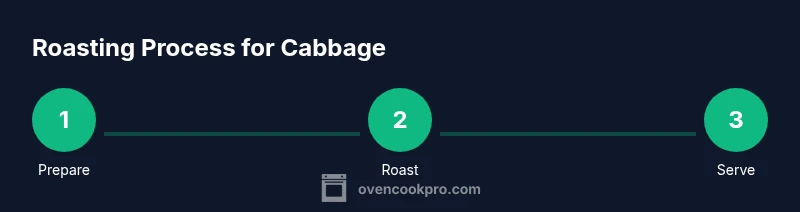
Preheat your oven to 425°F (220°C). This ensures immediate browning when cabbage enters the oven and sets you up for consistent texture. If you’re using a convection setting, reduce the temperature by about 25°F (15°C) to prevent excessive browning.
Tip: Convection fans speed browning; adjust time by about 5–10 minutes and keep an eye on the edges. - 2
Prepare the cabbage
Remove outer leaves if wilted and rinse the head. Pat dry thoroughly to avoid steam trapping. For wedges, cut into uniform quarters; for halves, simply halve the head; for shredding, slice thinly. Uniform pieces cook evenly and brown nicely.
Tip: Keep core intact for wedges to maintain structure during roasting. - 3
Coat with oil and season
Toss the cabbage pieces in a bowl with olive oil, salt, and pepper. Add optional aromatics like minced garlic or lemon zest to boost flavor. Oil helps browning and flavor adherence, while salt enhances natural sweetness.
Tip: Use enough oil to lightly coat surfaces without pooling. - 4
Arrange on pan in a single layer
Spread pieces on the sheet pan in a single layer, leaving space between them. Crowding leads to steaming instead of browning. If using parchment or foil, place it on the pan for easier cleanup later.
Tip: If using mixed shapes, start with the larger wedges on the outside and reserve thinner pieces to the center. - 5
Roast and flip
Roast for 25–35 minutes, flipping halfway through to promote even browning on all sides. Check for tenderness with a fork toward the end; you want the edges deeply browned with a soft interior.
Tip: For crispier edges, finish with 1–2 minutes under the broiler watching closely. - 6
Test for doneness and adjust
If cabbage still feels too firm, continue roasting in 5-minute increments, checking after each interval. If edges look overly browned but center isn’t tender, cover loosely with foil to trap some steam while finishing.
Tip: Use a fork for tenderness: it should slide in with slight resistance, not feel starchy. - 7
Finish and rest
When done, remove from oven and let rest for a few minutes. Resting helps moisture redistribute and the flavor to settle. A final drizzle of lemon juice or a sprinkle of fresh herbs brightens the dish.
Tip: Resting time can be counted toward your total meal prep without delaying other side dishes. - 8
Serve or store
Serve immediately as a side or fold into bowls with grains or protein. Refrigerate leftovers in an airtight container for up to 3 days, and reheat on a sheet pan at 375°F (190°C) for 5–8 minutes.
Tip: Leftovers reheat best on a hot sheet pan to recapture browning.
Questions & Answers
Can I cook cabbage in the oven without foil?
Yes. You can roast cabbage directly on a pan to maximize browning. Foil or parchment is optional depending on cleanup preference. If you’re worried about sticking, lightly oil the pan and use parchment.
Roasting without foil is fine if you want more browning; use parchment if you want easier cleanup.
What temperature is best for roasting cabbage?
A high heat, around 425°F (220°C), yields caramelized edges and tender centers. You can adjust to 400°F (204°C) for softer results or shorter times for shredded cabbage.
425 degrees gives a nice balance of browning and tenderness.
Should I cut into wedges or halves for roasting?
Wedges provide sturdy pieces with more surface browning; halves cook faster and are great for a bolder center texture. Shredded cabbage roasts quickly and stays tender but dries faster if overcooked.
Wedges give structure; halves cook faster; shredding is quickest.
How do I tell when cabbage is done?
Cabbage is done when the edges are deeply caramelized and the centers are tender enough to pierced with a fork with slight resistance. If the center is still tough, return to oven for a few more minutes.
Look for browned edges and a tender center with a fork slide.
Can I reheat roasted cabbage?
Yes. Reheat on a sheet pan in a hot oven (375°F / 190°C) for 5–8 minutes to recapture browning. You can also reheat briefly in a skillet with a little oil.
Reheat on a hot pan to restore crunch.
Can I add cheese or dairy to roasted cabbage?
Dairy is optional. A sprinkle of parmesan or a drizzle of butter toward the end adds richness, but it isn’t required for a flavorful result.
Dairy can enhance flavor if you want a richer finish.
Watch Video
Main Points
- Roasting concentrates cabbage flavor and saves time.
- Shape choice controls texture: wedges, halves, or shreds.
- Oil and proper spacing drive browning, not moisture.
- Add bright acidity after roasting for balance.