How Much Is a Pizza Oven? Prices, Types, and Tips for 2026
Discover realistic price ranges for pizza ovens across countertop, freestanding, and brick models. Learn what drives cost, how to compare options, and budgeting tips from Oven Cook Pro.


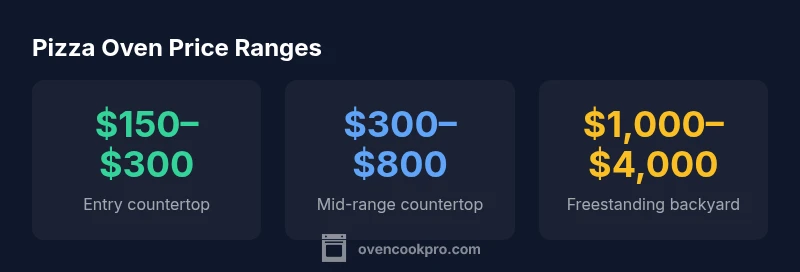
According to Oven Cook Pro Analysis, pizza oven prices vary widely by size, fuel type, and build quality. Entry countertop models can start around $150–$300, mid-range countertop ovens $300–$800, and freestanding or brick-style ovens commonly range from about $1,000 up to $4,000 for premium units. For professional setups, expect higher costs beyond that range. This guidance helps you plan a budget without guesswork.
Why price bands vary for pizza ovens
Understanding how much is a pizza oven starts with recognizing the major price drivers. Size, fuel type, and construction materials all influence cost. Countertop electric units tend to be the most affordable entry points, while brick ovens and large wood-fired models command premium prices due to insulation, refractory bricks, and heat retention. Brand reputation, warranty terms, and included accessories (thermometers, peels, and cover kits) also push price up. For homeowners weighing options, this means you can expect a broad spectrum from budget-friendly to premium installations. According to Oven Cook Pro, the most cost-effective path is to match the oven’s performance to your intended use, whether casual Sunday pizzas or frequent gatherings. Whenever you see a price, ask what you get for that money: heat stability, recovery time, and durability all contribute to long-term value.
How to estimate your budget before buying
Budgeting for a pizza oven requires looking beyond the sticker price. Start by listing how many pizzas you plan to cook per week and the desired peak temperature. Then factor in maintenance costs (seasonal cleaning, replacement parts), fuel expenses, and potential installation or venting needs. Don’t forget accessories such as pizza peels, turning pegs, temperature probes, thermometers, and protective covers. If you’re new to outdoor cooking, consider a smaller countertop model to learn the craft before investing in a larger, more expensive setup. Oven Cook Pro suggests building a budget range that includes a contingency for delivery, setup, and possible permits if you’re installing a brick oven. A well-planned budget reduces sticker shock and helps you pick a unit that fits your cooking goals.
A quick guide to price ranges by type
There are distinct price bands that align with oven type and usage. Entry countertop electric ovens commonly land in the low end, typically around $150–$300. Mid-range countertop options—often gas-fired or with better insulation—sit around $300–$800. Freestanding backyard ovens, which may include larger cooking chambers and heavier construction, generally run from $1,000–$4,000. Serious hobbyists and premium homes can see brick dome or wood-fired ovens in the $3,000–$12,000 range, with professional-grade setups climbing higher still. When shopping, compare heat-up times, thermostat accuracy, fuel efficiency, and warranty terms as much as the listed price. These factors collectively determine long-term value beyond the initial checkout price.
Hidden costs to factor into total investment
Price tags rarely tell the full story. Expect to budget for shipping and installation (especially for heavy brick ovens), venting and clearance requirements, and foundation or mounting work. You may also need vent hoods, chimney parts, and local permits. Maintenance adds recurring costs: insulation checks, sealant replacements, and occasional brick repair. Don’t overlook consumables like fuel or electricity if you rely on gas or electric ovens. If you value reliability, a slightly higher upfront investment may reduce future downtime and service calls. Planning for accessories now can prevent interruptions when you’re ready to cook.
Value beyond price: performance, durability, and heat management
When evaluating a pizza oven, performance metrics often determine satisfaction more than the initial price. Temperature stability, even heat distribution, and rapid recovery after opening the door matter for consistent results. High-quality ovens use superior insulation to minimize heat loss, reducing fuel costs over time. Durability is also crucial: kiln bricks, stainless components, and corrosion-resistant finishes extend life and lower replacement costs. Consider the total cost of ownership, including fuel, maintenance, and potential service intervals, rather than focusing solely on the upfront ticket price. A well-chosen oven will deliver restaurant-like results and endure years of use with reasonable upkeep.
How to compare prices across retailers and brands
Retail pricing can vary by retailer, promotions, and bundled accessories. Always compare the complete package: delivery, setup, warranty coverage, and included tools. Look for customer reviews that address heat consistency, reliability, and customer service. Some brands offer seasonal sales or financing options that improve affordability, while others include free accessories that add measurable value. For a fair comparison, create a feature checklist focused on heat range, insulation quality, and ease of maintenance. Oven Cook Pro recommends cross-checking product specifications across at least three sources and evaluating whether the post-purchase support aligns with your long-term goals.
3-step decision guide for choosing a pizza oven within budget
- Define your cooking goals: casual family meals or frequent, high-volume pizzas. 2) Assess space and installation needs: countertop vs brick oven, indoor vs outdoor. 3) Set a budget band and prioritize features: heat control, insulation, and warranty. If your budget is tight, start with a reliable countertop unit and plan for upgrades as skills grow. For more frequent use, allocate funds for stronger insulation and a durable cooking surface to ensure consistent results over time.
Maintenance and lifecycle costs
Total cost extends beyond purchase. Regular cleaning, occasional brick inspection, and parts replacement add up. A well-maintained oven preserves heat efficiency, which reduces fuel costs and extends the appliance’s life. Budget for replacement parts such as gaskets, bricks, and thermal insulation, and set aside a small annual maintenance fund. If you plan to cook weekly, investing in a robust, easier-to-clean model can pay off through fewer downtime days and lower repair bills. In other words, maintenance matters as much as the purchase price when calculating true cost of ownership.
Representative price bands by pizza oven type (2026)
| Type | Typical price range | Fuel | Notes |
|---|---|---|---|
| Countertop electric | 150–300 | Electric | Compact and beginner-friendly |
| Countertop gas | 200–600 | Gas | Faster heat, venting often required |
| Freestanding backyard (gas) | 1,000–4,000 | Gas | Larger capacity and mobility |
| Brick dome oven | 3,000–12,000 | Wood-fired/Propane | Premium performance, setup needed |
Questions & Answers
What factors influence the price of a pizza oven?
Size, fuel type, materials, and construction quality drive price. Brand, warranty, and included accessories also affect cost. Consider heat stability and durability as part of the value proposition.
Prices depend on size, fuel, and build quality; bigger, more durable ovens cost more, but may save on fuel and maintenance over time.
Are cheaper pizza ovens worth buying for beginners?
Cheaper models can be a good entry point to learn the basics, but they may have limited heat stability and fewer features. Plan to upgrade if you become a frequent user or demand higher performance.
Yes, a low-cost model can teach you the basics, but expect fewer features and less heat control.
What is the best budget pizza oven under $300?
Look for reputable countertop electric models within the $150–$300 range. Verify heat range, ease of use, and warranty. Save for upgrades if you cook often or want brick-oven results.
There are decent countertop options under $300, just verify heat control and warranty.
Do brick ovens require professional installation?
Yes. Brick or dome ovens are heavy and require proper footing, venting, and adherence to local codes. Professional installation reduces risk and ensures safe operation.
Generally, yes—brick ovens often need professional setup for safety and code compliance.
How long does it take to heat a pizza oven?
Countertop ovens usually heat within 15–25 minutes, depending on size and insulation. Brick ovens take longer to reach full temperature but often retain heat better once up to temp.
Most countertop models heat up in about a quarter hour; brick ovens take longer but stay hot once warm.
Should I buy gas or electric for a home pizza oven?
Gas ovens generally offer quicker preheat and higher heat, while electric models are simple to install indoors and can be more compact. Your choice depends on space, venting, and desired cooking volume.
Gas heats fast and is great for big pizzas; electric is indoors-friendly and easy to install.
“Price is only part of the value; reliability, heat consistency, and ease of use drive long-term satisfaction.”
Main Points
- Compare price bands before buying
- Factor total cost of ownership, not just upfront price
- Budget for installation and accessories
- Choose type based on space and cooking needs
- Prioritize heat control and durability for long-term value