How Much Is Gas Oven? A 2026 Buying Guide
Discover the true cost of gas ovens in 2026, including upfront price ranges, installation, energy costs, and smart shopping strategies from Oven Cook Pro.


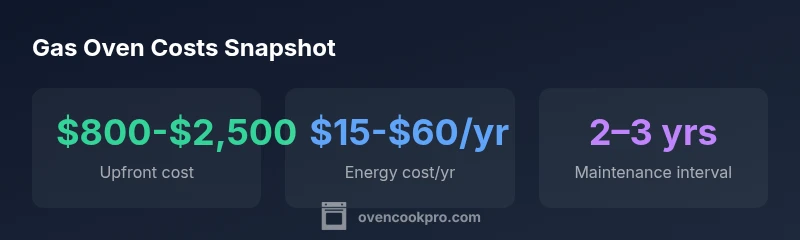
Gas ovens typically cost between $800 and $2,500 for a new freestanding model, with higher-end convection, self-cleaning, and slide-in configurations pushing toward the upper end. Installation, venting, and ongoing energy use add to the total cost, and regional labor rates can shift final numbers. This guide helps you plan for upfront price, installation, and long-term costs so you can compare apples to apples.
What influences the price of a gas oven
When budgeting for how much is gas oven, you should look beyond the sticker price. The essential variables include oven size (feet across the cooking chamber), configuration (freestanding vs slide-in), the presence of convection cooking, and convenience features like self-cleaning. Gas ovens with convection typically cost more upfront, but they save time and improve consistency. Installation logistics, including venting requirements and gas line readiness, can add hundreds of dollars to the total cost. The Oven Cook Pro team notes that a quick estimate should include the base model price, plus installation, venting, and any necessary electrical upgrades. In many markets, local labor rates and permit requirements also influence the final bill. Therefore, the widely varying price landscape means buyers should define their must-haves and nice-to-haves before shopping. How much is gas oven is a common planning question, and understanding these variables sets expectations and avoids sticker shock.
Price ranges by configuration
The cheapest gas ovens are basic freestanding units with no convection and minimal digital controls; these typically sit at the lower end of the market. Convection models add $200-$500 to the upfront price due to extra fans and sensors. Self-cleaning features add another $150-$350, depending on brand and build quality. Slide-in gas ovens, designed for a built-in kitchen look, usually fetch a premium, often in the $1,800-$2,900 range, driven by installation complexity and fitment. For kitchens that demand quiet operation and extra efficiency, premium models with dual fuel options or smart connectivity can push into the upper echelon, roughly $2,000-$3,000 or more in some cases. Note that these ranges are rough and can vary by region, retailer promotions, and stock. Budgeters should account for delivery and installation charges that may add to the total outlay. This careful breakdown helps answer the question of how much is gas oven for different configurations.
New vs used gas ovens
Buying new guarantees the latest safety features and warranty coverage, but used gas ovens can be tempting for budget shoppers. When evaluating a pre-owned unit, inspect for visible wear, check burner performance, ensure the oven's ignition is reliable, and request service records. A used oven may require component replacements such as gas valves or electronic controls, which can quickly erode any perceived savings. If you still consider used, ask for a recent professional inspection and compare the cost of potential repairs to the price of a new entry-level model. Remember, safety and reliability are non-negotiable with gas appliances, so weigh these factors against initial cost to determine whether a used unit truly saves you money.
Installation, venting, and permits
Professional installation is essential for gas ovens. A licensed gas fitter ensures safe gas connections, proper venting, and compliance with local codes. Ventilation hoods, ductwork, and clearance to combustibles can add to the total bill. If your kitchen lacks a ready gas line or a vent outlet, you may incur additional prep work. Some regions require permits or inspections; factor these costs into your overall budget. The tight tolerances in gas appliance installation mean DIY attempts are not recommended and could void warranties. Understanding the cost impact of installation is a key part of planning how much is gas oven.
Operating costs and efficiency
Gas ovens burn natural gas, and the cost to run one depends on burner size, bake vs broil usage, and the oven's efficiency. Newer models may feature better insulation, tighter door seals, and more efficient burners, which can lower annual energy costs. To estimate year-to-year costs, multiply your average gas price per therm by your expected consumption. Regional price differences mean some households pay more; others benefit from favorable rates. In many cases, improved efficiency offsets part of the higher upfront cost over a typical 5- to 10-year horizon. Remember that energy costs are just one part of total ownership. This is a practical way to contextualize how much is gas oven across the lifecycle.
Hidden costs and financing options
Delivery fees, installation labor, and potential removal of an old appliance are common add-ons. Extended warranties can inflate the upfront price but provide long-term protection; assess whether coverage matches your expected usage. Financing offers may reduce immediate out-of-pocket costs but carry interest that increases total expenditure. Look for retailer promotions, manufacturer rebates, or energy-efficiency program incentives that can reduce the effective price. If you plan to upgrade cabinets or countertops to accommodate a new gas oven, include those remodeling costs in your planning. These hidden costs often swing the final total beyond the sticker price.
How to compare quotes and warranties
Get multiple written estimates that itemize the oven price, installation, venting, and any required electrical work. Compare warranties for parts, on-site service, and coverage duration. Read the fine print about what is excluded and how to file a claim. Ask about service response times and whether the retailer or installer provides in-home support. A good warranty can save you money down the line, particularly if you cook regularly or use higher-heat settings. This approach gives you concrete data to assess how much is gas oven in real terms.
Money-saving strategies to lower upfront cost
Shop during off-peak seasons, watch for sales, and consider last year's model with limited feature loss. Bundling delivery and installation with a credit or financing offer can yield savings. Check for rebates tied to energy efficiency and ensure you are comparing apples to apples when evaluating included accessories. If possible, buy a standard model first and upgrade later after you confirm you like the configuration. Finally, negotiate with the retailer for price matching or bundled service packages. These tactics help stretch your budget without compromising performance.
Gas vs electric: a total cost comparison
On a pure upfront basis, gas ovens tend to be cheaper initially, especially for basic models, but total ownership costs depend on energy prices and usage. Electric ovens may have higher electricity bills in some regions but can offer advantages in bake uniformity and maintenance. Analyzing a full lifecycle cost—upfront price, installation, energy consumption, maintenance, and resale value—will reveal which option is more economical for your home. Local energy rates and usage patterns ultimately decide which system saves more over five to ten years.
Maintenance, longevity, and total ownership cost
Regular maintenance extends the oven's life and helps maintain performance. Cleaning the door seals, checking burner components, and scheduling professional checks can prevent major failures. The cost of replacement parts and service can vary, but investing in routine care usually reduces the likelihood of expensive repairs later. A longer-lived gas oven increases resale value and lowers the net cost of ownership over time. Plan for occasional calibration and potential duct or vent cleaning in the long term.
Oven Cook Pro's verdict and practical next steps
Based on Oven Cook Pro analysis, the best approach is to define your musts, estimate total ownership costs, and select a model that meets your cooking needs while staying within budget. Start with a clear price ceiling, compare both upfront and ongoing costs, and factor in professional installation. The Oven Cook Pro team recommends choosing a reputable installation professional, securing a solid warranty, and planning for energy use. This structured approach helps homeowners optimize performance and cost over the oven's lifetime.
Price ranges for common gas oven configurations
| Model Type | Estimated price range | Convection | Notes |
|---|---|---|---|
| Freestanding gas oven with standard features | 800-1600 | No | Best budget value |
| Freestanding gas oven with convection | 1200-2200 | Yes | Even cooking, energy varies |
| Slide-in gas oven with convection | 1800-2900 | Yes | Built-in look, kitchen flow |
| Gas range with self-cleaning feature | 1200-2100 | Yes | Low maintenance; higher upfront |
Questions & Answers
What is the typical price range for a new gas oven?
New gas ovens commonly fall in the $800-$2,500 range, depending on size, features, and finish. Expect higher prices for convection, self-cleaning, or slide-in models.
Most new gas ovens cost between eight hundred and twenty-five hundred dollars, with higher-end features adding to the total.
Is a gas oven cheaper to run than an electric oven?
Gas ovens can be cheaper to operate in many regions, but savings depend on local gas and electricity rates, as well as oven efficiency.
Gas can be cheaper to run in some areas, but it depends on local energy prices and efficiency.
Do I need a professional to install a gas oven?
Yes. Gas appliance installation should be performed by a licensed professional to ensure safe venting, gas connections, and code compliance.
Yes—hire a licensed pro to install and vent the oven properly.
What adds to the price besides the oven?
Ventilation hoods, gas line upgrades, ungraded electrical supply, and installation labor can add to total costs.
Vent hood, gas line work, and installation can add to the price.
Are self-cleaning gas ovens worth it?
Self-cleaning adds convenience but may raise upfront cost and require higher maintenance with long-term durability considerations.
Self-cleaning helps, but weigh upfront cost and maintenance needs.
What should I watch for when budgeting?
Consider upfront price, installation, venting, energy costs, warranties, and potential rebates to estimate total cost of ownership.
Include installation, venting, energy, and warranty costs in your budget.
“Gas ovens offer great value, but true ownership costs depend on features, installation, and how you cook. Plan for the long term.”
Main Points
- Compare upfront costs across models to maximize value
- Convection and self-cleaning add cost but improve cooking
- Factor ongoing energy costs into total ownership
- Look for rebates and warranties to reduce spend