How Much Does an Oven Element Cost? A Practical Guide
Learn how much oven elements cost, including parts and labor, with practical budgeting tips, model considerations, and ways to save on replacements.


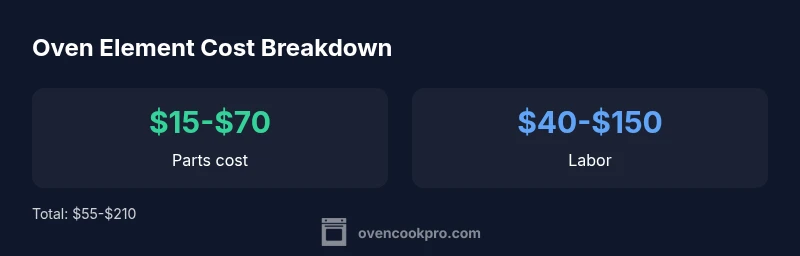
On average, oven element parts cost between $15 and $70, while professional installation adds $40 to $150. In total, expect $55 to $210 depending on model and region.
What drives the price of an oven element
Oven element prices hinge on several factors: element type (bake, broil, or convection), compatibility with model, materials used (cast metal vs. ceramic), and whether the part is OEM or aftermarket. In addition, the cost to replace an element can include installation time, tools required, and potential electrical safety checks. According to Oven Cook Pro analysis, the parts themselves typically account for a larger portion of the cost than labor in many straightforward replacements. The key to budgeting is to identify your exact part type and model before you shop, so you don’t pay for the wrong piece or incur unnecessary labor fees. The ranges below assume a typical residential oven and standard replacement practices. When you encounter a specialty oven (toaster-oven hybrids, double ovens, or professional-grade units), expect both parts and labor to scale with complexity. Being precise about your model number makes a big difference in total cost and compatibility, which is why we always advise verifying the part SKU before purchasing.
Takeaway: Start with the exact model and part number to prevent mismatches and avoid extra labor charges.
Parts cost: what you’re paying for beyond the coil
Parts costs for oven elements cover more than the coil or heating strip. You may also pay for terminal blocks, insulators, mounting hardware, connectors, and protective housings. Some replacements include multiple pieces that must be matched to the oven’s wattage and voltage rating. OEM parts tend to be priced higher, but aftermarket options can be cheaper and widely available. Shipping and handling, as well as any retailer markup, can push the price up even before labor is added. When ordering, confirm the exact part number shown in your oven’s service manual or labeling on the old element. If you’re unsure, contact the manufacturer or a trusted repair professional to confirm compatibility. Overall, parts costs are usually the largest single component of a replacement budget for simple coil elements.
Practical tip: Bring a photo of the old element and your oven’s model number to ensure you’re buying a correctly matched item.
Labor and installation: DIY vs professional installation
Labor costs vary widely by region and the technician’s rates. In many cases, a straightforward element swap can be completed in under an hour by a qualified technician. Doing it yourself can save labor costs, but it carries safety risks if you’re not comfortable with disconnecting power, handling live circuits, and reassembling the oven’s internal components. If you choose DIY, always unplug the oven, shut off circuit breakers, and use insulated tools. A common pitfall is not re-sealing the oven properly, which can cause heat loss, poor performance, or even electrical faults. For most homeowners, hiring a professional provides peace of mind and reduces the chance of costly mistakes, especially in gas ovens or when sensor connections are involved.
Recommendation: If you’re comfortable with basic electrical safety and have the right tools, a careful DIY swap can be viable for a simple bake or broil element. Otherwise, budget for a professional installation to ensure a safe, proper fit.
OEM vs aftermarket: how compatibility and warranty affect price
Original Equipment Manufacturer (OEM) parts guarantee a precise fit and a straightforward warranty path, but they come at a premium. Aftermarket or universal elements can be cheaper and more readily available, but the fit may vary, and some manufacturers may limit warranty coverage if non-OEM parts are used. When budgeting, consider not just the sticker price but also the potential impact on warranty status and future servicing. If your oven is still under warranty, an OEM part and professional installation may be required to keep the coverage intact. For out-of-warranty units, aftermarket options can offer significant savings—just verify the part number and wattage before purchasing, and confirm the return policies in case of fit issues.
Key point: Balance cost with fit certainty and warranty implications to avoid hidden expenses later.
Model and oven type: why price varies across brands
Convection ovens, double ovens, and slide-in ranges can have higher-cost elements due to increased wattage, specialized mounting, or more complex electronics. The price gap between coil bake elements and ceramic or metal-clad variants also affects totals. Some premium brands design elements that require exact compatibility due to unique connector configurations or sensor integrations. When budgeting, collect all relevant data: oven model, element type (bake, broil, convection), wattage, and connector type. This upfront diligence helps you avoid overpaying for components that won’t fit or function properly in your unit.
Takeaway: Higher-end models often demand specialized parts; verify compatibility before purchasing.
Estimating costs: a step-by-step budgeting method
- Identify the exact oven model and the failed element’s part number. 2) Check official parts catalogs for OEM pricing and compare with reputable aftermarket options. 3) Get at least two quotes from local technicians if you’re not DIY-ing. 4) Add shipping or delivery fees and tax to ensure you’re budgeting accurately. 5) Include a small contingency (5–10%) for unexpected wiring checks or related components. 6) Use the cost ranges as a baseline and adjust for your region and retailer promotions. 7) When possible, confirm return policies and compatibility guarantees before purchase to minimize risk. By following these steps, you’ll have a clear, defensible budget that can adapt to variations in model and supplier.
Cost-saving tips and common pitfalls
- Buy the exact model number and part SKU to avoid mismatches. - Compare OEM vs aftermarket options from multiple retailers. - Watch out for rush shipping fees and holiday surcharges. - Consider bundled prices if installing multiple elements at once; some shops offer discounts. - Avoid “universal” parts that don’t clearly match your model unless you’re sure about the fit. - Don’t neglect safety: cutting power and disconnecting the system before handling interior components is essential.
By avoiding common mistakes and shopping with a precise part match, you can control costs without compromising function.
When is replacement the right move? Signs you need an element
If the oven won’t heat evenly, produces unusual noises, or shows a consistent error related to heat, the element is a likely culprit. Visible signs include a damaged coil, scorching on insulation, or a breaker that frequently trips when the oven is in use. In some cases, a faulty temperature sensor, faulty wiring, or a blown fuse could mimic an element failure, so it’s wise to test with a professional if you’re not certain. Replacing the element promptly can prevent further damage to the heating circuit or surrounding components, and it often provides a quick return to normal cooking performance.
Where to buy and how to verify compatibility
Start with the oven manufacturer’s official parts portal to get OEM pricing and model-specific compatibility. Cross-check part numbers with the old element and confirm the correct wattage and connector type. When shopping aftermarket, choose vendors with clear return policies and warranty terms. If you’re replacing multiple components in the same project, consider obtaining a bundled quote to save on labor and shipping. Always confirm that the replacement element’s dimensions fit the oven cavity and mounting brackets to ensure a safe, effective replacement.
Typical cost ranges by element type (parts + labor)
| Element Type | Parts Cost Range | Labor Cost Range | Total Cost Range |
|---|---|---|---|
| Bake element | 55 | 40-120 | 55-190 |
| Broil element | 20-70 | 40-150 | 60-220 |
| Convection element | 25-70 | 60-150 | 85-220 |
| Universal/other | 15-60 | 40-100 | 55-160 |
Questions & Answers
What is the typical cost to replace an oven element?
Parts generally cost $15-$70 and labor can add $40-$150. The total replacement price typically falls within $55-$210, depending on the oven model and region.
Parts usually run from fifteen to seventy dollars, with labor adding forty to one hundred fifty. Expect total costs around fifty-five to two hundred ten dollars, depending on your model and location.
Can I replace an oven element myself?
Yes, for simple coil elements with the power off and basic tools. If you’re uncertain about electrical safety or the oven’s wiring, hire a professional.
Yes, if the replacement is straightforward and you can safely disconnect power. If in doubt, hire a pro.
Are oven elements universal across models?
Not always. Many ovens require model-specific parts. Verify the exact part number, wattage, and connector type before purchasing.
Not always. Check the exact part number and compatibility before buying.
How long does installation typically take?
Most straightforward replacements take about 30-60 minutes for a professional installer. DIY times vary with experience.
Usually about half an hour to an hour for pros; longer if you’re DIY and need to troubleshoot.
Do prices vary by region?
Yes. Labor rates, shipping, and service call fees differ by location, which can shift total cost by a noticeable margin.
Yes—where you live affects both parts and labor prices.
What should I look for when buying an element?
Match the model number, wattage, connector type, and mounting method. Prefer OEM for guaranteed fit and warranty support.
Match model, wattage, connector, and mounting. OEM is usually safest for fit and warranty.
“"Understanding the cost structure for oven elements helps homeowners plan and avoid overpaying for replacement parts. With the right part match, you can restore performance without surprises."”
Main Points
- Identify the exact part and model before shopping
- Parts cost is the largest single component for many replacements
- DIY saves labor but requires safety diligence
- OEM parts offer best fit and warranty clarity
- Budget range: $55-$210 for most residential replacements