How Long to Cook Boneless Chicken Breast in the Oven: A Step-by-Step Guide
Learn exactly how long to cook boneless chicken breast in the oven with safe temps, doneness tests, and practical tips for juicy results. Clear guidelines, tips, and a complete step-by-step approach for reliable oven-baked chicken.


You can cook boneless chicken breasts in the oven in about 18-25 minutes at 375°F (190°C) for 1-inch thick fillets. For thicker pieces, start checking at 25 minutes; always rely on a meat thermometer to reach 165°F (74°C) internal temperature. Rest 5 minutes before serving.
Understanding the basics of oven cooking boneless chicken breast
Boneless chicken breasts are prized for their lean protein, but they can turn tough if cooked too long. The objective is to reach a safe internal temperature of 165°F (74°C) while keeping the meat juicy and tender. Oven cooking offers consistent heat and even browning when you preheat properly and use a reliable thermometer. As the Oven Cook Pro team often notes, precision in temperature and resting time makes the biggest difference in moisture retention. Thickness matters: a 1-inch piece will cook faster than a 1½-inch cut, and variations in size can swing the total time by several minutes. With the right setup, you’ll achieve juicy slices that stay moist even after resting.
Key factors that influence cooking time
Several variables determine how long boneless chicken breast needs in the oven. Thickness is the dominant factor: thinner cuts cook quickly, while thicker portions require more time. The starting temperature of the meat matters, too—cold meat from the fridge will take longer to reach doneness than meat left at room temperature for a short period. Oven type and pan choice play roles as well; convection ovens can shorten cooking times, and dark, rimmed sheets tend to brown faster than shiny, shallow pans. Finally, whether you baste, oil lightly, or apply a dry rub can influence moisture loss and perceived doneness. Understanding these factors helps you tailor timings rather than rely on a single fixed duration.
Temperature and time guidelines you can rely on
A safe starting point is 375°F (190°C) for most standard boneless breasts. For about 1-inch thickness, plan roughly 18-22 minutes, with a final check at 18 minutes to avoid overcooking. If pieces run 1.25 to 1.5 inches thick, expect a total of about 25-30 minutes, with checks beginning around 22-25 minutes. If you’re using a convection oven, you can either reduce the temperature by about 25°F (14°C) or shave a few minutes off the total time. Always confirm doneness with an instant-read thermometer; the thickest part should reach 165°F (74°C).
Doneness and safety: using a thermometer
Relying on visual cues alone is risky with chicken breast. Insert the thermometer into the thickest part without touching bone for an accurate reading. Aim for 165°F (74°C) and observe a brief rest of 5 minutes. Resting lets juices redistribute, improving moisture and sliceability. If the thermometer hovers near 160°F (71°C), you’re close—allow for a brief rest, then recheck. Across cases, a dependable thermometer is your most consistent ally in achieving safe, juicy results, especially for varying breast sizes and oven performance.
Preparation techniques for juicier results
Juiciness starts with moisture retention. Lightly oil the surface and apply a balance of salt and spices to create flavor without drying out the meat. A short brine of 15-20 minutes can help, especially for larger breasts, followed by patting dry for even browning. If you prefer marinade, keep it brief (15-30 minutes) to avoid overpowering the natural chicken flavor. Preseasoned rubs can be excellent, especially when you finish with a quick broil for browning. Remember to pat surface dry before baking to foster better crust formation rather than a steamed texture.
Convection vs conventional oven: what changes and why
Convection ovens circulate hot air, which speeds cooking and promotes even browning. If you’re using convection, you can reduce the temperature by 25°F (14°C) or cut cooking time by about 20-30%. Either approach requires watching the breast closely near the lower end of the time range, since some ovens run hotter or cooler than the dial suggests. If you don’t have a convection setting, simply extend the time slightly and ensure even spacing on the baking sheet for uniform contact with heat.
Adjusting for different thicknesses: quick rules of thumb
For every ¼ inch increase in thickness over 1 inch, add roughly 3-4 minutes of bake time. If your pieces are 1 inch or thinner, aim for the lower end of the range (18-22 minutes). Use the thermometer to confirm: 165°F (74°C) is the target regardless of thickness. If you’re unsure about uniformity, consider pounding thicker breasts to a consistent 1 inch for even cooking. The goal is a predictable internal temperature rather than chasing a fixed minute count.
Flavor boosters: seasoning, rubs, and finishing touches
Salt and pepper form a reliable baseline, complemented by garlic, paprika, lemon zest, or herb blends. A light brush of olive oil improves browning and flavor. For extra brightness, finish with a squeeze of lemon or a drizzle of herb-infused butter after resting. If you prefer smoky notes, a pinch of smoked paprika works well. Always keep balance in mind: bold seasonings can mask the chicken’s natural flavor if overused.
Resting, slicing, and serving: best practices
Resting for 5 minutes after removing from the oven is essential for juiciness. Slice against the grain to preserve tenderness and make portions appear larger. If you plan to sauce the chicken, slice first, then return the pieces to the pan with your sauce for a quick paro turn. Serve with a simple side like roasted vegetables or a bright salad to contrast the warmth of the chicken. Proper resting, cutting, and plating elevate a straightforward dish into something that feels cooked with intention.
Storage, reheating, and food safety
Store leftovers in a shallow container in the fridge within two hours of cooking. Use within 3-4 days for best quality. Reheat gently in the oven at a lower temperature (around 325°F) to avoid drying. If freezing, slice into portions and freeze in airtight bags for up to 3 months. Thaw in the refrigerator overnight before reheating. Always recheck that the internal temperature remains safe after reheating and discard any chicken that smells off or looks questionable.
Common mistakes and how to fix them
Common missteps include overcooking, which dries meat, under-seasoning, and baking from a cold start. Preheating is non-negotiable for consistent results, and avoid crowding the pan to ensure even heat exposure. If your chicken dries out, consider a brief brine or lower oven temperature with longer cook time so the fibers retain moisture. Finally, rely on a thermometer rather than timing alone; even identical breasts can vary in doneness.
Real-world scenario and quick-check checklist
Imagine 1.25-inch chicken breasts, patted dry, seasoned with a light rub, baked on a single layer. Preheat to 375°F, bake ~22-28 minutes, and check for 165°F. Rest 5 minutes before slicing. Quick-checks: thermometer reads 165°F, juices run clear, and the edges show light browning. Use a timer and thermometer together for best results.
Tools & Materials
- Oven preheated to 375°F (190°C)(Ensure oven reaches target temperature before baking)
- Baking sheet or shallow pan(Line with parchment or foil for easy cleanup)
- Meat thermometer (instant-read)(Insert into thickest part; do not touch bone)
- Tongs(For safe turning and handling)
- Optional: parchment paper(Prevents sticking and aids cleanup)
- Light oil (olive or neutral)(Lightly coat for browning)
- Seasonings or marinade(Salt, pepper, paprika, garlic, herbs as desired)
Steps
Estimated time: 30-45 minutes
- 1
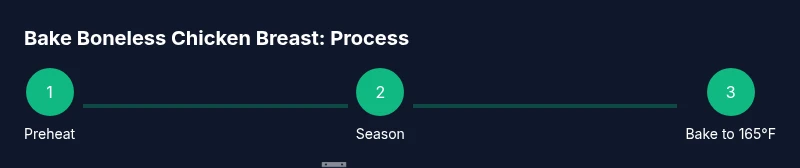
Preheat and prep
Preheat the oven to 375°F (190°C). While it heats, pat the chicken dry with paper towels and lightly oil or rub with your chosen seasoning. A dry surface helps browning and even texture.
Tip: Let the oven complete preheating before loading the pan to avoid temperature dips. - 2
Season evenly
Season all sides evenly with salt and spices or apply a light marinade. Even coating ensures flavor distribution from edge to center.
Tip: Avoid heavy marinades that pool and steam the meat rather than sear and brown. - 3
Arrange on sheet
Place the breasts in a single layer on the baking sheet, leaving at least 1 inch between pieces for even heat exposure.
Tip: Crowding creates steamy conditions and uneven cooking. - 4
Bake and monitor
Bake the chicken in the preheated oven until the thickest piece reaches 165°F (74°C). Start checking around 18 minutes for 1-inch breasts and later for thicker pieces.
Tip: Using a thermometer is essential—don’t rely only on time. - 5
Rest before slicing
Remove from oven and rest for 5 minutes to redistribute juices. Slice against the grain for tender portions.
Tip: Resting drastically improves juiciness and yields juicier slices. - 6
Serve or store
Serve immediately, or portion and refrigerate within two hours. For longer storage, freeze in airtight containers.
Tip: Cool briefly before sealing to prevent condensation from affecting texture.
Questions & Answers
What temperature should I bake boneless chicken breasts at?
A common starting point is 375°F (190°C). Adjust minutes based on thickness and check doneness with a thermometer to reach 165°F (74°C).
Most people bake boneless chicken breasts at 375°F and verify doneness with a thermometer to 165°F.
How thick should chicken breasts be for oven cooking?
Aim for about 1 inch thickness for even cooking. Thicker pieces will require more time, and thinner pieces cook faster.
Keep them around one inch thick for best results.
Can I bake from frozen?
It's best to thaw for even cooking. If baking from frozen, expect longer times and verify doneness with a thermometer.
It's better to thaw before baking, but you can cook from frozen with more time and careful checking.
Should I cover chicken while baking?
Uncovered baking promotes browning and juiciness; cover only if you’re concerned about drying out or to keep moisture in.
Uncovered is usually fine for browning, cover only if needed to prevent drying out.
What’s the best way to tell it’s done without a thermometer?
Color and juices can be misleading; use the thermometer for accuracy. If you must rely on appearance, look for opaque meat and clear juices.
Don’t rely on color alone—use a thermometer to be safe.
What are good flavor options for baked chicken?
Stick with balanced seasonings like salt, pepper, garlic, and lemon; finish with fresh herbs or a light sauce.
Try simple herbs and a squeeze of lemon for bright flavor.
Watch Video
Main Points
- Use a thermometer for safe doneness.
- Preheat thoroughly and don’t overcrowd the pan.
- Resting improves juiciness and sliceability.
- Adjust time or temperature for convection ovens.
- Thin breasts cook faster; thicker pieces need more time.