How to Insert Oven Racks Correctly
Learn how to insert oven racks correctly with a clear, step-by-step process. Discover rack heights, safe handling, and tips for single or multiple racks, all from Oven Cook Pro.


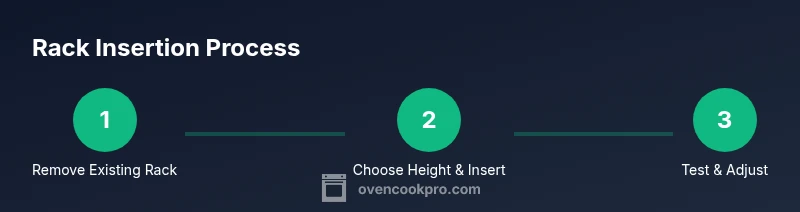
The correct installation is simple: remove any existing rack, choose the right height, align the rack with the oven’s support rails, slide it in until it sits evenly, and avoid tilting. For most baking tasks you’ll place food so the top is 2–4 inches from the heating element; adjust based on recipe, bake mode, or broil needs.
Overview of oven rack types
Oven racks come in a few common styles, but the core concept is the same: a wire frame with a flat surface that rests on built-in support rails inside the oven cavity. Most homes use standard wire racks that slide along vertical rails, with front edges designed to sit securely on a pair of notches or stops. Some racks are enamel-coated for easier cleaning, while heavy-duty models resist warping under loaded pans. If you’ve ever asked, how do oven racks go in, start with a quick inspection: are the rails clean, level, and free of burrs? Bent or warped racks won’t seat correctly and can tilt, causing spills or uneven heat. According to Oven Cook Pro, a proper rack fit and smooth rails are the foundation for reliable, even heat distribution and safer handling.
Before you start, always confirm the rack is designed for your model—some ovens require specific rack widths or front-edge notches. A mismatched rack can be difficult to insert and may rub against door seals or heating elements. Keeping a couple of spare, properly sized racks on hand makes changing rack height quick and predictable for different recipes.
How to determine the correct rack height for your dish
Choosing the right rack height influences how heat reaches the food and how browning occurs. For cookies and light cakes, the middle rack usually yields even air circulation around the pan. For roasting vegetables, poultry, or casseroles, moving the rack one notch lower helps keep the top from burning while fat drips away to promote browning around the edges. If you’re broiling or finishing with high heat, the top rack is typically best to monitor crust formation without overdoing the surface. In multi-rack scenarios, maintain at least a couple of inches of clearance between pans to maximize airflow and prevent soggy bottoms. These guidelines help you achieve consistent results and prevent surprises from hot spots in older ovens.
The correct orientation and insertion technique
Most oven racks are symmetrical, but some designs include a defined front edge or a small notch that must align with a corresponding feature on the rails. Check that the rack rests flat on the rails with even contact along both sides. To insert, grip the rack with both hands, align the front edge per the manufacturer’s mark, and slide it straight back until it seats fully. Avoid twisting or angling the rack as you push it in; this can bend rails or cause uneven support. Once the rack is in place, give it a gentle tug to confirm it’s secure and straight. If you encounter resistance before it seats, pull it out and re-align rather than forcing it in—forcing can damage the rails and create a dangerous wobble.
Single rack vs multi-rack setups and spacing
For a single rack, place it at a height that allows adequate air flow around the pan and gives you room to slide in and out safely. When you use two racks, stagger their heights and leave sufficient space between them (typically a couple of inches) to promote even heat circulation. If you’re cooking something tall, put it on the lower rack and keep the other item higher to avoid crowding and to ensure both items receive even heat. Planning rack positions before you start helps prevent crowding and ensures you don’t block airflow near the door or around the heating elements.
Broiling, convection, and special cases
Broiling benefits from placing food close to the top heat source, so the top rack is often used for finishing touches or small items that brown quickly. In convection ovens, air scribbles around pans; you may be able to place multiple racks if your oven supports it, but ensure there’s enough clearance so hot air can circulate. If your oven has a powerful fan, you might need to adjust rack heights slightly from what you’d use in a conventional oven. Always monitor high-heat cooking closely at the start to identify hot spots and adjust rack positions as needed.
Safety, handling, and maintenance
Never touch hot racks with bare hands; always wear oven-safe gloves and use tongs or a rack-puller to move racks when the oven is hot. Allow racks to cool completely before cleaning, and wipe rails with a damp cloth to remove dust, grease, or food particles. If the enamel coating is damaged or the rack shows signs of bending, replace it rather than trying to bend it back. Regular inspection of rails and proper storage when not in use helps extend rack life and keeps your oven functioning predictably.
Troubleshooting misalignment and common problems
If a rack sits crooked or wobbles, remove it and re-seat carefully, ensuring full contact with the rails. Warping, especially after dishwasher cleaning, can distort how a rack sits. In some ovens, rails wear down and lose bite; in these cases you may need to replace the rack or rails. If you notice uneven browning that follows a rack, verify you’re using the correct height for the dish and that airflow isn’t obstructed by the rack above or below. A quick inspection before each bake saves you from surprises later.
Common mistakes and quick fixes
Avoid overloading a single rack or stacking pans directly on top of each other without space for air to circulate. Don’t push a rack beyond its stop; this can damage rails or cause it to sit unevenly. Clean and dry racks before insertion to prevent sticking and slipping. If a rack feels stubborn, remove other racks temporarily to re-seat the problematic one by itself, then reintroduce the others. With practice, rack insertion becomes quick and routine.
Tools & Materials
- Oven rack(s)(Have spare racks on hand; ensure they are clean and metal safe for high temperatures.)
- Oven mitts or heat-resistant gloves(Use heat rating appropriate for your oven, typically at least 450°F (232°C).)
- Tongs or rack-puller(Helpful for moving hot racks without reaching over the hot door.)
- Dish towel or non-slip mat(Place on counter to set racks down safely when hot.)
- damp cloth(For quick cleaning of rails after use.)
Steps
Estimated time: 5-10 minutes
- 1
Remove existing rack
Carefully pull the current rack straight out using oven mitts. Place it on a heat-safe surface. Inspect for warping or debris before reusing, and wipe the rails clean.
Tip: Keep your other pans out of the oven zone while removing a rack to avoid spills. - 2
Choose the correct rack height
Refer to your recipe to select a height. For most tasks, start with the middle position and adjust based on browning and heat distribution observed in past bakes.
Tip: If in doubt, start in the middle and test with a small bake first. - 3
Align with the rails
Hold the rack level and align any front-edge notch with the rails’ front guides. Make sure the rack sits evenly on both sides before insertion.
Tip: Check for burrs or bent rails before inserting; misalignment can cause wobble. - 4
Insert the rack straight back
Slide the rack in without tilting until it seats fully on the rails. Avoid forcing it through any resistance.
Tip: If resistance occurs, pull out and re-align rather than pushing hard. - 5
Test for stability
Gently pull on the rack to ensure it’s locked in place and doesn’t wobble. If it shifts, remove and re-seat.
Tip: A stable rack prevents spills and uneven browning. - 6
Arrange multi-rack spacing
Place additional racks with adequate clearance (about 2 inches or more) between pans to maximize air flow.
Tip: Avoid crowding; crowded racks can cause hot spots and soggy bottoms. - 7
Load cookware and resume baking
Position pans, slide racks back in, close the door, and begin the bake. Double-check clearance around door seals.
Tip: Always wear gloves when sliding hot racks in or out.
Questions & Answers
How high should the rack be for baking cookies?
For most cookies, place the rack in the middle to promote even air flow. If your oven runs hot, adjust slightly lower.
For most cookies, use the middle rack to bake evenly; adjust if your oven runs hot.
Can I put racks in the oven when it’s hot?
Only if necessary and with proper protection. Use oven mitts and tongs; avoid leaning over the opening to prevent burns.
Only if needed, with gloves; be careful of steam and heat when adding racks.
What should I do if a rack wobbles?
Remove the rack, inspect for warping or debris, re-align, and re-insert. Replace if the wobble persists.
If it wobbles, take it out, re-seat, and check for warping.
Is it safe to use multiple racks at once?
Yes, but leave ample space between pans to promote airflow and monitor browning closely at first.
Yes, just leave space between racks and watch for hot spots.
How do I clean oven racks?
Soak in warm, soapy water, scrub with a nonabrasive pad, and dry thoroughly before reuse.
Soak and scrub with a nonabrasive pad, then dry before use.
Watch Video
Main Points
- Know the rack heights for common tasks.
- Insert racks straight and level for safety.
- Space racks to maximize airflow and even cooking.
- Use protective gear and maintain rails for longevity.