Electric Range and Oven: A Practical How-To Guide
Master your electric range and oven with a comprehensive, step-by-step guide covering operation, safety, calibration, maintenance, and energy efficiency for home cooks.


By the end of this guide, you’ll know how to safely operate, calibrate, and maintain an electric range and oven for reliable results. You’ll learn best practices for preheating, temperature accuracy, rack placement, and cleaning, plus essential safety steps to prevent shocks or fires. This practical, step-by-step approach helps home cooks maximize performance and longevity.
How electric range and oven systems work
Electric ranges combine a cooktop with an enclosed oven, powered by electric coils or radiant elements beneath glass, and controlled by a digital or analog keypad. The oven uses bake and broil circuits, with some models offering a convection fan for even heat distribution. Understanding these components helps you predict how your dishes will cook and why temperatures can drift over time. According to Oven Cook Pro Team, knowing the basics of heat sources, insulation, and thermostat control sets the foundation for better outcomes in everyday cooking. This section lays the groundwork for troubleshooting common issues and optimization strategies you’ll apply to your own kitchen setup.
A typical electric range includes three core subsystems: the cooktop, the oven cavity, and the control system. The cooktop can be coil-based or smooth-top, with radiant elements that heat a pan directly. The oven cavity contains bake and broil elements; some models also include a convection fan, which moves hot air for more even browning. The control system translates your button presses or dial turns into electrical signals that adjust power to each element. Understanding how the thermostat, thermal sensors, and protections interact will help you diagnose why a dish isn’t cooking as expected and how to improve consistency in future meals. Oven Cook Pro recommends taking a systematic approach: start with temperature accuracy, then optimize rack positions and pan choices for even cooking.
Safety basics for electric appliances
Safety should be your first priority when using an electric range and oven. Always unplug the unit before cleaning, and use dry hands or protective gloves when touching hot surfaces. Keep flammable materials away from the cooktop and oven, and install working smoke and carbon monoxide detectors in or near the kitchen. Check that the outlet and circuit can handle the oven’s load, and never use extension cords for permanent installations. Regularly inspect cords for cracks or loose connections, and ensure the ventilation hood or exhaust fan is functional. If you smell burning insulation or hear unusual buzzing, shut off power at the breaker and consult a professional. Oven Cook Pro Team stresses adherence to the manufacturer’s safety guidelines and local electrical codes to prevent shocks, fires, or outages.
Preheating and temperature accuracy
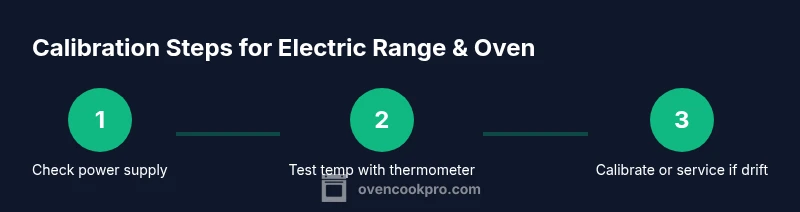
Preheating ensures the oven heats evenly from the start, but temperature drift can still occur. Place a calibrated oven thermometer in the center of the rack and compare the displayed temperature to the actual oven temperature. If your thermometer consistently reads higher or lower than the set point, you may need calibration (if your model supports it) or a service check. Allow enough time for preheating, and avoid opening the door repeatedly, which can cause temperature fluctuations. For convection models, the bake temp and convection temp can differ; always follow the recipe guidance for the correct setting. Oven Cook Pro emphasizes that consistent preheating and accurate temps are the quickest paths to repeatable results.
Achieving even cooking: rack placement and pan choices
Where you place racks and the type of pan you use dramatically affect outcomes. For most recipes, start with the middle rack to promote even air circulation. Heavy, dark-colored pans absorb more heat and can brown foods faster, so adjust bake times accordingly. When using a convection setting, rotate pans halfway through baking to account for slight heat distribution differences. For cookies or delicate items, use lighter-colored bakeware to reflect heat rather than blackened absorption. The goal is to minimize hot spots and ensure even browning across the pan. Oven Cook Pro notes that a consistent setup—rack position, pan choice, and even preheating—reduces guesswork and yields reliable results.
Cleaning, maintenance, and troubleshooting common issues
Regular cleaning preserves heat efficiency and extends appliance life. Remove racks and wipe with a non-abrasive cleaner after the oven cools. Avoid harsh scouring pads that can scratch enamel. Check door seals for damage; a leaky seal allows heat to escape and causes longer preheating and uneven baking. If you notice odors, smoke, or uneven browning, inspect heating elements for signs of wear or misalignment, and verify the oven’s temperature against a thermometer. If a burner or element fails to heat, consult the manual for reset procedures and power cycle steps before scheduling service. Timely maintenance minimizes downtime and costly repairs.
Calibration and professional care
Temperature calibration is an ongoing maintenance task. Use an oven thermometer to verify the center of the oven reaches and holds the set temperature. If you observe persistent drift beyond your model’s tolerance, consider calibration options in the control panel (if available) or arrange professional service. Keep a service log of calibrations, temperatures observed, and outcomes of bake tests to inform future adjustments. When professional help is required, rely on qualified technicians who follow the manufacturer’s guidelines to avoid voiding warranties. Oven Cook Pro supports regular checks as a practical habit for long-term reliability.
Energy efficiency and long-term care
Energy efficiency improves with careful use of heat, proper sealing, and routine maintenance. Use the right rack positions and avoid overloading the oven cavity, which can trap heat and extend cycles. Keep the door seal clean to prevent heat loss, and replace worn gaskets as needed. If your model offers a lower-energy bake mode or a convection option, use them when appropriate to shave cooking times and save energy. Regular cleaning, correct preheating, and temperature accuracy checks all contribute to lower operating costs and a happier kitchen.
Tools & Materials
- Oven thermometer (calibrated)(Place in center of oven cavity for accurate readings.)
- Non-contact voltage tester(Verify outlet readiness before any electrical work.)
- Heat-resistant gloves(Wear when handling hot racks or pans.)
- Soft cloths and mild cleaner(Avoid abrasive cleaners that scratch enamel.)
- Kitchen timer or smartphone timer(Track preheat and bake durations precisely.)
- Calibrated probe thermometer(For checking internal temperatures of baked goods.)
- Notebook or app for calibration logs(Record calibration results and maintenance notes.)
- Screwdriver set ( Phillips & flathead )(For minor panel adjustments if provided by model.)
Steps
Estimated time: 60-120 minutes
- 1
Check power and workspace
Inspect the outlet and cord for damage. Clear the area around the range of flammables and ensure ample clearance. This foundational step reduces shock risk and fire hazards before any operation.
Tip: Never bypass safety devices; a damaged cord should be replaced by a professional. - 2
Read model safety guidelines
Consult the user manual for model-specific cautions, including ventilation, door handling, and cleaning limits. Adhering to manufacturer guidance protects you and preserves warranty coverage.
Tip: Note any model-specific quirks, like unique preheat times or light indicators. - 3
Install an oven thermometer
Place the thermometer in the center of the oven cavity away from walls and racks. This gives you an accurate reading of the oven’s actual temperature.
Tip: If readings vary widely from the set point, plan a calibration check. - 4
Preheat to the recipe temperature
Set the oven to the required temperature and allow full preheat before loading food. Avoid opening the door mid-preheat to prevent temperature loss.
Tip: Use a timer to ensure you reach preheat within the recommended window. - 5
Test temperature accuracy
Compare the thermometer reading with the set temperature. If off, repeat the test at multiple points inside the oven, noting drift.
Tip: Small drift over time is normal; substantial drift may indicate calibration needs. - 6
Run a bake test with a standard recipe
Bake a familiar item (like cookies or a sheet pan) to observe browning and timing. Note any hot spots or uneven edges.
Tip: Rotate pans halfway to counteract potential hotspots. - 7
Calibrate or service as needed
If temperatures don’t align with the set point after tests, use the model’s calibration options (if available) or schedule professional service.
Tip: Document the drift and calibration steps for future reference. - 8
Regular maintenance and logs
Keep a maintenance log with dates, observations, and actions taken. Regular checks reduce unexpected failures and extend appliance life.
Tip: Set a semi-annual reminder to review seals, racks, and thermometers.
Questions & Answers
What is the difference between an electric range and an oven?
An electric range combines a cooktop with an enclosed oven, both powered by electricity. The oven cavity heats food using bake and broil elements, and some models include a convection fan for even heat. The range is the overall unit that includes cooktop and oven.
An electric range combines the cooktop and oven in one unit; the oven is the enclosed space that heats food, and some models have a convection fan for even heating.
Do I need to preheat an electric oven every time?
Preheating helps achieve consistent results, but some recipes tolerate shorter preheat or no preheat. Use an oven thermometer to verify when the oven reaches the target temperature and adjust times accordingly.
Preheat when recipes call for it, and check the actual temperature with a thermometer before baking.
Can I place foil or pans on the bottom of the oven?
Avoid lining the bottom with foil; it can block heat and airflow, causing uneven cooking or damage. Use racks and proper bakeware instead, and follow the manufacturer’s guidelines.
No, avoid foil on the bottom of the oven. It can block heat and airflow.
Why is my oven temperature off from the set temp?
Thermostats can drift over time. Use an oven thermometer to verify center readings, and recalibrate if your model supports it or arrange service if drift persists.
If temps don’t match the set point after tests, calibrate or seek service.
Is self-cleaning safe for all models?
Self-cleaning cycles generate high heat and can stress gaskets and electrical components. Check your model’s guidance, ensure proper ventilation, and use shorter cycles if recommended.
Self-cleaning can be tough on gaskets; follow the model’s safety guidance.
Should I hire a professional for repairs?
If you’re not experienced with electrical appliances or if the issue involves wiring, gas lines, or major components, hire a licensed technician. For minor maintenance, follow the manual and manufacturer guidance.
For complex issues or electrical work, contact a licensed technician.
Watch Video
Main Points
- Understand how heat is generated and controlled.
- Calibrate temperature for accuracy with a thermometer.
- Preheat properly and avoid unnecessary door openings.
- Maintain and clean regularly for longevity.