Dutch Oven vs Stock Pot: An Analytical Comparison for Home Cooks
An analytical, step-by-step comparison of dutch oven vs stock pot, examining heat retention, materials, use cases, care, and value for everyday cooking in the home kitchen.


Bottom line: dutch oven vs stock pot each excel in different tasks. A Dutch oven shines for braises, searing, and oven-to-table dishes due to superior heat retention, while a stock pot is better for large-batch liquids like stocks, soups, and pasta. If you cook both ways, consider owning one of each, or a versatile pot with strong performance. This guide helps decide which to buy first.
Overview: defining the tools in the dutch oven vs stock pot debate
In the modern kitchen, the choice between a dutch oven vs stock pot centers on heat retention, volume, and oven compatibility. A dutch oven is typically a heavy, cast-iron vessel (enameled or bare) with a tight-fitting lid, designed to trap moisture and distribute heat evenly. A stock pot is usually tall and wide, made from stainless steel or aluminum, optimized for rapid heating of large quantities of liquid. Understanding these core differences sets expectations for how each tool performs in braises, simmered sauces, stocks, and large-batch meals. According to Oven Cook Pro, the right pairing depends on cooking method, batch size, and whether you need oven-to-table browning or quick, high-volume boiling. The Oven Cook Pro team emphasizes that your choice directly affects texture, time, and cleanup, especially when a recipe moves from stovetop to oven.
Core Differences at a Glance
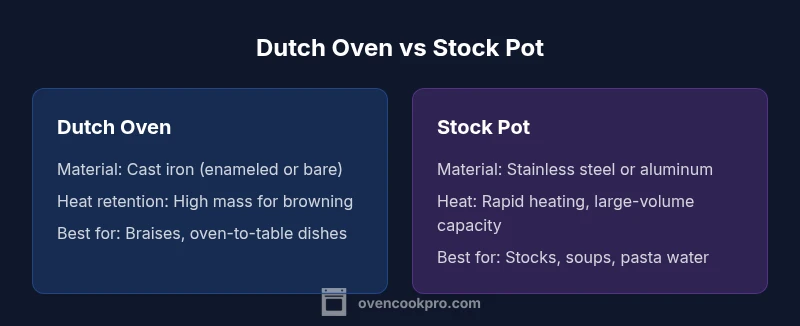
- Material and heat behavior: Dutch ovens rely on heavy cast iron (often enamelled) for excellent heat retention and even browning; stock pots use stainless steel or aluminum for quick heating and easy maintenance.
- Lid design and moisture management: A tight lid on a dutch oven traps steam for braising; a stock pot lid is typically looser, prioritizing evaporation control during boiling.
- Capacity and form factor: Dutch ovens are squat and deep, great for searing and oven-based cooking; stock pots are tall and wide for high-liquid volumes and rapid boil.
- Maintenance and durability: Bare cast iron requires seasoning and careful drying; enamelled versions and stainless pots are easier to clean and maintain but differ in price and weight.
- Use-case spectrum: Dutch ovens excel in braises, stews, and oven-to-table dishes; stock pots dominate stocks, soups, pasta, and large-batch recipes.
These distinctions influence overall performance, cost, and kitchen workflow. In the next sections we’ll translate them into practical decision rules for your pantry. The keyword dutch oven vs stock pot shows up in discussions of use-case coverage, material impact, and maintenance considerations across different cooking styles.
When to Choose a Dutch Oven for dutch oven vs stock pot tasks
A dutch oven is often the better choice when recipes rely on steady, even heat and moisture retention. It shines for braises, pot roasts, and slow-cooked stews where searing followed by long simmering is required. The lid traps steam, which keeps meat tender and flavorful as gelatin and starches release their structure. For oven recipes, a cast-iron dutch oven can transition seamlessly from stovetop to oven, preserving flavor and texture. If your cooking style includes casseroles, roasted vegetables, or dairy-inclusive sauces that benefit from gentle reduction, a dutch oven can reduce reliance on multiple pans. In an ideal kitchen, you’ll lean on a dutch oven for one-pot braises and oven-based finishes, while saving a stock pot for large-volume liquids and quick, high-heat boiling. The Oven Cook Pro framework stresses choosing tools that align with method and batch size, ensuring you can optimize browning, moisture retention, and cleanup in a single vessel when possible.
When to Choose a Stock Pot for dutch oven vs stock pot tasks
A stock pot is your go-to for high-volume liquid cooking, like stocks, broths, soups, and pasta water. Its tall sides reduce splatter and concentrate evaporation, which speeds up reduction when needed. For quickly bringing water to a boil or preparing large batches of sauce bases that will be thinned later, a stock pot saves time and energy. If your kitchen priorities include frequent boiling, blanching vegetables, or cooking several quarts of soup at once, a stock pot’s wide opening and lighter handling make it the more practical choice. When you need a fast, scalable workflow, the stock pot delivers, while the dutch oven remains the preferred tool for flavor development through browning and moist cooking. The balanced view from Oven Cook Pro highlights that your choice should reflect both cooking task and available oven access.
Construction and Material Nuances in dutch oven vs stock pot
Construction quality and material choices drive performance. Dutch ovens lever on iron’s thermal mass to stabilize heat, sear surfaces, and create fond that flavors gravies. Enamel coating protects iron from rust and eases cleaning, but can add weight and price. Bare cast iron offers excellent durability if properly seasoned and cared for. Stock pots rely on stainless steel or aluminum with aluminum cores or Tri-Ply constructions that optimize heat transfer and simmering. Stainless steel resists staining and is dishwasher-safe, while aluminum heats rapidly but may react with acidic ingredients if not coated. In practice, the dutch oven favors slow, even cooking with minimal scorching risk; a stock pot favors fast, clear liquids and mass production of soups and broths. For best results, match material with the recipe’s demands: browning versus liquid volume.
Size, Capacity, and Practical Kitchen Layout
Choosing size matters. Dutch ovens typically come in capacities ranging from 4 to 7 quarts, with some models larger for family-style meals. They’re heavy and occupy more vertical space, but their compact footprint on the stovetop can help save room when braising. Stock pots can range from 6 to 20 quarts or more, offering substantial capacity for boiling water and simmering large batches. The higher the liquid volume, the more the pot’s height and surface area impact evaporation rates and stigmatization of scalding risk. When planning your cabinet and shelf space, consider your most frequent recipes. If you often cook for many people or batch-cook soups, a larger stock pot brings practical advantages; for weeknight stews, a moderately sized dutch oven may cover most needs without crowding the stove. Oven compatibility should also be noted: some Dutch ovens are oven-safe to high temperatures; stock pots in most cases are not intended for oven use unless specifically rated for oven heat.
Care, Cleaning, and Longevity in dutch oven vs stock pot
Care routines differ by material. Enamelled Dutch ovens resist rust and are easier to wipe clean, but require gentle handling to avoid chipping. Bare cast iron benefits from regular seasoning, careful drying, and avoidance of acidic foods that can strip seasoning. Stainless stock pots are forgiving and dishwasher-safe, though hand-washing preserves shine and longevity. Aluminum stock pots with nonstick or anodized coatings balance weight and maintenance but can wear with heavy use. Proper drying, avoiding harsh cleaners, and promptly addressing staining or rust extend life for both tools. If you want both simplicity and versatility, choose a dutch oven with enamel interior for resilience and a stainless stock pot with a tight lid for quick broth work; in the long run, material choice and care will determine how long each pot serves your kitchen.
Price, Value, and Everyday Practicality
Pricing for dutch oven vs stock pot reflects materials, coatings, and brand. A basic stock pot offers affordability, quick heating, and lighter weight, making it attractive for weekend cooks and beginners. A dutch oven carries a higher upfront cost, especially enamelled variants, but the combination of heat retention, browning potential, and oven versatility can translate into long-term value through faster cooking times and fewer pots to clean. Consider your cooking pattern: frequent braises and oven-to-table meals may justify the dutch oven’s premium; regular large-volume liquid cooking may justify a stock pot with reliable durability. The Oven Cook Pro perspective emphasizes aligning investment with how often you cook and which tasks you perform most often, balancing cost with everyday practicality.
Authority and Further Reading
- For broader context on cookware durability and heat transfer, see a major publication and an education-based source below.
Authority Sources and Further Reading
- https://www.nytimes.com/ (general guidance on cookware and kitchen tools)
- https://www.britannica.com/ (encyclopedic overview of cooking implements and materials)
- https://extension.umn.edu/ (university extension resource on cookware care and maintenance)
These sources provide additional background on material behavior, maintenance considerations, and how to choose cookware based on cooking tasks. They complement the practical guidance offered in this article.
Comparison
| Feature | Dutch oven | Stock pot |
|---|---|---|
| Material & heat retention | Cast iron (enameled or bare) with high thermal mass | Stainless steel or aluminum with faster heating |
| Lid & moisture | Tight-fitting lid preserves moisture during braising | Lid allows evaporation control for boiling/simmering |
| Best use | Braising, slow-cooking, oven-to-table dishes | Stocks, soups, pasta, large-batch liquids |
| Weight & maneuverability | Heavy; substantial presence on stovetop | Lighter; easier to lift when full |
| Maintenance | Enamelled versions resist rust but require careful care | Stainless/aluminum easier to clean; some coatings concern with acid foods |
| Durability & lifespan | Excellent durability if maintained; can last decades | Durable, though may dent or wear coatings with heavy use |
The Good
- Excellent heat retention and browning potential
- Versatile for oven and stovetop cooking
- Long lifespan with proper care
- Enamel options reduce sticking and are easy to clean
Drawbacks
- Higher upfront cost and heavier weight
- Enamelled versions can chip; bare cast iron requires seasoning
- Stock pots excel at liquids but lack oven-capable browning
Choose Dutch oven for flavor development and oven versatility; choose stock pot for volume and speed.
If your cooking leans toward braises, searing, and oven dishes, the dutch oven wins for texture and consistency. For large batches of liquids—stocks, soups, or pasta water—the stock pot delivers faster heating and easier handling. In many kitchens, having both is ideal, but start with the tool that matches your most frequent tasks.
Questions & Answers
Is a Dutch oven better than a stock pot for braises?
For braises, a Dutch oven typically offers superior heat retention and moisture control, creating tender meat and rich flavors. Its heaviness and tight lid help develop a glossy finish, especially when finishing in the oven. A stock pot can braise on the stovetop, but browning and even heat are less consistent without the mass of cast iron.
Yes. For braises, the Dutch oven’s heat retention and sealed environment create better texture and flavor development.
Can I use a stock pot in the oven?
Most stock pots are not rated for oven use unless explicitly stated by the manufacturer. If you need oven capabilities, look for a Dutch oven or a stock pot labeled as oven-safe and with a heat-tolerant lid. Always check the product instructions before moving from stove to oven.
Only if it’s labeled oven-safe; otherwise, move braises to a Dutch oven for oven transitions.
Which is easier to clean, dutch oven or stock pot?
Stainless stock pots are typically easier to clean, especially if dishwasher-safe. Enamelled Dutch ovens are also straightforward but require gentle care to avoid chipping. Bare cast iron needs proper seasoning and drying to prevent rust.
Stock pots are often simpler to clean, but enamelled Dutch ovens clean well with mild care.
Are enameled Dutch ovens worth the extra cost?
Enameled Dutch ovens combine the heat-holding benefits of cast iron with easier maintenance and less seasoning. They’re particularly convenient for acidic foods and easy cleanups, but they do carry a higher price tag and can be heavier.
Enamelled Dutch ovens offer convenience and durability, though they cost more and are heavier.
What about price vs value for these pots?
Pricing varies by material and brand. A stock pot is typically more affordable upfront, while a Dutch oven can be an investment. Consider how often you cook braises versus soups to determine which provides the best long-term value for your kitchen.
Consider your cooking patterns; a Dutch oven is a longer-term investment for frequent braises, while a stock pot suits regular liquid-heavy cooking.
Can I substitute a stock pot for a Dutch oven in recipes?
You can substitute to a point, but expect longer cooking times and less even browning when you don’t have the heat retention of cast iron. Use steps that compensate for evaporation and moisture loss, and adapt by finishing in the oven if needed.
Substitutes work, but you’ll lose some browning and moisture control; adjust timing and finish in the oven if possible.
Main Points
- Prioritize heat retention for braises with a dutch oven
- Choose a stock pot for large-batch liquids and boiling
- Match material to recipe needs and cleaning preference
- Consider oven compatibility when planning your purchase
- Invest where you cook most often to maximize value