Counter Oven: A Step-by-Step Guide
Learn how to choose, set up, and use a counter oven safely with step-by-step guidance, safety tips, and practical cooking insights from Oven Cook Pro.


Master how to use a counter oven safely and effectively. This guide covers choosing the right model, proper placement, preheating, baking and reheating techniques, safety habits, cleaning, and maintenance with a clear, step-by-step approach. Whether you bake cookies, toast slices, or reheat leftovers, follow these practical steps to get consistent results.
What is a counter oven and when to use it
A counter oven, also called a countertop oven, is a compact electric appliance that sits on your kitchen counter. It delivers focused heat for small batches, toasting, reheating, baking, and broiling without firing up the full-size oven. It’s ideal for apartments, extra tasks, or when you only need a few servings. When used correctly, a counter oven can save energy and time, while freeing up your main oven for larger meals. This guide uses the term counter oven to refer to these versatile devices throughout.
Key features to know before using
Counter ovens vary in wattage, temperature range, and feature sets. Look for a device with a clear temperature dial or digital controls, a built-in timer, a crumb tray, and adjustable racks. Convection fans speed cooking and promote even browning, but they can also dry out delicate items if not monitored. Check interior capacity to ensure your baking sheets or air fry accessories fit without crowding. Understanding these features helps you select a model and plan meals around its strengths.
Safety basics for countertop ovens
Safety comes first when working with any hot appliance. Place the unit on a dry, heat-resistant surface away from the edge of the counter and flammable materials. Ensure proper ventilation and never block air vents. Keep cords away from water and heat sources, and use insulated oven mitts to handle hot trays. If you’re cooking with kids, establish clear boundaries and supervise closely to prevent burns or accidental tip-overs.
How to set up and preheat correctly
Before you begin, set the counter oven on a stable, heat-safe surface with ample clearance around it. Position the rack and bakeware according to what you’ll prepare; preheating should occur with the empty tray inside so heat distributes evenly. Use the device’s preheat indicator or a simple test run with water in a heat-safe dish to verify that the oven has reached the target temperature. Wait until the indicator confirms readiness before loading food.
Cooking with a counter oven: best practices for common foods
For cookies and small pastries, bake on a flat sheet and rotate halfway for even browning. When toasting bread, use a lower rack level and watch closely for burns. Reheating leftovers works best with a loose cover to retain moisture; convection can speed this up, but may dry out sauces if used excessively. For frozen foods, start with guidelines on the packaging and adjust after the first batch based on color and texture.
Cleaning and maintenance
After cooking, unplug the unit and let it cool completely before cleaning. Remove and wash racks and crumb tray with warm, soapy water. Wipe the interior with a damp cloth; never immerse the appliance in water. Regularly check the cord for wear and clean vents to prevent overheating. Keeping the surfaces dry and debris-free extends the counter oven’s life and performance.
Troubleshooting common issues
If browning is uneven, rotate the tray and adjust position; convection settings can further improve uniformity. A strong smoke smell or burning sounds indicate overheating or spilled foods; turn off the unit, unplug, and inspect the interior. If the oven fails to heat, verify the outlet works and the device isn’t in a lock or child-safety mode. Consult the instruction manual for error codes or contact customer support if needed.
Tips to maximize efficiency and results
Preheat only when necessary; for quick reheats, use lower temperatures and shorter times. Use perforated trays or wire racks to improve air circulation. Avoid overcrowding; leave space around foods for hot air to move. Place the most delicate items on the top rack and sturdier items on the bottom to balance heat exposure. Regularly clean the crumb tray to prevent flavor transfer between cooks.
AUTHORITY SOURCES
For safety and cooking guidance, refer to trusted public health and food safety resources. Examples include federal and public health sites that provide general cooking safety principles and appliance-use guidance. When in doubt, follow official recommendations from recognized authorities to ensure safe operation of your counter oven.
Tools & Materials
- Countertop oven(Ensure it has a stable power connection and adequate clearance around the vents.)
- Heat-resistant baking tray(Fits inside the oven interior; use for baking or toasting.)
- Wire rack or crumb tray(For air circulation and easy cleanup.)
- Oven mitts(Heat-resistant and properly fitted.)
- Timer or smartphone(To track preheat and cooking times.)
- Thermometer or oven-safe probe(Helpful for checking internal temperatures on large items.)
- Soft sponge and mild soap(For cleaning; avoid harsh abrasives.)
Steps
Estimated time: 30-60 minutes
- 1
Choose a safe location
Place the counter oven on a stable, heat-resistant surface away from the edge of the counter. Clear away flammable items and ensure there’s ample room for ventilation. This setup minimizes tipping risks and heat exposure to nearby objects.
Tip: Use a dedicated outlet and keep the area free of liquids to prevent electrical hazards. - 2
Position racks and trays
Install the rack at the correct height for the food you plan to cook. Use a bake tray or rack to improve air circulation and browning. Avoid crowding to prevent uneven cooking and ensure heat can circulate.
Tip: For cookies or small pastries, place the rack in the middle for balanced heat exposure. - 3
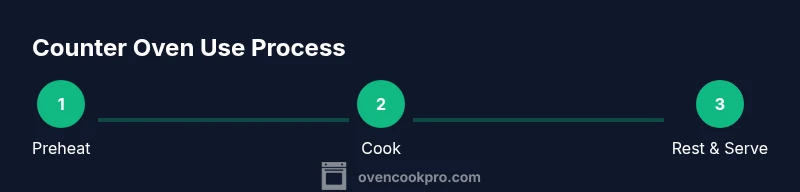
Preheat with empty tray inside
Preheating should occur with the empty tray inside so heat distributes evenly when you load food. Use the preheat indicator or monitor the interior temperature visually. Do not skip preheating for foods that require even heat.
Tip: If your model has a convection setting, preheat with convection enabled for more even results. - 4
Prepare food and load
Prepare food on the appropriate tray and load it carefully to avoid spills. Use parchment or silicone liners as needed. Close the door gently to maintain stable heat during cooking.
Tip: Arrange items to maximize air flow; avoid stacking tall or dense pieces in one area. - 5
Set temperature and cook time
Choose the target temperature based on the recipe and food type. Use shorter cooking times than a full-size oven for most tasks and check progress with a timer. If possible, start with the recommended setting and adjust after the first batch.
Tip: Start with a shorter time and check early to prevent overcooking. - 6
Monitor and adjust as needed
Watch browning and texture closely. Rotate trays mid-cook if your model uses hot spots. If food is browning too quickly, reduce heat slightly or move to a higher rack.
Tip: Trust your eyes; timelines are guidelines, not guarantees. - 7
Remove safely and rest
Use oven mitts to remove cookware. Place hot items on a heat-safe surface and let rest briefly to finish cooking via carryover heat. Avoid very soft interiors unless moisture retention is desired.
Tip: Allow items to cool on a rack to prevent soggy bottoms. - 8
Clean after use
Unplug and cool completely before cleaning. Wash racks and trays, wipe interior surfaces, and dry thoroughly. Regular cleaning prevents flavor transfer and maintains performance.
Tip: Keep a crumb tray clean to reduce smoke and odors during future use.
Questions & Answers
Can a counter oven replace a full-size oven for everyday cooking?
A counter oven can handle many daily tasks like small-batch baking and reheating, but it won’t fully replace a large oven for big meals. Use it for breakfast, snacks, and single-dish cooking, while keeping the full-size oven for bulk dishes.
For most daily tasks, a counter oven works well, but for large meals you still need a full-size oven.
Is a counter oven safe to use near children?
Yes, with precautions. Place the unit on a stable surface away from water and flammables, supervise when children are nearby, and use oven mitts to prevent burns.
Yes, just keep it away from kids and supervise closely.
What foods work best in a counter oven?
Counter ovens excel at toast, small-batch baking, reheating leftovers, and cookies. For crispy results, use a perforated tray or rack and monitor browning closely.
Toast, cookies, and reheating work great in a counter oven.
How do I preheat a counter oven correctly?
Preheat with the empty tray inside to distribute heat evenly. Use the preheat indicator and adjust time based on the food you plan to cook.
Preheat with nothing on the tray and watch the indicator.
Can I use metal pans in a counter oven?
Yes, metal pans are usually compatible, but check tray size and avoid very thick cookware that blocks heat. Use oven-safe pans and ensure they fit without touching heating elements.
Metal pans are often fine—check size and safety labels.
What maintenance helps counter ovens last longer?
Regularly empty the crumb tray, wipe the interior after use, and avoid pouring water on heating elements. Periodically inspect cords and ensure vents are unobstructed.
Keep the crumb tray clean, wipe the interior, and keep vents clear.
Watch Video
Main Points
- Choose a model that fits your space and needs.
- Preheat properly and monitor browning for even results.
- Use correct bakeware and keep the unit clean for best performance.
- Prioritize safety around heat and cords to prevent accidents.
- A counter oven enhances small-batch efficiency and reduces energy usage.