How to Use a Commercial Convection Oven: Step-by-Step Guide
Learn how to choose, operate, and maintain a commercial convection oven for reliable, energy-efficient cooking in busy kitchens with expert Oven Cook Pro guidance.


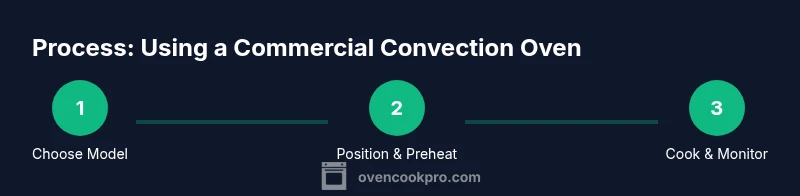
Learn how to operate a commercial convection oven for consistent, bakery-grade results. This quick answer outlines selecting the right model, proper preheating, tray loading for even airflow, setting temperatures and timing, monitoring humidity and airflow, and safe cleaning and maintenance to maximize efficiency, oven lifespan, and compliance with local health codes.
What is a commercial convection oven and why it matters in busy kitchens?
A commercial convection oven is a heavy-duty cooking appliance that uses a fan and vented chamber to circulate hot air for faster, more even cooking. For home cooks, this can feel like a leap, but in restaurant and bakery settings it translates to consistent batch quality, reduced cook times, and the ability to handle high-volume output. According to Oven Cook Pro, the most important factors are reliable airflow, robust construction, precise temperature control, and straightforward safety features. Understanding these basics helps you pick the right model and set it up for success in your kitchen. In this section we’ll lay the groundwork by explaining airflow, fan speed, and how oven geometry affects heat delivery, so you can make informed decisions when evaluating commercial units.
How convection differs from conventional/static ovens
Convection ovens move heated air around the food using a dedicated fan, which reduces hot spots and speeds up browning and crust formation. This means you can often lower temperatures by 25-50°F (15-25°C) compared with a traditional oven, and you may need to adjust bake times. Key differences to note include:
- Airflow intensity and uniformity depend on fan type and rack spacing.
- Tray alignment and staggering affect how heat reaches foods and how evenly moisture moves.
- Some models offer humidity or steam controls, which can help with moisture retention for ranges of products from roast to pastry.
When you’re selecting a unit, verify that the oven uses balanced air circulation, has clearly labeled controls, and provides consistent preheat times. A well-matched oven reduces batch variation and makes recipes easier to scale.
How to assess and choose the right commercial convection oven
Choosing the right oven starts with capacity and footprint. Consider the batch size you routinely run, the maximum number of racks you want to load at once, and the available power supply. Look for:
- A robust, sealed cooking chamber with a proven heat source (electric coils or gas burners) and a durable door gasket.
- A controllable convection fan with multiple speeds or a standard high/low setting.
- Clear, reproducible temperature readings and easy-to-clean interiors.
- Safety features like automatic shut-off, door interlocks, and accessible emergency power.
- Energy efficiency indicators such as insulation thickness and door seals.
Budget for electrical or gas supply, ventilation requirements, and service access. Plan for a client-friendly control interface if you have multiple operators. Oven Cook Pro’s analysis highlights that higher-quality fans and better insulation often deliver faster preheat and lower operating costs over time.
The setup you need before you start cooking
Proper setup is the foundation of consistent results. Start with site preparation: ensure adequate clearance around the oven (at least 6 inches/15 cm on all sides for ventilation and cleaning), level placement, and secure mounting if the unit is heavy. Verify electrical or gas connections meet spec and install any required venting or exhaust hoods. Check door seals and inspect racks for warping. Prepare a cleaning plan and place a timer within easy reach. A clean, well-ventilated environment reduces the risk of heat loss and improves air circulation, which directly affects outcomes.
Preheating and stabilization: getting the oven ready
Preheating is critical to avoid thermal shock to foods and to ensure reproducible results across batches. Start by selecting the correct convection setting and temperature, then allow the oven to stabilize for the recommended time from the manufacturer. Use an accurate oven thermometer or the built-in probe to confirm that the chamber reaches the target temperature. If you observe hot spots, run a manual fan-recalibration or place an empty tray to promote even air circulation during the preheat phase. Preheating not only saves time but also protects product texture and color.
Rack configuration and load density for even cooking
Proper rack configuration is essential for uniform heat exposure. Space trays evenly with 1-2 inches of clearance between them and between trays and the oven walls. Avoid stacking trays directly on top of one another unless the unit’s manual permits it. Use full racks when possible and rotate trays mid-cook to equalize heat exposure. If you’re cooking different items at once, place those with similar cooking profiles together and adjust timing accordingly. These practices reduce hot spots and ensure consistent browning.
Temperature, time, and humidity: adjusting for convection cooking
Convection often allows you to reduce temperature by 25-50°F (15-25°C) and shorten cook times. Start with test batches to establish baseline times for each product, then adjust in small increments (5-10 minutes, then re-check). If humidity control is available, use it for baked goods that require moisture retention or for roasting meats to maintain juiciness. Track temperatures with an accurate thermometer and document your standard profiles so cooks can reproduce results.
Monitoring and adjustments during cook cycles
During operation, actively monitor the process. Look for signs of under- or over-browning, moisture loss, or uneven coloration across racks. If needed, adjust rack position, fan speed, or bake time. Use probe thermometers to verify internal temperatures and avoid overcooking. Logging adjustments helps you build a library of reliable settings for different products and batch sizes. Remember that consistent practices reduce variability and waste.
Safety basics and routine maintenance
Always observe safe handling when dealing with hot surfaces, steam, and moving fans. Wear heat-resistant gloves, use approved non-slip footwear, and ensure the area around the oven is clean of spills to prevent slips. Schedule routine maintenance checks for door seals, fans, and burners. Address wear early to prevent costly failures. A proactive approach to safety and maintenance protects staff and preserves equipment value.
Cleaning, sanitation, and long-term care for longevity
Clean the interior after each shift, following manufacturer directions for degreasing and non-abrasive scrubbing. Remove racks and pan supports for thorough cleaning, paying attention to crevices where grease accumulates. Sanitize surfaces, then dry completely before reuse. A regular deep-clean schedule, including gasket inspection and door latch checks, extends the oven’s life and maintains consistent performance over time.
Energy efficiency and budgeting considerations for convection ovens
Energy usage depends on insulation, door seals, and duty cycle. Regularly compare preheat times, batch throughput, and energy consumption across models to identify savings opportunities. Consider scheduling high-demand cooking during off-peak hours if your facility’s energy plan supports it. Investing in a unit with better insulation and a durable fan often pays for itself through lower utility bills and longer life. Oven Cook Pro’s team notes that efficient convection ovens can reduce per-batch energy consumption when properly operated.
Tools & Materials
- Commercial convection oven user manual(Keep accessible in kitchen or office)
- Heat-resistant gloves (18 inches/45 cm)(For handling hot trays and racks)
- Oven-safe racks and rack supports(Sturdy, compatible with your oven model)
- Oven thermocouple or infrared thermometer(Verify chamber and food temps)
- Digital kitchen thermometer for internal foods(Critical for safety and accuracy)
- Non-abrasive degreasing cleaner and scrub pads(Follow manufacturer directions)
- Soft towels and disposable cloths(For wiping and sanitizing)
- Ventilation hood and ducting checks(Ensure proper exhaust and safety)
- Calibration tool or service log(Record calibration and maintenance)
Steps
Estimated time: 1 hour 50 minutes
- 1
Assess needs and select model
Evaluate batch sizes, peak hours, and available space. Compare capacity, power type (electric vs gas), and fan performance. Choose a unit that aligns with your menu and throughput goals.
Tip: Document expected loads and keep spare parts available for quick maintenance. - 2
Position the oven and verify ventilation
Place the oven on a level floor with clear clearance for air intake and exhaust. Install or verify a compliant ventilation hood and ensure there is no obstruction to airflow.
Tip: Use a level and check door gasket after installation to prevent heat leakage. - 3
Power on and perform safety checks
Connect to the correct power supply and perform a basic safety check: doors seal, racks glide smoothly, and the display responds to controls.
Tip: Wake up the unit per manufacturer instructions before loading trays. - 4
Preheat to target temperature
Set the convection mode and desired temperature, then preheat for the recommended duration until the internal thermocouple reads stable.
Tip: Use an independent thermometer to confirm chamber temperature accuracy. - 5
Load trays with proper spacing
Arrange trays with even spacing, avoid overloading, and stagger rows for air flow. Ensure trays align with rack guides for stable support.
Tip: Rotate trays halfway through if cooking different items together. - 6
Set time and airflow parameters
Choose the correct convection setting, adjust fan speed if available, and program the timer per recipe or standard profile.
Tip: Record baseline times for your most common items. - 7
Monitor cook and adjust as needed
Watch color, texture, and internal temperatures. If browning is uneven, rearrange trays or adjust time and fan speed.
Tip: Use probes for accurate readings and reduce guesswork. - 8
Finish, hold, and transfer
Remove from oven promptly at target color and internal temp. Hold at safe temperatures if needed and transfer to service area or resting racks.
Tip: Minimize door openings to maintain steady heat. - 9
Clean, disinfect, and schedule maintenance
After service, remove racks, clean interior surfaces, wipe gaskets, and log any maintenance or replacements.
Tip: Create a weekly deep-clean checklist and track long-term wear.
Questions & Answers
What is a commercial convection oven and how does it differ from a conventional oven?
A commercial convection oven circulates hot air with a fan to cook food more evenly and quickly than a conventional oven. The result is faster browning, more uniform texture, and batch consistency, especially at higher volumes.
A convection oven uses a fan to move hot air, cooking more evenly and faster than a regular oven.
Can I use convection for all foods, or are there exceptions?
Convection is versatile, but some delicate items like certain soufflés or sponge cakes may require adjustments or even traditional oven methods. For meat, vegetables, and most baked goods, convection typically delivers the best balance of speed and texture.
Most foods do well in convection, but some delicate recipes may need adjustment or a standard oven finish.
How do I calibrate temperature on a convection oven?
Use a dedicated oven thermometer to verify the set temperature against the actual chamber temperature, then adjust the oven’s calibration setting per the manufacturer’s instructions if discrepancies are found.
Check the real temperature with a thermometer and adjust the oven’s calibration as needed.
What safety steps should I take when using a commercial convection oven?
Wear heat-resistant gloves, keep the area ventilated, avoid touching hot surfaces, and ensure door seals are intact. Regularly inspect electrical connections or gas lines and have a professional service the unit as recommended.
Wear gloves, ventilate the area, and inspect for leaks or damaged seals regularly.
How should I clean a convection oven without damaging it?
Follow the manufacturer’s cleaning guidelines using non-abrasive cleaners, remove racks for thorough washing, and avoid harsh chemicals that could degrade seals. Wipe dry and reassemble only after complete drying.
Use non-abrasive cleaners and avoid harsh chemicals; let everything dry before reuse.
Is a convection oven more energy-efficient than a traditional oven?
Yes, generally convection ovens are more energy-efficient due to faster cooking times and improved heat transfer, but efficiency depends on proper usage, insulation, and temperature settings.
Convection ovens are typically more energy-efficient, especially when used with optimized temperatures and loads.
Watch Video
Main Points
- Choose a model based on capacity and airflow reliability.
- Preheat properly and space racks to maximize heat distribution.
- Monitor temps, humidity, and airflow for consistent results.
- Prioritize safety and routine maintenance to extend oven life.
- Aim for energy-efficient profiles to reduce operating costs.