How to Use a Convection Oven: A Complete Step-by-Step Guide
A comprehensive guide to using a convection oven, covering airflow, temperature adjustments, rack placement, and safety tips for home cooks. From preheating to finishing, learn practical steps and pro tips from Oven Cook Pro to achieve faster, more even baking.


With a convection oven, you bake faster and more evenly by circulating hot air with a built-in fan. To start, preheat as directed, swap to low-sided pans, and reduce cooking temperatures by about 25°F (15°C) or follow recipe guidelines for convection. This guide provides a clear, step-by-step method to master convection cooking.
How to use a convection oven: principles and benefits
Mastering convection cooking begins with the basic idea: a fan blows hot air around food, which speeds convection and leads to even browning. In practice, this means more uniform crusts on pastries, crispier vegetables, and shorter bake times. The key to success is managing airflow and heat exposure without crowding the oven. According to Oven Cook Pro analysis, convection works best when items are spaced to allow air to circulate freely. Understanding this will set you up for consistent results, whether you’re roasting a chicken, baking cookies, or reheating leftovers. When you know how to use a convection oven, you’ll notice the difference in texture, moisture retention, and color compared to conventional baking.
Throughout this guide, you’ll see practical tips, common mistakes to avoid, and a simple workflow you can adapt to weeknight cooking.
Getting started: preheating and cookware
Before you load your pan, enable the convection setting and preheat to the recommended temperature for your recipe. Use shallow, low-sided pans or baking sheets to maximize air flow; deep or bulky vessels can obstruct circulation and lead to uneven browning. Line sheets with parchment paper or silicone mats to minimize sticking and make cleanup easier. For fragile baked goods, consider using lighter-weight, dark-freeware to avoid scorching on the bottom. In short, the goal is to keep air moving freely around each item so the heat reaches every surface.
Oven Cook Pro notes that preheating isn’t just about reaching a number; it’s about establishing a stable air temperature for that first, critical browning wave.
Temperature and time adjustments
Convection cooking typically requires lower temperatures and shorter times than conventional baking. A practical starting point is to reduce the recipe temperature by 15–25°F (8–14°C) and to start checking doneness earlier than the original directions. Because air moves more efficiently, foods often finish sooner, so rely on visual cues and a thermometer rather than clock-watching alone. If your recipe doesn’t specify convection guidelines, use the standard bake settings as a fallback and monitor closely. Remember, different foods react differently to airflow, so flexibility is key.
When in doubt, a gentle reduction in temperature coupled with vigilant timing yields the most reliable results.
Rack placement and airflow
Convection air flows best when there’s space around each item. Place racks in the middle or upper-middle positions for even browning on larger roasts, while cookies or delicate pastries may benefit from a lower rack to prevent top scorching. Rotate pans halfway through cooking to equalize exposure. If you’re roasting multiple trays, stagger their positions to avoid crowding the fan’s path. The overall idea is to maintain continuous air movement for consistent results.
Following these guidelines helps you harness the full power of your convection oven.
Cooking different foods with convection
Meat: Use a shallow roasting pan and a meat thermometer to verify doneness. Vegetables: Toss with a light coating of oil and spread in a single layer for crisp edges. Baked goods: Cookies and pastries appreciate lower temperatures and lighter pans to prevent over-browning. Reheating: Convection works well for reviving texture on leftovers, but avoid over-drying by reducing time and keeping portions small. For all foods, avoid overcrowding and monitor progress closely.
If you’re new to convection, start with simple vegetables or cookies to learn how airflow affects browning and moisture.
Cleaning and maintenance that keep convection efficient
Regularly clean racks, pans, and the oven cavity to prevent grease buildup that can disrupt airflow. Check that the fan spins freely and that vents aren’t blocked by debris. Use a gentle oven-cleaning method or a baking soda paste for interior areas, then wipe with a damp cloth. Protect yourself with heat-resistant gloves when handling hot racks. A well-maintained oven not only cooks better but extends the appliance’s life.
Oven Cook Pro recommends routine checks for any unusual noises or temperature discrepancies between the dial and actual heat.
Common mistakes and how to fix them
Crowding the oven is the most common mistake; give air space around every item. Using deep, dark pans can absorb heat and create uneven browning. Not preheating can lead to temperature shocks and inconsistent results. Finally, ignoring convection-specific timing can overcook delicate items. By avoiding these pitfalls and adjusting temps and times thoughtfully, you’ll consistently achieve even textures and color.
Quick-start workflow for weeknight dinners
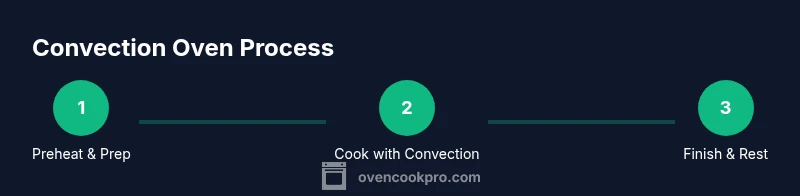
- Preheat the oven in convection mode to the recipe’s convection temperature. 2) Prep ingredients and lay out on shallow pans with parchment. 3) Bake, rotating pans halfway, and start checking early. 4) Use a thermometer to confirm doneness, then rest briefly before serving.
This streamlined approach helps you capitalize on convection benefits without sacrificing taste or texture.
Tools & Materials
- Convection oven with functioning fan(Ensure the convection setting is enabled before cooking)
- Oven thermometer(Place away from heating element for accurate reading)
- Shallow, light-colored bakeware or rimmed sheets(Promotes airflow and even browning)
- Parchment paper or silicone baking mats(Prevents sticking and facilitates airflow)
- Oven-safe roasting rack (optional for meats)(Elevates meat to maximize air exposure)
- Heat-resistant oven mitts(Protect hands when handling hot pans)
- Timer (digital or smartphone)(Track short convection cooking times)
- Meat thermometer (optional for meats)(Check internal temps accurately)
Steps
Estimated time: 30-60 minutes
- 1
Preheat with convection
Turn on the convection setting and preheat to the recipe’s suggested convection temperature. This establishes a stable air environment so the first batch browns evenly. If the recipe is silent on convection, start from the standard bake temperature and subtract 25°F as a starting point.
Tip: Preheating ensures air at the target temperature radiates evenly to all sides of the food. - 2
Prepare bakeware and food
Arrange foods in a single layer on shallow pans, with space between pieces. Line pans with parchment or silicone mats to promote sliding and even heat transfer. Avoid stacking or crowding, which blocks airflow.
Tip: Single-layer layouts maximize the convection effect. - 3
Load and position racks
Place racks in the middle or upper-middle positions for most foods. For baked goods needing crisper bottoms, a lower rack can help. If using multiple trays, stagger them to avoid overlap of the hot air.
Tip: Don’t stack trays directly on top of each other. - 4
Monitor and rotate
Set the timer and rotate pans 180 degrees halfway through cooking to equalize exposure. Keep an eye on color; convection can brown faster than expected.
Tip: Rotation is your friend for uniform browning. - 5
Check doneness
Use a thermometer for meats or rely on color and texture cues for vegetables and baked goods. Remember, convection recipes often finish earlier, so start testing early.
Tip: Don’t rely solely on the clock; visual and internal temp guidance is key. - 6
Rest and serve
Let roasted meats rest briefly to redistribute juices. For baked goods, cool on a rack to prevent soggy bottoms. This step ensures the final texture meets expectations.
Tip: Resting helps moisture redistribute for better bite.
Questions & Answers
What is a convection oven and how does it work?
A convection oven uses a fan to circulate hot air around the food, which speeds cooking and promotes even browning. The airflow helps remove moisture from the surface, creating crisper exteriors without drying out the interior.
A convection oven uses a fan to move hot air, making foods cook faster and brown more evenly.
Should I preheat a convection oven?
Yes, preheating helps establish stable air flow and accurate temperatures. Some recipes specify convection settings from the start; if not, preheat as you would for the standard bake mode and switch to convection during cooking.
Yes—preheating ensures consistent results when convection is used.
Do I need special pans for convection cooking?
No special pans are required. However, shallow, light-colored pans and avoiding deep, dark-coated pans help air circulate and prevent over-browning on the bottom.
No special pans are needed, but shallow, light-colored pans work best.
How should I adjust recipes for convection?
Reduce the oven temperature by 15–25°F (8–14°C) and monitor doneness earlier than with standard bake times. Not all recipes need changes, so use your judgment based on the food and oven performance.
Lower the temperature and watch the time closely when using convection.
Can I use frozen foods in a convection oven?
Yes, you can, but expect shorter cook times and ensure items are in a single layer with space between pieces. Check for doneness with a thermometer and adjust time as needed.
Yes, but keep measurements in mind and test for doneness.
Watch Video
Main Points
- Adjust temperatures when using convection to prevent overbrowning.
- Avoid overcrowding to maintain airflow for even browning.
- Choose shallow, light-colored pans to maximize convection efficiency.
- Verify doneness with a thermometer for safety and accuracy.