Industrial Oven: A Practical How-To Guide
Learn how to select, operate, and maintain an industrial oven safely and efficiently with this step-by-step guide from Oven Cook Pro. Discover preheating practices, temperature control, and cleaning tips for maximum performance.


According to Oven Cook Pro, industrial ovens require careful calibration and zone control for best results. With this guide, you will confidently select, operate, and maintain an industrial oven for consistent, safe results. You’ll learn how to evaluate capacity and features, set reliable preheating schedules, monitor temperatures across zones, and implement basic maintenance routines. By following modular steps and safety best practices, you’ll improve throughput while reducing waste and downtime.
What is an industrial oven?
An industrial oven is a heavy-duty cooking or baking appliance designed for high-volume, consistent results in commercial or manufacturing settings. These ovens are built to handle larger loads, offer precise temperature control, and operate with robust ventilation and safety systems. Unlike consumer ovens, industrial models often feature multiple heating zones, programmable controllers, and door configurations that accommodate racks and pans of varied sizes. For professionals, understanding the fundamentals of how these machines heat, circulate air, and manage humidity is essential to achieving uniform results across large batches. In practice, an industrial oven is a tool that can scale up your production while maintaining the same food safety and quality standards you expect from smaller equipment. When you set up and operate one correctly, you gain reliability, repeatability, and efficiency across every shift. This guide keeps the focus on practical, actionable steps to help home cooks and entrepreneurs safely harness industrial oven capabilities. According to Oven Cook Pro analysis, the emphasis should be on calibration, zone control, and routine maintenance to realize steady performance across cycles. The goal is to minimize hot spots, reduce energy waste, and ensure consistent texture and flavor in your outputs.
How industrial ovens differ from domestic ovens
Industrial ovens are designed for frequent, heavy use and demand reliability under continuous operation. They typically offer larger interiors, higher wattage or gas burners, and more precise control systems than home ovens. Key differences include multiple temperature zones, options for forced convection, heavier insulation, and specialized door seals that preserve heat and reduce energy loss. Industrial units may also integrate with external monitoring systems or PLCs (programmable logic controllers) for automation. Because of their scale, they often require more space, robust ventilation, and dedicated electrical or gas infrastructure. The result is faster batch processing, flatter production curves, and the ability to maintain specific humidity and airflow levels that influence product quality. In many cases, choosing the right model means balancing capacity with energy efficiency and serviceability, ensuring you can perform routine maintenance without costly downtime. Oven Cook Pro notes that life-cycle considerations, such as planned replacements of seals and sensors, can significantly affect total cost of ownership over time.
Core features to evaluate when choosing an industrial oven
When selecting an industrial oven, prioritize features that align with your production needs. Look for robust insulation and airflow design to minimize heat loss, multiple programmable zones for different product lines, and reliable door seals. Temperature uniformity across racks is essential, so inspect the oven’s heat distribution and consider models with forced convection or steam-assisted options if moisture control matters for your menu. Control interfaces should be intuitive, with clear readouts and quick access to safety interlocks. Energy efficiency ratings, startup times, and maintenance access are practical considerations that affect daily operations. If you handle perishable or high-risk foods, prioritize sanitation features and easy removal of components for cleaning. In short, the best industrial oven balances capacity, control, energy use, and serviceability in alignment with your production schedule and safety standards.
Safe operation and energy efficiency: best practices
Safety starts with understanding the oven’s safety interlocks, door operation, and ventilation. Always wear PPE such as heat-resistant gloves, eye protection, and an apron when loading or unloading hot items. Maintain clear access to emergency stop controls and train staff on shut-down procedures. Energy efficiency comes from proper preheating, minimizing door openings, and using correct rack spacing. Regular calibration checks ensure thermostat accuracy and prevent over- or under-cooking. Maintain clean door seals and ventilation paths to avoid heat leakage. Documentation of routine maintenance, inspection results, and any repairs helps track performance and compliance. Oven Cook Pro analysis shows that disciplined calibration and zone management are central to reducing energy waste and ensuring uniform product quality across batches.
Step-by-step: setup, preheat, load, monitor
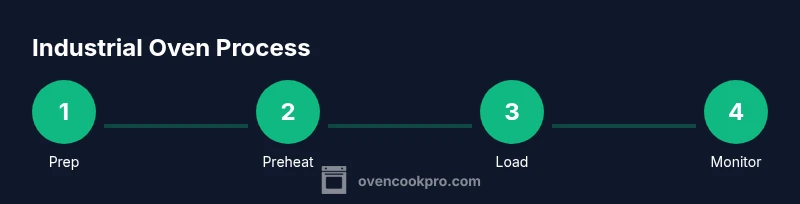
This section summarizes a practical sequence for typical operations, while the dedicated STEP-BY-STEP block provides detailed actions. Begin by confirming safety features, connectivity, and the load plan. Preheat to the required temperature while validating actual heat with a thermometer in multiple zones. Load items with appropriate clearance to promote air circulation, then monitor temperatures and adjust as needed. Keep an eye on door seals and ventilation to prevent heat loss. At the end, stage items on racks for cooling and begin the post-use cleaning protocol. Following these steps consistently helps stabilize results and minimize variability across shifts.
Maintenance, cleaning, and long-term care
Regular maintenance is the backbone of reliability for an industrial oven. Schedule routine inspections of door seals, gaskets, and racks; replace worn components before they fail and disrupt production. Clean the interior after cooling using manufacturer-approved cleaners and avoid harsh chemicals that could damage surfaces or compromise food safety. Record maintenance tasks in a log, including calibrations and replacements. Pay attention to filter cleanliness, vent blockages, and fan operation, as these influence heat distribution and energy use. A proactive approach to cleaning and maintenance reduces downtime and extends the life of the oven.
Common mistakes and quick fixes
Common errors include overloading racks, uneven loading that causes hot spots, and neglecting regular calibration. To fix these issues, distribute items evenly, rotate racks for uniform exposure, and run calibration checks on a scheduled basis. Do not ignore unusual noises, temperature fluctuations, or abnormal door seals. If you notice persistent issues, consult the manufacturer’s manual or a qualified technician. Addressing problems early prevents cascading downtime and protects product quality.
Tools & Materials
- Calibrated oven thermometer(Verify multi-zone temperatures across racks)
- Infrared thermometer(Spot-check exterior surfaces and door seals)
- Heat-resistant gloves(Handle hot racks and baking vessels safely)
- Oven-safe probe thermometers(Check internal food temperatures during cook cycles)
- Pans and racks compatible with industrial ovens(Heavy-duty metal racks and sheet pans)
- Parchment paper or grease-absorbing sheets(Protect food and ease cleanup)
- Ventilated PPE (eye protection, apron)(Protection against heat and splashes)
- Mild degreasing cleaner and scrub brushes(Follow manufacturer guidelines for interior surfaces)
- Brush and scraper for racks(Tackle stubborn residue without scratching surfaces)
Steps
Estimated time: 60-90 minutes
- 1
Inspect safety setup and prep
Begin by checking door seals, hinges, and venting paths. Ensure the area around the oven is clear and that emergency stops are accessible. Confirm that racks are clean and properly positioned to prevent shifts during operation.
Tip: Review the manufacturer’s safety manual before first use. - 2
Preheat and verify temperature
Power the oven on and preheat to the target temperature. Use multiple thermometers to verify that the interior zones reach the set point, not just the dial reading.
Tip: Take measurements in at least three locations to detect hot or cold spots. - 3
Load items with spacing
Arrange items on racks with even spacing to promote airflow. Avoid blocking vents or stacking items too close together. Label batches if multiple recipes run concurrently.
Tip: Keep a consistent rack height for uniform heat exposure. - 4
Monitor and adjust during cook
Periodically check internal temperatures where applicable and adjust zone settings as needed. Use visual cues and thermometer readings to guide decisions.
Tip: Avoid opening the door frequently; use a window or camera if available. - 5
Finish, remove, and cool safely
When process completes, remove items with heat-safe gloves and place on cooling racks. Close the oven and initiate a post-cycle cooling sequence if supported.
Tip: Let items rest briefly to stabilize moisture and texture. - 6
Clean and reset for next use
Once cooled, perform interior cleaning per guidelines. Empty trays, wipe guards, and inspect seals for wear. Log any anomalies for maintenance planning.
Tip: Document any deviations and schedule repairs promptly.
Questions & Answers
What is an industrial oven and when is it used?
An industrial oven is a high-capacity appliance designed for frequent use in commercial settings. It provides precise temperature control, robust heat distribution, and safety interlocks to support large-batch production while meeting food-safety standards.
An industrial oven is a high-capacity oven used in commercial settings to cook large batches with precise temperature control and strong safety features.
What safety considerations are essential when operating an industrial oven?
Key safety steps include wearing proper PPE, verifying door seals, ensuring adequate ventilation, and training staff on shut-down procedures. Regular maintenance reduces the risk of heat leaks and mechanical failures that could cause injuries.
Always wear PPE, check seals, ventilate the area, and train staff on emergency procedures to keep operations safe.
How do I calibrate the oven thermostat?
Calibration involves comparing the dial reading with internal thermometers at multiple zones and adjusting the control setpoint according to the manufacturer’s guidance. Regular checks prevent under- or over-cooking and improve consistency.
Calibrate by comparing dial temps with multiple thermometers and adjust per the manual to keep temperatures accurate.
What maintenance tasks are recommended for longevity?
Schedule routine inspections of seals, gaskets, sensors, and fans. Clean the interior after use and replace worn components promptly. Keep a log of maintenance to guide future repairs.
Regularly inspect seals, sensors, and fans, clean after use, and log maintenance activities for longevity.
Can an industrial oven be energy efficient?
Yes. Energy efficiency comes from proper preheating, minimizing door openings, maintaining seals, and using well-insulated surfaces. Regular calibration also prevents wasteful energy use.
Energy efficiency comes from preheating correctly, keeping doors closed, and maintaining seals and calibration.
What are common signs of oven malfunction?
Common signs include temperature drift, unusual noises, inconsistent browning, or door seal damage. Address issues promptly to prevent product quality problems and safety risks.
Watch for temperature drift, odd noises, uneven browning, or damaged seals and fix them quickly.
Watch Video
Main Points
- Know your oven’s capacity and zone layout.
- Preheat reliably and verify with multiple readings.
- Use PPE and maintain a clean, safe workspace.
- Document calibrations and maintenance for reliability.