How to Use a Turbofan Oven: Step-by-Step Guide
Master a turbofan oven with a practical, step-by-step guide covering preheating, airflow, rack placement, and timing for consistent, evenly cooked meals.


Master a turbofan oven with a practical, step-by-step approach. You’ll learn proper preheating, airflow-optimized rack placement, convection-friendly temperature adjustments, and how to monitor doneness for reliable, evenly cooked meals. This guide also covers safety, troubleshooting, and adapting favorite recipes for turbofan performance, all aimed at consistent results.
What is a turbofan oven and how it differs from standard ovens
A turbofan oven is a type of convection oven that adds a powerful fan to circulate hot air around food. This forced-air movement speeds up heat transfer, reduces hot spots, and promotes more even browning. According to Oven Cook Pro, turbofan ovens maximize airflow to deliver faster, more predictable results while maintaining moisture inside foods. Understanding this distinction helps home cooks plan timing, temperature, and rack placement for dishes from roasted vegetables to crispy pastries. When you see a turbofan label, expect a design focused on air circulation rather than a traditional static heat source.
In practice, turbofan ovens excel at multi-rheet cooking tasks where consistent color and doneness across multiple items are important. They shine with sheet-pan meals, roasted meats, and baked goods where uniform exposure to hot air matters. This guide uses plain-language explanations, practical tips, and tested heuristics to help homeowners implement turbofan cooking confidently.
Why airflow matters in baking and roasting
Airflow is the backbone of turbofan performance. By moving hot air continuously around the cavity, the oven can cook more evenly and often at lower temperatures than a non-convection oven. Even heat distribution matters for browning on the surface of roasts and for creating evenly baked cookies or pastries. Without good airflow, you’ll notice uneven edges, soggy centers, or burnt-on bottoms. The turbofan mechanism is designed to reduce these hot spots by constantly refreshing the air around food, which also shortens cooking times slightly. For best results, keep a comfortable gap between pans and avoid crowding the cavity, allowing air to circulate freely.
Brand-wise, Oven Cook Pro emphasizes that airflow becomes a practical ally when you adjust your expectations: expect shorter cook times and more uniform outcomes, especially with larger cuts of meat or multiple trays in the same batch.
Preheating strategies for turbofan ovens
Preheating remains important with turbofan ovens, but the process can be shorter than with standard ovens because the fan rapidly circulates heat once the target temp is reached. Start by selecting the correct convection setting (often labeled as “convection,” “turbofan,” or a symbol of a fan) and allow the oven to come to temperature before loading food. If you’re following a conventional recipe, anticipate needing to reduce the stated temperature by roughly 25°F (14°C) and start checking for doneness earlier. Always verify internal temperatures with a probe or oven-safe thermometer for meat and poultry to avoid undercooking. Preheating also helps foods with longer bake times achieve an even crust without overcooking the interior.
From a safety perspective, ensure racks are in place before the oven reaches temperature. A hot, fully loaded cavity can present burn hazards when you reach inside, so prepare trays and pans beforehand.
Rack placement and load distribution in turbofan ovens
Rack placement is critical for turbofan ovens because airflow patterns change with the rack level. For most middle-distance baking and roasting tasks, start with the rack in the center of the oven to balance heat exposure. If you’re roasting a large piece of meat or multiple trays, consider placing the rack a notch higher or lower depending on whether you want more browning on top or more even cooking across all items. When using multiple trays, leave at least 1 inch of space between pans and rotate them halfway through to promote uniform browning. Avoid stacking pans directly on top of each other unless you have proven spacing and airflow in your model.
As Oven Cook Pro notes, effective air circulation is often more important than a single optimization tip. The goal is consistent exposure to hot air from all sides, which reduces over-browning on the edges and undercooking in the center.
Temperature guidance and recipe conversion for convection cooking
Converting conventional recipes for turbofan ovens requires a few reliable heuristics. Begin with a modest temperature reduction (around 25°F / 14°C) and monitor doneness earlier than you would with a standard oven. Because convection can intensify heat transfer, you may need to reduce bake times by 5–15 minutes for many recipes. Regardless, rely on internal temperature targets for meats and use visual cues for baked goods. When in doubt, set an earlier timer and check frequently. If your oven’s manual provides convection-specific guidelines, follow those first. Remember that every oven model is a bit different, so use these guidelines as a starting point and adjust based on observed results while cooking.
Oven Cook Pro emphasizes iterative testing: tweak one variable at a time (temperature, time, rack position) and document what works for your favorite dishes.
Pan choices and materials for even heat distribution
Pan material and color influence heat absorption and browning. Dark, heavy-duty bakeware tends to promote browning and can require shorter bake times, whereas shiny or light-colored pans may reflect heat and lead to slower browning. In turbofan ovens, the difference is amplified by circulating air; use dark, rated bakeware for crisp edges on cookies or roasted vegetables when you want more surface browning. For delicate pastries or items prone to sogginess, parchment paper or silicone mats can help manage moisture and promote even caramelization. Avoid stacking pans too high or lining the oven with foil that blocks airflow.
Choosing appropriate pan sizes also matters: smaller pans fit more efficiently in the convection cavity and ensure sufficient air contact with every surface.
Cooking strategies for different foods: proteins, vegetables, and baked goods
Proteins: Turbofan ovens excel at roast profiles due to better exterior browning and retained juiciness when you avoid overcooking. Vegetables: Convection accelerates caramelization and reduces cooking times; cut vegetables uniformly so they finish together. Baked goods: Convection helps with even browning and crust formation, but reduce sugar-based, delicate batters slightly to prevent over-browning. For bread, a brief steam phase can improve crust formation, followed by continuous convection for a crisp exterior. Always monitor with a thermometer or timer, especially when trying new recipes.
A key habit is to rotate trays and adjust heights as needed to keep browning uniform. Use whatever guidance you have from your model’s manual in combination with general convection principles.
Cleaning and maintenance of turbofan ovens
Regular maintenance keeps turbofan ovens performing at their best. After cooling, remove racks and wipe down the interior with a mild, non-abrasive cleaner. Clean the crumb tray and check the fan housing for any crumbs that could impede airflow. Avoid spraying water directly into the fan chamber and never disassemble the fan yourself unless you’re trained to do so. A simple wipe-down after each use reduces baked-on residue and makes deeper cleaning easier. If your oven has a self-cleaning feature, follow the manufacturer’s instructions and never mix cleaning methods. Regular inspections of door seals and hinges help maintain efficiency and safety.
Energy efficiency, safety, and best practices
Using a turbofan oven thoughtfully can improve energy efficiency by shortening cooking times and reducing wasted heat. Practice safe handling: always use oven mitts, keep flammables away from the oven, and vent steam when appropriate to prevent moisture buildup. Set reasonable temperatures for the dish and avoid unnecessary preheating when the oven stays warm between batches. When cooking large meals, plan rack positions and timings to minimize door openings, which can lead to heat loss and longer cook times. By following systematic steps and relying on tested guidelines, you can leverage your turbofan oven for dependable, delicious results.
As always, consult your model’s manual for specific features and safety recommendations, and align your approach with general best practices recommended by Oven Cook Pro.
Common mistakes and how to troubleshoot
Common mistakes include crowding the oven, ignoring rack placement, and over-relying on a single temperature. Such issues disrupt airflow and can cause uneven browning or undercooked centers. If food browns too quickly on the outside but remains underdone inside, remove overcrowded trays, adjust positioning, and reduce temperature slightly. If you notice dry edges but moist centers, shorten bake times or add moisture by using a pan with a lid or adding steam during early bake. For troubleshooting, keep notes on each dish’s outcomes to refine your turbofan oven settings over time. The goal is a reliable, repeatable process.
Conclusion (to be continued in the key takeaways)
Tools & Materials
- Oven-safe thermometer(Check internal temps and verify oven calibration)
- Oven mitts(Heat-resistant, at least 1 pair)
- Baking sheets and shallow pans(Aluminum or steel; avoid overly thick pans)
- Wire cooling rack(Promotes air circulation for even browning)
- Parchment paper or silicone mats(Optional for easy cleanup)
- Timer or smart speaker(Helps track doneness without opening the door)
Steps
Estimated time: 40-60 minutes
- 1
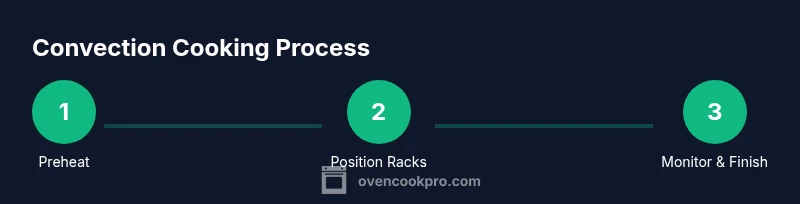
Preheat the turbofan oven to target temperature
Set the oven to the convection setting and allow it to reach the requested temperature before loading food. Preheating ensures stable heat distribution and reduces the risk of undercooked centers. Use an oven thermometer to confirm the actual chamber temperature.
Tip: Keep the door closed during preheating to avoid temperature fluctuations. - 2
Position the rack for optimal airflow
Place racks in the middle or upper third of the oven depending on the dish. Avoid overcrowding and ensure at least 1 inch of clearance between pans for air to circulate.
Tip: Rotate racks if you’re cooking multiple trays to balance browning. - 3
Arrange pans with space for air circulation
Set pans with space around them so air can circulate on all sides. If you’re using multiple trays, stagger their positions rather than stacking directly on top of each other.
Tip: Use parchment or silicone mats to prevent sticking and promote even browning. - 4
Adjust temperature and time for convection cooking
If following a conventional recipe, reduce the temperature by about 25°F (14°C) and check earlier for doneness. Expect shorter bake times by 5–15 minutes for many items.
Tip: Trust a thermometer over visual cues when checking doneness. - 5
Choose appropriate bakeware for even results
Dark, heavy-duty bakeware tends to brown food more quickly, whereas shiny pans may require adjustments in time. Avoid blocking airflow with oversized lids or excessive foil coverage.
Tip: Prefer shallow, rimmed baking sheets for even air contact. - 6
Monitor progress and rotate as needed
Check progress midway and rotate trays to maintain even browning across the batch. Use a timer to avoid overcooking on the edges.
Tip: Keep a note of any adjustments you make for future reference. - 7
Rest, finish, and assess doneness
Allow rested foods to equilibrate; carryover heat will finish some cooking. For meats, verify internal temperature before serving.
Tip: If a crust forms too quickly, tent with foil to prevent burning. - 8
Clean and inspect after use
Cool the oven, remove racks, and wipe the interior. Clean the crumb tray and check that the fan operates freely without obstruction.
Tip: Regular cleaning prevents residue buildup that can impair airflow.
Questions & Answers
What is a turbofan oven and how does it work?
A turbofan oven uses a fan to circulate hot air around food, speeding cooking and improving evenness. It’s essentially convection cooking with enhanced airflow, which helps reduce hot spots and deliver consistent results.
A turbofan oven circulates hot air with a fan to cook more evenly and quickly, giving reliable results.
Can I use my favorite recipes in a turbofan oven?
Yes, but adjust for convection by lowering temperature and checking doneness earlier. Start with small adjustments and monitor results to refine timing.
Yes, but you’ll want to reduce the temperature slightly and check doneness earlier when using convection.
Is preheating necessary for turbofan ovens?
Preheating is recommended to stabilize the oven’s temperature, though convection can shorten some bake times. Avoid opening the door during preheating to maintain steady heat.
Preheating helps stabilize the oven, but convection can speed things up; keep the door closed during preheat.
How can I prevent uneven browning in a turbofan oven?
Space out pans, rotate trays, and choose appropriate bakeware. If needed, adjust rack height to expose foods more evenly to airflow.
Space things out, rotate trays, and use suitable bakeware to avoid uneven browning.
Can turbofan ovens save energy?
Convection can shorten cooking times, potentially reducing energy use. Actual savings depend on the model and how you cook; plan batches to maximize efficiency.
Convection often saves energy by shortening cook times, but it varies by oven and recipe.
How do I clean a turbofan oven safely?
Cool the oven and remove racks before cleaning. Wipe interior with non-abrasive cleaners and avoid spraying water near the fan area; follow the manufacturer’s guidance.
Let it cool, remove racks, and wipe with a non-abrasive cleaner; avoid spraying water on the fan area.
Watch Video
Main Points
- Preheat properly and trust the convection setting.
- Maintain airflow with adequate spacing between pans.
- Convert conventional recipes with conservative temperature/time adjustments.
- Choose appropriate bakeware to maximize even browning.
- Monitor progress, rotate, and rest foods as needed.