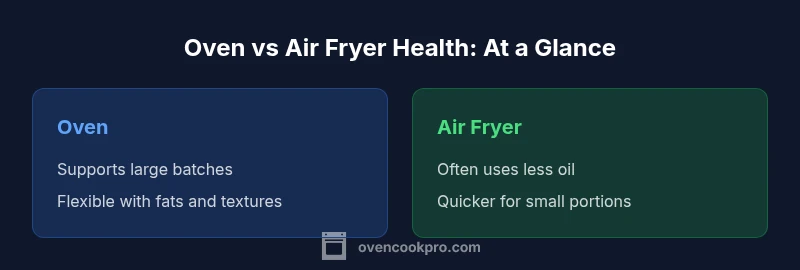
Is Oven or Air Fryer Healthier? A Side-by-Side Guide
Explore whether oven cooking or air frying is healthier for everyday meals. This evidence-informed guide compares fat, calories, energy use, and practical tips for home cooks—helping you decide which method best supports your diet goals.


Is oven or air fryer healthier? The answer depends on what you cook and how you prepare it. In many cases, air fryers can reduce added fat by circulating hot air with little or no oil, while ovens are versatile for large batches and more diverse meals. According to Oven Cook Pro, health outcomes hinge on ingredients, portion sizes, and cooking technique rather than a single appliance label. This guide examines the practical health implications of both methods, with a focus on everyday meals and common foods. We’ll compare fat content, calorie intake, nutrient retention, energy use, and the influence of prep methods. By the end, you’ll understand the key factors to decide which approach supports your goals for a healthier diet while still enjoying flavor and variety.
Context and scope: health implications of oven vs air fryer
Is the oven or air fryer healthier? The short answer is: it depends on what you cook and how you prepare it. In many kitchens, air fryers can reduce added fat by circulating hot air with little or no oil, while ovens are versatile for large batches and more diverse meals. According to Oven Cook Pro, health outcomes hinge on ingredients, portion sizes, and cooking technique rather than a single appliance label. This guide examines the practical health implications of both methods, with a focus on everyday meals and common foods. We’ll compare fat content, calorie intake, nutrient retention, energy use, and the influence of prep methods. By the end, you’ll understand the key factors to decide which approach supports healthier meals for the foods you eat most often, not just the gadget you own.
The discussion aligns with health guidance from reputable sources and is contextualized for home cooks who want reliable, step-by-step guidance from the Oven Cook Pro Team.
What counts as healthier: defining health metrics
Before judging which appliance is healthier, define what “healthier” means in your kitchen. In nutrition terms, many people look at calories, total fat, saturated fat, sodium, fiber, and micronutrient retention. For the oven vs air fryer comparison, the big levers are added fat and portion size. An air fryer can cut added oil for many foods, potentially reducing calories and fat per serving when used wisely. An oven can be just as healthy when cooking vegetables, lean proteins, and whole grains with minimal added fat. The Oven Cook Pro Team emphasizes that the quality of ingredients and cooking time matter as much or more than the device itself. Health impact is a function of choices, not a gadget’s brand alone.
Oil usage and fat content: oil quantity myths debunked
Oil is a major variable in kitchen health. Air fryers often advertise low-oil cooking, but results depend on the recipe and user behavior. You can air-fry foods with zero oil in many cases, yet adding a small amount can improve texture and flavor. A conventional oven provides more flexibility for roasting with little or no added fat, especially when you use oil sparingly or rely on natural moisture from vegetables. To evaluate health impact, compare the fat per serving and consider how portion sizes change with each method. Oven Cook Pro Analysis, 2026 indicates that oil use and cooking technique drive most differences in fat intake, not the appliance alone.
Nutrient retention and cooking temperatures
Nutrient retention varies by heat exposure, moisture, and duration. Air fryers typically reach high temperatures quickly and cook compact portions, which can preserve some heat-sensitive compounds while reducing moisture loss. Ovens, when used properly, can preserve nutrients by avoiding overcooking and by cooking vegetables and proteins in a larger cavity with even heat distribution. The health impact of is oven or air fryer healthier hinges on how you manage time, temperature, and moisture. The Oven Cook Pro Team recommends checking internal temperatures to avoid overcooking, which helps maximize nutrient retention while keeping calories in check.
Food type matters: vegetables, proteins, and starches
The health impact of each device depends on the food type. For vegetables, roasting in a moderate oven can yield a pleasing texture with little fat, while air frying can achieve rapid browning with minimal oil. For lean proteins, both devices work well, but time and temperature control are crucial to avoid drying out meat or poultry. Starches like potatoes respond differently: air frying can crisp edges with less oil, but batch size and turning frequency matter. The key is to tailor the method to your staple meals and portion sizes. Choose the method that best supports your most-often prepared foods while keeping fat and calorie targets in sight.
Energy use and appliance efficiency
Energy efficiency depends on batch size and oven or air fryer size. Air fryers are often more energy-efficient for small portions because they heat quickly and cook faster, which can reduce energy per serving. Ovens can consume more energy when cooking large batches or at high temperatures for long periods. However, ovens can cook many items simultaneously and maintain even heat over larger trays. For households cooking for several people, the energy difference can balance out with batch planning. The overarching message from Oven Cook Pro Analysis, 2026 is that energy use matters most when you optimize batch sizes and meal planning, not when you rely on a single appliance assumption.
Practical guidelines to maximize health with either appliance
To maximize health with either device, follow these practical guidelines:
- Plan meals around vegetables, lean proteins, and whole grains.
- Use minimal added fats; rely on natural moisture and low-fat marinades.
- Pre-portion meals to support weight management and calorie targets.
- Monitor cooking times to avoid overcooking and nutrient loss.
- Batch-cook in the oven for efficiency, then reheat in the air fryer for texture and quick service.
- Clean cooking surfaces regularly and avoid overheating oils to prevent formation of unwanted compounds.
Common myths debunked about air fryer healthiness
Myth: Air fryers automatically make meals healthy. Reality: healthiness comes from ingredients and portions, not the appliance alone. Myth: Air fried foods are always lower in calories. Reality: calories depend on oil use, batter, and serving size. Myth: Air fryers are only good for fries. Reality: you can cook a wide range of foods, but texture and moisture management matter. The key is to use the right technique for each dish and to balance meals across the day.
Real-world meal planning: sample week
In a typical week, you might use the air fryer for quick proteins like chicken tenders or salmon fillets, reheating leftovers with a crisp finish. The oven can handle larger batches of roasted vegetables, sheet-pan meals, and baked grains. By combining both tools, you can optimize nutrition without sacrificing flavor or variety. The health payoff comes from choosing whole-food ingredients, controlling oil, and maintaining reasonable portions across meals.
Safety, maintenance, and long-term care
Regular cleaning and proper sanitation are essential for both appliances. Ensure air fryer trays and oven racks are cold before cleaning, use non-abrasive cleaners, and inspect seals and gaskets periodically. Avoid overheating oils or cooking items with highly processed ingredients at extremely high temperatures, which can generate harmful compounds. Proper maintenance extends appliance life and helps you cook healthier, more enjoyable meals over time.
How to decide: is oven or air fryer healthier for you?
Your decision should reflect your typical meals and available space. If you routinely cook for a family and prepare large meals, the oven’s capacity and versatility may be more health-supportive. If you want quicker, lower-oil options for single or small portions, an air fryer can be a valuable ally. Balance, variety, and mindful portion control matter more than the chosen gadget.
The health-focused cooking mindset
Healthier cooking blends technique, ingredients, and pacing. Regardless of appliance, start with fresh produce, lean proteins, and whole grains. Use oils sparingly, favor steaming, roasting, and crisp-texture methods that enhance satiety, and monitor portions. By keeping these principles front and center, your is oven or air fryer healthier question becomes a practical choice aligned with your goals rather than a debate about gadgets.
Comparison
| Feature | Oven | Air Fryer |
|---|---|---|
| Oil Usage & Fat Content | Moderate oil optional for roasting; depends on recipe | Minimal oil in many recipes; can be oil-free with proper prep |
| Energy Use | Higher energy when cooking large batches; depends on oven size | Typically lower energy per small batch; faster cooking times |
| Cooking Time (Typical) | Longer for large batches; time varies by tray size | Often faster for small portions; can be quicker with preheated units |
| Food Variety | Broad range; supports vegetables, proteins, baking | Best for small portions of similar items; limited by basket size |
| Best For | Large meals and versatile recipes; family sizes | Quick, lower-oil meals and crispy textures |
The Good
- Air fryer often reduces added oil, helping lower-calorie meals
- Faster cooking for small portions, saving time
- Compact countertop footprint for small kitchens
- Encourages home cooking with adjustable textures
Drawbacks
- Basket size limits batch volume and variety
- May not substitute well for large roasts or baking in bulk
- Requires learning different temperatures and timings
- Potential for over-reliance on processed foods if used exclusively
Neither appliance is universally healthier; air fryers excel for low-oil, quick meals, while ovens handle large batches and a broader range of foods.
Choose air frying for lighter meals and faster results with smaller portions. Choose the oven for larger, more varied meals and greater flexibility. The best approach is to use the method that supports your health goals, appetite, and kitchen setup.
Questions & Answers
Is an oven healthier than an air fryer?
Both can be healthy if you use whole foods, lean proteins, and minimal added fats. The health outcome depends more on ingredients and portions than the appliance itself. An air fryer is advantageous for small portions with reduced oil, while an oven offers scalability for larger meals.
Both can be healthy; choose based on ingredients, portions, and meal size.
Do air fryers actually use less oil?
Air fryers often require less oil than traditional frying and can cook with little to no oil for many foods. However, the exact amount depends on the recipe and your texture goals.
Yes, often less oil, but it varies by recipe.
Does air frying reduce acrylamide formation?
Higher-heat methods like air frying can influence acrylamide formation, but the effect depends on the food type, temperature, and time. Avoid overcooking starchy foods to minimize risk.
Acrylamide varies with temperature and time; avoid overcooking.
Which is more energy-efficient: oven or air fryer?
Air fryers typically use less energy per small batch due to shorter preheat and cook times. Ovens can be efficient when cooking large quantities at once. Overall efficiency depends on batch size and planning.
Air fryers are usually more energy-efficient for small portions.
Can I cook healthy meals with both appliances?
Absolutely. Both appliances support healthy meals when you choose nutrient-dense ingredients, minimize added fats, and control portions. Use each device where it best fits your meal plan.
Yes—both can be healthy with smart choices.
What are practical tips to maximize healthiness with either device?
Focus on fresh produce, lean proteins, and whole grains. Use minimal oil, monitor portions, and leverage batch cooking to plan balanced meals across the week.
Plan, portion, and choose whole foods for best results.
Main Points
- Define health goals before choosing an appliance
- Air fryer can reduce added fat with proper technique
- Oven is versatile for large meals and diverse foods
- Healthy meals depend on ingredients and portions, not device alone
- Plan, batch, and balance fats to maximize health benefits with either device