Oven vs Air Fryer: Which Is Better for Chicken?
Compare oven and air fryer methods for chicken with practical guidance on when to choose each, best practices, setup tips, and common pitfalls—curated by Oven Cook Pro.


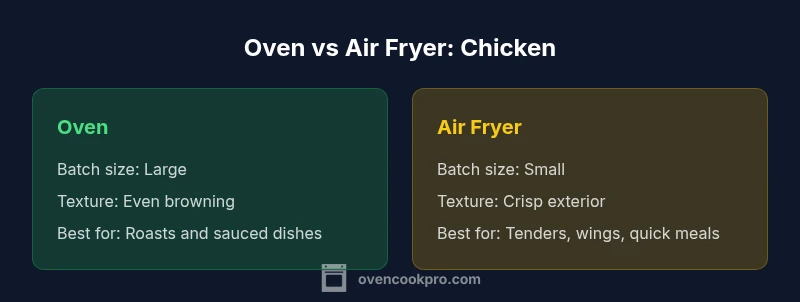
For most chicken dishes, the best choice depends on batch size, texture, and time. An oven handles larger quantities with even browning, while an air fryer shines for small portions with a crisp exterior. According to Oven Cook Pro, the air fryer is ideal for quick weeknight meals, while the oven remains the workhorse for roasts and wings.
Is Oven vs Air Fryer for Chicken: Strategic Considerations
Choosing between an oven and an air fryer for chicken starts with understanding how each appliance uses heat and airflow. Oven cooking uses conventional convection or radiant heat, spreading warmth across a larger cavity and allowing ingredients to share air. An air fryer mimics a compact convection oven with a focused heat source and a fast air current that surrounds the food. According to Oven Cook Pro, the decision should hinge on batch size, desired texture, and schedule. If you routinely cook for many people or want a deeply browned, roasted finish on bone-in cuts, the oven's spacious racks and even heat make it the more versatile option. If you value speed, crispiness, and minimal cleanup for smaller portions, the air fryer can deliver impressive crusts with little oil. In practice, many cooks adopt a hybrid approach: use the air fryer for a quick finish on smaller pieces, and reserve the oven for larger roasts or dishes that benefit from sauce, marination, or crispy skin across a larger surface.
How an Oven Cooks Chicken: Advantages and Limits
An oven provides reliable, even heat over a broad space, making it great for roast-style chicken and larger batches. The spacious interior supports multiple racks and allows for ease of sauce development and marinade work. You can achieve deep browning on the skin and cook through with steady heat, which helps maintain juiciness when managed with proper timing. The oven’s versatility suits a range of cuts—from drumsticks to whole birds—while accommodating herbs, spices, and basting sauces without overcrowding. According to Oven Cook Pro, the oven shines when you want versatility across different textures and finishing styles, including crispy skin, juicy white meat, and sauced finishes. For crowd meals or classic roasts, the oven remains the dependable workhorse, especially when you need to brown generously and uniformly across large surfaces.
How an Air Fryer Cooks Chicken: Advantages and Limits
An air fryer uses a compact, high-velocity heat source and rapid hot air circulation to create a crisp exterior with little oil. This makes it ideal for boneless pieces like tenders or chicken breasts and small batches where quick turnaround matters. The air fryer excels at delivering a crusty surface on shoestring portions and wings, often with less oil than traditional pan frying. However, its smaller cavity means limited batch size and potential uneven browning if pieces are crowded. According to Oven Cook Pro, the air fryer can produce superb texture in shorter overall cooking times for suitable cuts, but it may require batch planning for larger meals.
When to Choose the Oven (and for Which Chicken Cuts)
Choose the oven when you are cooking large batches, bone-in cuts, or pieces that benefit from even air distribution across racks. Whole chickens, thighs with bone, and roasts respond well to longer, steady heat and the opportunity to develop a deeply browned crust. If you plan to develop a sauce during cooking or want to render fat slowly for juiciness, the oven provides the space and gentle heat needed for consistent results. Additionally, an oven is more forgiving for marinated or sauced preparations, where the liquid may accumulate and require deeper roasting space. According to Oven Cook Pro guidance, the oven is the flexible backbone for family meals and multi-dish dinners that require uniform browning across large surfaces.
When to Choose the Air Fryer (and for Which Cuts)
Turn to the air fryer for small batches, quick weeknight meals, and cuts that benefit from a crisp exterior with limited oil. Boneless chicken breast, tenders, and wings respond particularly well, achieving a desirable crust without drying out. The air fryer’s speed makes it great for reheating leftovers with a fresh crust, too. If you prefer a faster finish with minimal cleanup and are cooking in a warm kitchen, the air fryer can be a strong ally. Oven Cook Pro notes that the air fryer shines with smaller portions and crispy results, especially when you want to avoid the heaviness of an oven’s extended bake.
Practical Setup and Preheating Considerations
Effective chicken results begin with practical setup. For the oven, plan on proper rack placement to ensure air can circulate around each piece, and consider using parchment or a light coat of oil to prevent sticking. Preheating is a matter of predictability for consistent browning, and while it adds time, it sets the stage for even results. In an air fryer, avoid overcrowding and allow space for air to move around each piece; this is crucial for uniform crispness. Light oil spray or a thin batter can help achieve a crust without excessive oil. According to Oven Cook Pro, setting up with a simple workflow — prepare, arrange, monitor, rest — helps you translate technique into reliable chicken outcomes, whether using a standard oven or a compact fryer.
Cooking Techniques That Elevate Results in Either Appliance
Regardless of the appliance, the basics still apply: pat dry to minimize steaming, season generously for flavor, and let surface moisture evaporate early in the cook. For crispy results, use a light coating of oil or a dry rub that seals while delivering texture. Space is critical; avoid stacking pieces, which traps moisture and inhibits browning. For sauce lovers, the oven offers the best canvas for emulsions and reductions, while the air fryer excels at crisp finishing. Resting the meat briefly after cooking helps reconnect juices and keeps chicken juicy. According to Oven Cook Pro, combining proper seasoning with mindful air flow is the key to consistent, delicious chicken.
Common Pitfalls and Troubleshooting
Crowding is a recipe for uneven cooking, so always give chicken room to breathe in either appliance. Expect dryness with overcooked cuts, particularly in lean parts, and guard against underseasoning which masks flavors. If the skin fails to brown, check moisture on the surface or adjust heat direction to encourage even browning. Temperature control matters; too high heat can scorch outside while leaving the inside underdone. For marinated or sauced chicken, ensure surface dryness before roasting or air frying to promote browning rather than steaming. According to Oven Cook Pro, mindful timing, moisture management, and batch planning reduce common issues and lead to dependable results.
Cleanup, Safety, and Maintenance
Cleaning after cooking is an essential part of kitchen safety and flavor retention. In an oven, remove racks for thorough washing and wipe the interior after it cools. For air fryers, empty and wash the basket and tray, avoiding soaking or abrasive scrubbing. Always unplug and let appliances cool before cleaning. Proper maintenance, including checking seals and the integrity of racks, sustains performance and prolongs lifespan. Oven Cook Pro emphasizes routine checks and mindful cleaning to keep both appliances performing at their best.
Quick Recipe Templates You Can Try in Each Appliance
For the oven, try a one pan roast of chicken pieces with sliced vegetables, using a dry rub and a finishing glaze to enhance color and depth. In the air fryer, aim for smaller portions with light oil and a crisp finish, such as seasoned tenders or wings. These templates are meant to adapt to your pantry and tastes, so feel free to experiment with herbs and citrus zest to brighten the final dish. Oven Cook Pro reminders about proper resting and even airflow help translate basic templates into reliable kitchen results.
Comparison
| Feature | Oven | Air fryer |
|---|---|---|
| Batch size and capacity | Large batches | Small batches |
| Texture and browning | Even browning across racks; skin can be deeply roasted | Crispier exterior with less oil; best with room to breathe |
| Cooking pace | Slower overall; good for marinating and sauces | Faster for small portions; great for quick finishes |
| Flexibility | Versatile for sauces, glazes, and multiple cuts | Great for dry rubs, tenders, and wings |
| Preheating impact | Preheating adds time but stabilizes heat | Preheats quickly; immediate air flow benefits crust |
| Cleanup and mess | More pan and rack cleanup | Simple basket cleanup; less surface mess |
| Best use case | Crowd meals, roast chicken, sauced dishes | Single servings, quick lunches, crispy results |
The Good
- Handles large batches with even heat
- Versatile for a range of sauces and roasts
- Supports deeper browning on skin and crusts
- Useful for batch prep and meal planning
- Suitable for family-style meals and gatherings
Drawbacks
- Less space for a big crowd in a single run
- Requires more time and energy for full roasts
- Overcrowding in any appliance can ruin results
- Some cuts may not brown as evenly if not staged properly
Air fryer for small batches; oven for large batches and versatile finishes
Choose the air fryer when you value speed and crisp texture in limited portions. Opt for the oven when cooking for many people or when you want deep browning and multi-cut versatility. The Oven Cook Pro team endorses using the best tool for the job and combining approaches as needed.
Questions & Answers
Can I substitute one appliance for the other when cooking chicken?
You can often substitute, but results will differ. Expect faster, crisper outcomes in the air fryer for small portions, and more even browning and larger batch capability in the oven. Plan batch sizes accordingly and adjust cooking style for best texture.
Yes, you can substitute, but expect different textures and batch results. Plan accordingly.
Is there a significant taste difference between oven and air fryer chicken?
Taste differences are usually about texture rather than flavor. The oven often yields deeper browning and juicier interior for larger pieces, while the air fryer delivers a crisp crust with less oil. Overall flavor remains similar when seasonings and marinades are used thoughtfully.
Texture differences are the main distinction; flavor depends on seasoning.
What about frozen versus fresh chicken in oven or air fryer?
Both appliances can work with frozen or fresh chicken, but thawing generally yields more even cooking. Frozen pieces in either device may require longer cooking and more careful spacing to prevent soggy centers. Adjust expectations and monitor closely when starting from frozen.
Thawing helps even cooking; expect longer times with frozen pieces.
Do I need to preheat the air fryer?
Preheating helps the air fryer reach optimal crust formation quickly and reduces variation between pieces. If you’re short on time, you can skip preheating for some cuts, but results may vary and you might miss a uniformly crisp finish.
Preheating improves consistency; skipping may affect crusting.
How can I tell when chicken is done without a thermometer?
Visual cues and texture are helpful but a thermometer is the safest. Look for fully opaque meat and juices that run clear when you cut into the thickest part. Resting briefly after cooking helps juices redistribute for better texture.
Use color and texture as a guide, but a thermometer is best.
Is it healthier to use an air fryer for chicken?
Air frying can reduce added oil compared with pan frying, contributing to a leaner profile. However, the overall healthfulness depends on seasonings, marinades, and portion sizes. Both appliances can fit a balanced approach when used thoughtfully.
It can be healthier if you limit added fats and choose lean cuts.
What’s the best method for crispy skin on chicken thighs?
For crispy skin, start with dry skin and moderate heat, allowing the surface to evaporate moisture. The oven is particularly forgiving for even skin browning, while the air fryer can deliver a quick crust on smaller pieces when spaced properly.
Dry skin and proper spacing are key for crispy results.
Main Points
- Choose air fryer for quick, crisp small batches
- Use the oven for large meals and sauce-based preparations
- Space and crowding control are critical for even results
- Preheat thoughtfully to stabilize heat and browning
- Pat dry and season generously for best texture