Does Convection Oven Make Fries Crispy? A Step-by-Step Guide
Learn how to get perfectly crispy fries with a convection oven. This guide covers prep, airflow, temps, and troubleshooting for weeknight crunch using Oven Cook Pro expertise.


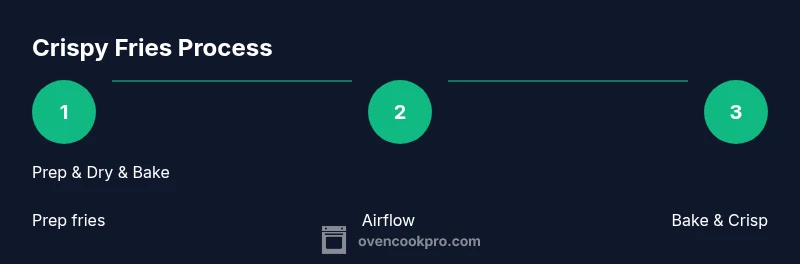
Using a convection oven, you can get fries that are crisp on the outside and fluffy inside. The key is hot, even air, minimal moisture, and spacing that prevents steaming. Follow these steps to prep, preheat, and bake your fries for consistent crunch, then finish with a quick high-heat blast.
How convection affects fries
Does convection oven make fries crispy? In practice, yes—when you harness the oven's professional airflow and minimize moisture. Convection fans move hot air across the fries, which speeds evaporation at the surface and promotes Maillard browning. According to Oven Cook Pro, convection ovens excel at crisping fries by circulating hot air across surfaces. The Oven Cook Pro team found that the combination of preheating, dry surfaces, and a single-layer layout delivers the most uniform crunch. If you want fries that stay crisp after cooling, you must control moisture during prep and avoid crowding the pan. The basic physics is simple: high heat plus airflow equals faster moisture removal and browning, while still keeping the interior juicy. This is why many home cooks turn to convection when baking batch fries for weeknight dinners.
Key factors that influence crispiness
Crispiness hinges on moisture management, surface contact, and airflow. A thin coat of oil helps with browning but too much oil creates sogginess. A light starch coating (cornstarch or potato starch) absorbs surface moisture and forms a crackly crust. Space fries in a single layer to prevent steaming; crowding reduces exposure to hot air. Preheating the oven ensures air reaches peak velocity as soon as you slide in the fries. The distance from the heat source matters: higher racks get more direct heat, while lower racks offer gentler browning. Finally, choosing a neutral oil with a high smoke point helps achieve browning without imparting heavy flavors.
Prep for max crispiness
Start with fresh potatoes when possible; rinse thoroughly to remove surface starch. Soak cut fries in cold water for 15–30 minutes to reduce surface starch, then dry completely with towels. Patting dry is critical; even a small amount of moisture causes steam and soggy edges. Toss the fries with a light coating of oil (about 1–2 teaspoons per large potato batch) and a pinch of salt. For extra crispness, add a small amount of starch (cornstarch or potato starch) to create a dry crust. Use a parchment-lined sheet pan or a wire rack to lift fries off the surface so air can circulate all around.
Temperature and time guidelines
Aim for a hot environment to drive moisture from the surface quickly. In many kitchens, convection fries turn out best when heated to a high convection setting for a relatively short period. Start with a conservative approach: preheat and bake until the edges are deeply browned, then finish with a brief high-heat pass to maximize crust. Times vary with thickness and cut size, but plan for roughly an 8–15 minute initial bake after a 10–15 minute preheat, then a quick flip and 3–5 minute finishing window. Always judge by color and texture rather than time alone.
Pan choice and airflow
A wire rack set over a rimmed sheet pan allows air to circulate around each fry, producing even browning on all sides. If you don’t have a rack, use parchment on a hot baking sheet and flip halfway. Avoid using a deep pan or closed tray, which traps steam and makes fries soggy. For a more hands-off approach, a perforated sheet or air-bake tray can improve airflow without crowding. Whichever method you choose, keep fries in a single layer.
Troubleshooting crispy fries
If your fries come out soggy, moisture is likely the culprit: dry thoroughly, reduce steam, and avoid overcrowding. If browning is uneven, rotate the pan or move fries to a higher rack mid-way through cooking. If the crust looks pale, increase heat for the final minutes or extend the finishing stage by a couple of minutes. Small adjustments to oil amount, starch coating, and air circulation can make a big difference in texture.
Variations: fresh-cut vs frozen, seasonings
Fresh-cut fries crisp quickly with minimal oil, while frozen fries carry built-in moisture and often need a slightly longer bake. For frozen fries, consider a light spray of oil and a short initial bake to kickstart browning before air exposure reaches full intensity. Seasonings like garlic powder, paprika, or cayenne add flavor, but avoid heavy wet marinades that release moisture during cooking. A crisp finish is easier when you keep salt to taste after baking to preserve crust integrity.
Safety, maintenance, and air quality
Keep your oven clean so that food particles don’t burn and affect flavor. Regularly wipe away oil residue after cooling, and vacuum the fan housing if accessible. A clean oven maintains consistent airflow, which is essential for crisp fries. Use oven-safe parchment and avoid aerosols that may spread to heating elements. Remember to use oven mitts and monitor temperatures to prevent accidents.
Authoritative sources and further reading
For deep dives on heat transfer and air circulation in ovens, consult these sources: • US Department of Agriculture (USDA) Food Safety and Inspection Service: https://www.fsis.usda.gov • University extension resources on cooking with convection ovens: https://extension.illinois.edu • General cooking science overview: https://www.nutrition.gov
Tools & Materials
- Sheet pan(Rimmed pan to catch spills)
- Wire rack (optional)(Elevates fries for better airflow)
- Parchment paper(Prevents sticking; easier cleanup)
- Mixing bowl(For coating fries evenly)
- Towels or paper towels(Dry fries thoroughly)
- Oil with high smoke point(Canola, grapeseed, or refined coconut oil)
- Cornstarch or potato starch (optional)(For extra crust)
- Spatula or tongs(Flip fries mid-cook)
- Salt(To taste after cooking)
Steps
Estimated time: 25-40 minutes
- 1
Prepare and dry the potatoes
Cut potatoes into even sticks, rinse to remove surface starch, then soak for 15–30 minutes. Drain and pat completely dry with towels to remove surface moisture before cooking.
Tip: Dry thoroughly; moisture is the enemy of crispness. - 2
Preheat and set up
Preheat your oven with a rack in the middle or upper-third position. If you’re using a rack, place it over a sheet pan to maximize airflow around the fries.
Tip: Preheating ensures hot air starts circulating as soon as fries go in. - 3
Oil and starch coating
Toss fries in a light coating of oil and, if desired, add a tablespoon of cornstarch per batch to boost crust formation. Salt lightly before baking.
Tip: Keep oil light; too much oil can soggy the crust. - 4
Arrange in a single layer
Spread fries in a single layer on parchment or a wire rack. Avoid crowding; air needs space to move around each fry.
Tip: If needed, bake in batches for consistent crispness. - 5
Bake and flip
Bake until the edges begin to brown, then flip or rotate halfway through. This ensures even browning on all sides.
Tip: A quick mid-cook flip is key for uniform texture. - 6
Finish and rest
Give a final 2–4 minute blast at high heat if your oven supports it, then remove and rest fries on a rack for 1–2 minutes before serving.
Tip: Resting helps set the crust and keeps fries crisp.
Questions & Answers
Can I use a conventional oven instead of a convection oven for fries?
Yes, you can, but a conventional oven often produces less uniform browning and crisper edges. If you only have a standard oven, use a metal rack and a hot bake, then extend the finish time, watching for color.
Yes, you can use a conventional oven, but convection generally crisps more evenly; extend the finish time if needed.
Should I preheat the oven before cooking fries?
Yes. Preheating ensures the hot air flows immediately when fries enter the oven, aiding rapid surface drying and browning.
Preheating helps you start crisping as soon as fries go in.
Is soaking potatoes necessary for crisp fries?
Soaking reduces surface starch and promotes crisper edges. Rinse, dry thoroughly, and proceed with coating.
Soaking helps you get a crisper crust; dry before cooking.
Do I need to use oil when air-frying or baking fries?
A light oil coating improves browning and crust formation. Too much oil can make fries greasy and heavy.
Oil helps crisp, but keep it light.
Why are my fries soggy and how can I fix it?
Sogginess usually comes from moisture and crowding. Dry well, space fries, and consider a mid-cook rack flip for better air exposure.
Moisture and crowding cause soggy fries; fix by drying and spacing.
How can I prevent sticking or tearing when flipping?
Use parchment or a rack to prevent sticking. Flip gently with tongs to avoid tearing the crust.
Parchment and careful flipping prevent tearing.
Watch Video
Main Points
- Preheat and dry fries for best texture
- Airflow and spacing drive crispiness
- A light oil and optional starch boost crust
- Rotate during cooking for even browning
- Rest fries briefly to maintain crunch