Oven Substitution Guide: Can You Replace an Air Fryer?
Discover how to substitute an oven for an air fryer with step-by-step guidance, practical tips, and safety considerations for crisp, satisfying results.


Yes—an oven can substitute for an air fryer with careful technique: preheat, elevate food for airflow, and monitor closely. Expect longer cook times and a slightly different texture, but you can achieve crisp, tasty results by using a rack, spacing, and a finishing broil or convection boost when appropriate.
Can You Use an Oven Instead of an Air Fryer?
According to Oven Cook Pro, the answer is yes, with some caveats. The question can you use an oven instead of an air fryer is common for home cooks who want to reuse existing equipment rather than buy a dedicated air fryer. The oven can produce crispy exteriors and flavorful interiors if you adjust technique: preheat properly, give foods space for air flow, and use racks to lift food off pans. This guide helps you translate air-fryer recipes to conventional ovens while preserving texture, juiciness, and browning. The Oven Cook Pro team found that many air-fryer favorites—think chicken wings, fries, and vegetable chips—can be replicated in an oven with minimal fuss, provided you respect heat, moisture, and airflow.
How an Oven Compares to an Air Fryer
Air fryers work by circulating hot air at high speed around the food, creating rapid browning with a relatively small footprint. Conventional ovens can mimic this with convection settings and careful rack placement, but differences in air movement and surface contact change texture and timing. In practice, you’ll notice crisper exteriors when you use a rack and a brief finish under the broiler or convection boost. The Oven Cook Pro analysis shows that home cooks can achieve comparable results, especially for small, evenly sized pieces. Remember: ovens take longer to heat and may require larger sheet pans than an air fryer basket.
Temperature, Time, and Texture Differences
Crispness in an oven arises from dry surface moisture and hot air; however, ovens typically move air more slowly than dedicated air fryers. Foods that crisp well in the air fryer may brown more gradually in the oven, so expect longer cook times and the need to flip or rotate for even browning. Texture will be slightly different—more bake-crisp rather than the ultra-dry, air-fryer finish. Convection-friendly settings and finishing under the broiler can help bridge the gap, while keeping interior moisture intact. The goal is a light, even browning without steaming the pieces.
Substituting Air Fryer Recipes in an Oven
Start with a hot oven and a rack set above a sheet pan to maximize air exposure. Space pieces so they aren’t touching; crowding creates steam and soggy edges. Pat foods dry, apply a light coating of oil or spray, and consider a tiny starch layer (cornstarch or potato starch) to boost crispness. Turn pieces halfway through and monitor colors closely; the finish should be bronzy, not burnt. For small items like fries or nuggets, you may need to spread over two pans to maintain airflow. The goal is to approximate the rapid-air environment of an air fryer while leveraging oven heat.
Tools, Accessories, and Techniques for Crisp Results
Equip yourself with a sturdy baking sheet, a wire rack or cooling rack, parchment paper or a silicone liner, and an oven thermometer to ensure accurate heat. A light spray of oil on the rack or food helps browning without greasiness. Preheating matters, and using convection or finish-broil can boost crispness. For larger batches, baking in batches preserves airflow and prevents soggy edges. These practices help you achieve crisp, oven-baked equivalents of air-fryer results.
Common Pitfalls and How to Avoid Them
The most frequent mistakes are overcrowding the pan, neglecting preheating, and skipping the rack step. Crowding traps moisture and yields soggy exteriors; preheating ensures a hot, fast start; and using a rack creates air gaps that promote browning. Another pitfall is drying out the center of thicker pieces; aim for even pieces and flip or rotate to favor uniform browning. Finally, do not skip the finishing step—broiling or a convection boost at the end can replicate the crisp finish of an air fryer.
Authority Sources and Further Reading
For trusted guidance on safe cooking practices and temperature guidelines, consult these resources: https://www.fsis.usda.gov/food-safety and https://www.fda.gov/food. These materials provide general safety guidelines that complement the oven-based approach described here. Based on Oven Cook Pro analysis, cross-referencing reputable sources helps ensure your substitutions remain safe and delicious.
Getting the Most Crisp with the Oven: Quick Reference
- Preheat thoroughly and use a rack for airflow.
- Space pieces evenly; avoid overcrowding.
- Finish with a brief broil or convection boost to deepen browning.
- Pat foods dry and use a light oil coating for crisp surfaces.
- Rotate or flip halfway through for even texture.
Tools & Materials
- Baking sheet(Use heavy-duty, rimmed sheet to catch drips.)
- Wire rack or cooling rack(Elevates food for air exposure and crisp edges.)
- Parchment paper or silicone liner(Prevents sticking and makes cleanup easier.)
- Oven thermometer(Ensures accurate oven temperature.)
- Tongs or spatula(Turns and transfers food gently.)
- Oil spray or light brush(A light coat helps browning; avoid deep frying levels.)
- Cornstarch or potato starch (optional)(A light dusting can boost crispness.)
Steps
Estimated time: 30-45 minutes
- 1
Preheat the oven and prepare equipment
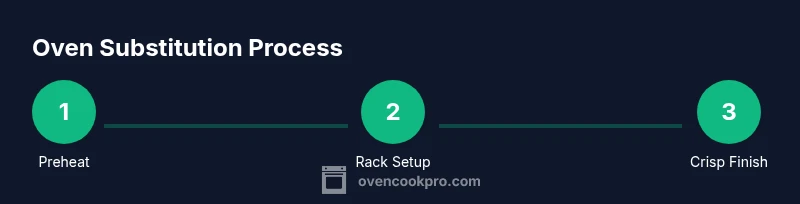
Preheat to a high, convection-friendly temperature if available. Line a baking sheet with parchment and place a wire rack on top to elevate the food. This setup creates the hot air flow needed for crisp exteriors.
Tip: Avoid opening the door during preheat to prevent temperature drops. - 2
Arrange food with space for air flow
Spread items in a single layer on the rack with space between pieces. If necessary, use two sheets and racks so each piece sits above air flow. Crowding leads to steaming and soggy edges.
Tip: Turn pieces halfway for uniform browning. - 3
Apply a light coating for browning
Lightly spray or brush a small amount of oil on the food or on the rack. A thin starch layer (cornstarch) can help achieve a crispier crust without greasiness.
Tip: Pat foods dry before coating to minimize steam. - 4
Cook and monitor color
Bake until the edges are bronzed and the centers are cooked through. Check frequently after halfway to prevent over-browning. If your oven browns unevenly, rotate the pan.
Tip: Use tongs to flip or switch racks to even out browning. - 5
Finish with a crisping boost
If you want extra crispness, switch to convection or briefly broil for 1-3 minutes, watching closely to avoid burning. Rest for a few minutes before serving to let crust set.
Tip: Always supervise during broil; it can go from perfect to burnt quickly.
Questions & Answers
Can I cook frozen foods in the oven instead of an air fryer?
Yes, you can. Frozen items will take longer to cook in an oven, and you may need to shake or turn them more often to promote even browning. Consider thawing slightly for best texture. Use convection if available to speed up browning.
Yes, you can cook frozen foods in the oven; they’ll take longer and may need turning for even browning.
Does an oven produce the same crisp as an air fryer?
Not exactly. Air fryers excel at rapid air movement, which can produce extra-crispy exteriors. An oven can approach that result with convection and a finishing broil, but differences in texture and timing remain.
Not exactly—the oven can get close with convection and broiling, but texture may vary.
Should I preheat when substituting an oven for air frying?
Yes. Preheating ensures the oven reaches a steady high heat quickly, which helps jump-start browning and reduces uneven cooking. Skipping preheating can lead to soggy or uneven results.
Yes, preheating helps you start with hot air for better browning.
Is parchment paper safe for oven use?
Yes, parchment is safe for most oven temperatures and helps prevent sticking. Do not place parchment directly under a broiler or near open flames, and trim excess to avoid edges catching.
Yes, parchment is generally safe in the oven, just keep it away from direct flame when broiling.
What foods work best when using an oven instead of an air fryer?
Foods that benefit from a dry surface and browning, such as fries, chicken wings, vegetables, and small breaded snacks, generally work well. Thick or very wet items may not crisp as quickly as in an air fryer.
Fries, wings, and battered vegetables work well; thicker items may brown more slowly.
How long does it take to crisp foods in a normal oven?
Crisp textures typically take longer in a conventional oven than in an air fryer. Plan for extra minutes to achieve browning, and use a brief broil at the end for best results.
Crisping in a regular oven usually takes longer than an air fryer; finish with broil for best crispness.
Watch Video
Main Points
- Preheat thoroughly and use a rack for airflow
- Space food evenly to prevent soggy edges
- Finish with a brief broil or convection boost for crispness
- Pat foods dry and apply light oil for browning
- Cook in batches if needed to maintain airflow