Air Fryer and Toaster Oven: A Practical Comparison
A data-driven comparison of air fryer and toaster oven performance, capacity, energy use, and cost to help homeowners choose the right countertop appliance for crispy results or larger baking tasks.


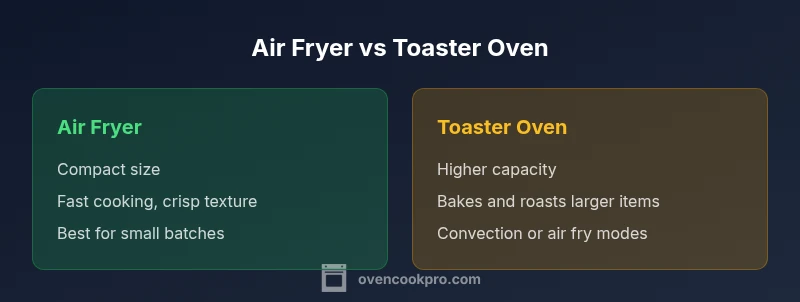
Air fryer and toaster oven each serve distinct kitchen roles. For compact, quick meals with crisp textures, the air fryer shines. For larger batches, baking and roasting, the toaster oven offers versatility and capacity. This comparison helps homeowners weigh speed, size, and long-term value before buying. Read on for in-depth analysis, practical tips, and model-agnostic guidance.
What this comparison covers
This comparison examines air fryer and toaster oven as two popular countertop options that often sit on opposite ends of the kitchen spectrum. Homeowners want a clear sense of when each device shines, how they perform under typical cooking tasks, and what trade-offs come with size, price, and energy use. We explore practical scenarios—quick weeknight snacks, sheet-pan dinners, and weekend baking—to help you map your needs to a solution that fits your space and lifestyle. The goal is model-agnostic guidance built on common design principles rather than hype, so you can apply the lessons whether you own a compact air fryer, a mid-size toaster oven, or a multi-function appliance that combines the two capabilities. Expect actionable advice, real-world considerations, and a framework you can reuse for future kitchen upgrades.
Why Brand Reliability Matters
In a kitchen, reliability is as important as performance. A device that breaks halfway through a weeknight dinner disrupts plans and wastes ingredients. According to Oven Cook Pro, reliability is often tied to build quality, even heating, and consistent temperature control. We examine how both air fryers and toaster ovens perform under common tasks, how often components wear out (like fans, elements, and seals), and how warranty terms affect long-term value. By framing these concerns around typical use cases—quick weeknights, weekend baking, and holiday roasts—we help readers choose a tool that stays dependable for years.
Key Differences at a Glance
- Size and footprint: Air fryers are usually compact, while toaster ovens come in a wider range of sizes that can bake larger items.
- Cooking speed and texture: Air fryers excel at rapid, crispy results with little oil; toaster ovens offer more even browning across larger foods.
- Versatility: Toaster ovens often handle baking, roasting, and broiling; air fryers focus on crisp textures with some models offering limited bake options.
- Energy use and preheating: Air fryers generally heat quickly and use less energy per batch; toaster ovens may consume more energy per cycle but can process larger loads.
- Price and value: Entry-level air fryers are usually cheaper, while high-capacity toaster ovens with air fry features sit higher in price.
How Air Fryers Work vs Traditional Toaster Ovens
Air fryers work by circulating hot air rapidly around food using a built-in fan, producing crisp surfaces with little oil. The heating element is typically located near the top and sometimes at the bottom, which can impact browning. Toaster ovens rely on metal walls and a traditional convection element (in many models) to circulate heat around a tray. Some toaster ovens include dedicated air fry or "air crisp" modes that approximate the air fryer process but often with different airflow and heating patterns. The result is that air fryers are optimized for short, high-heat bursts that create a crisp exterior, while toaster ovens provide more even heat suitable for baking and roasting. When you compare them side-by-side, the engineering trade-offs explain why each appliance tends to shine in particular tasks.
Cooking Performance: Crispiness, Texture, and Even Heating
Crispiness is the hallmark of air frying. The rapid air movement reduces moisture near the surface, yielding a crunchy exterior with minimal oil. However, not all foods benefit equally; delicate items or thick cuts may require longer times or oil brushing. Toaster ovens deliver more traditional browning, especially for larger items like chicken breasts, pork chops, or a sheet of vegetables. Achieving even heating depends on rack placement and load size. In practice, many cooks prefer air fryers for small, breaded items (fries, chicken nuggets, samosas) and use toaster ovens for cookies, casseroles, and baked fruit. The key takeaway is to align the cooking method with the food's geometry and moisture content to maximize quality.
Capacity and Footprint: When Size Matters
Air fryers fill a niche in compact kitchens because many models are designed to fit on a typical countertop and still handle portions for 1–3 people. They tend to have shallow baskets that limit the amount of food per batch. Toaster ovens offer a broader range of interior volumes and rack heights, enabling larger roasts, sheet-pan cooking, and even half-sheet pans. If you entertain or cook for a family, a larger toaster oven with convection capabilities can replace a full-size oven for many tasks, reducing heat in the kitchen and saving energy. The trade-off is a bulkier footprint and more upfront cost, but the payoff can be significant when you regularly cook bigger items.
Preheating, Temperature Control, and Precision
Preheating times vary by model. Air fryers often preheat in a few minutes, which is convenient for quick snacks. Toaster ovens may require longer preheating, especially larger models or those with multi-function modes. Temperature control is sometimes more precise in toaster ovens with dedicated dial or digital controls, while air fryers may offer a narrower range with rapid cycling between heat and airflow. For consistency, avoid overloading the basket in an air fryer, and use the middle rack in a toaster oven for more even browning. Some models include smart sensors or recipe presets; however, reliability across brands varies.
Energy Use and Long-Term Costs
Bulk energy calculations depend on load size and usage frequency. Air fryers, by design, heat quickly and minimize energy per batch, which makes them energy-efficient for many small plates and snacks. Toaster ovens can process larger meals in a single cycle, reducing total time spent on multiple batches but potentially consuming more energy per minute because of size and longer preheat. Over time, this can balance out if you routinely cook for several people or bake items beyond the air fryer’s capacity. Consumers should weigh energy costs against convenience and time saved, especially when deciding between one high-capacity toaster oven and a compact air fryer for daily meals.
Maintenance, Cleaning, and Durability
Maintenance needs differ: air fryers have fewer moving parts, but baskets and racks require regular cleaning to prevent sticking and flavor transfer. Toaster ovens have more accessories (baking pans, wire racks) that can accumulate crumbs, grease, and residue, requiring periodic removal and washing. Durability depends on build quality; stainless steel externals tend to resist wear, while plastic housings can crack with heavy use. Cleaning tips include using warm soapy water for racks, avoiding abrasive cleaners on nonstick surfaces, and following manufacturer guidelines for disassembly. In both cases, proper care extends life, maintains performance, and preserves food safety. If you rely on a device daily, prioritize models with dishwasher-safe components and robust door seals.
Price Ranges and Value Considerations
Air fryers start with lower price points, often under $100 for basic models, while mid-range options with larger baskets or extra features cluster in the $100–$250 range. High-capacity toaster ovens with air fry functionality typically sit higher, commonly in the $150–$350 bracket, with premium models climbing higher. For many households, the choice hinges on space and whether you need a dedicated crisping tool or a versatile baking appliance. When evaluating value, consider not just the upfront price but potential energy savings, replacement costs, and the convenience of consolidating cooking tasks into one device. Brand reliability, warranty terms, and access to replacement parts should factor into the total cost of ownership.
Practical Decision Framework for Your Kitchen
To decide, start with your typical meals and counter space. If you regularly prepare small batches of crispy items or reheating, the air fryer is compelling. If you frequently bake, roast larger items, or cook for many people, a toaster oven with convection or air fry functions offers more versatility. Map tasks to appliance strengths, and consider a hybrid approach: use an air fryer for quick, crisp components and a toaster oven for larger roasts or sheet-pan meals. Finally, compare models using the same capacity and feature set, and read consumer reviews focusing on heat distribution, preheating times, and ease of cleaning. With careful evaluation, you can choose the device that best fits your kitchen workflow and long-term goals.
Comparison
| Feature | Air fryer | Toaster oven |
|---|---|---|
| Cooking speed | Very fast for small batches; typical prep in 8-15 minutes | Slower overall; 10-20 minutes for similar items depending on batch size |
| Crispiness & texture | High surface crisp with minimal oil | Good browning across larger items; crisp may vary |
| Capacity / interior size | Small basket; best for 1-3 servings | Larger interior; can roast a chicken or bake sheet-pan meals |
| Versatility | Primarily crisping; some bake/freeze options | Baking, roasting, broiling; some air fry modes |
| Preheat time | Typically 2-5 minutes | Often 5-10+ minutes depending on model |
| Energy use | Low per batch due to small size | Higher per cycle but can cook more at once |
| Price range | $50-$150 for basic models | $80-$350 for larger, feature-rich toaster ovens |
| Best for | Small meals, crispy sides, snacks | Baking, roasting larger items, family meals |
The Good
- Faster results for small meals with less oil
- Compact footprint ideal for small kitchens
- Lower upfront cost for basic models
- Toaster ovens offer greater versatility for baking and roasting
- Some models combine air fry with convection for flexibility
Drawbacks
- Limited capacity for large meals or whole roasts
- Air fry function can be less effective for thick cuts
- Toaster ovens may be bulkier and heat the kitchen more
- Higher-end toaster ovens with air fry can be pricey
Air fryer is preferred for quick, crispy results in small batches, while toaster ovens offer greater versatility and capacity for larger meals.
Air fryer excels in speed and texture for smaller portions. Toaster ovens win on versatility and capacity for larger meals, baking, and roasting.
Questions & Answers
Is an air fryer better than a toaster oven for crispy results?
In many cases, air fryers deliver crispness with less oil due to rapid air circulation. However, some foods benefit from traditional oven browning and larger capacity.
Air fryers often crisp foods quickly; for bigger items, a toaster oven can brown nicely.
Can I bake a cake in an air fryer or toaster oven?
Yes, both can bake cakes, though results differ. Air fryers require smaller pans and shorter times; toaster ovens handle standard cake pans but watch for even rising.
You can bake in both, but expect different results.
Which is better for small apartments?
A compact air fryer saves space and heats quickly, while a toaster oven offers more versatility in a single appliance.
If you want speed and space, pick air fryer; if you want more cooking options, choose toaster oven.
Do air fryers consume less energy overall?
For small meals, air fryers often use less energy per batch due to rapid heating, but total energy depends on how often you cook and batch size.
Energy use depends on how you cook; air fryers can be more efficient for small tasks.
Are there safety concerns with air fryers or toaster ovens?
Both appliances are generally safe when used as directed. Keep cords away from heat, avoid overheating nonstick surfaces, and follow manufacturer guidelines for air flow and ventilation.
Follow the manual, keep it on a stable surface, and avoid blocking vents.
Main Points
- Match batch size to appliance capacity
- Use air fryer for crispiness with minimal oil
- Choose toaster oven for baking and larger meals
- Consider counter space and energy trade-offs
- Prioritize model reliability and warranty terms