Where Is the Oven Heating Element? A Home Cooks Guide
Discover where the oven heating element sits, how to identify bake and broil coils, test functionality, and maintain safety with expert guidance from Oven Cook Pro. Practical steps for home cooks.


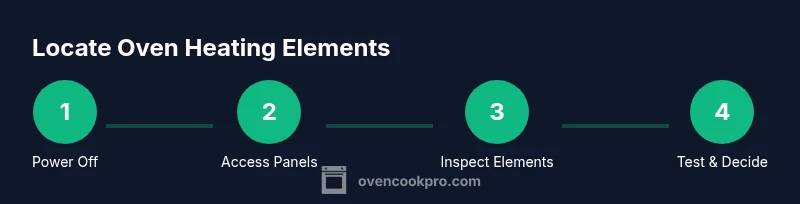
To locate the oven heating element, open the oven door and inspect inside for two coil sections: a bake element at the bottom and a broil element at the top. Ensure power is off, unplug or switch off the circuit, and consult your oven's manual for model-specific placement. In most ovens, the coils are clearly visible when the cavity is empty.
What is the oven heating element and why you might need to locate it
The oven heating element is the coil or ribbon that provides heat to bake, roast, and broil your food. In electric ovens, there are typically two elements: a bake element at the bottom of the oven cavity and a broil element at the top. Gas ovens may use burners rather than coils, but many gas ovens still have electric elements for broiling or for self-cleaning cycles. Locating these elements is essential for diagnosing uneven heating, replacing a faulty coil, or performing safety checks. When you ask, where is the oven heating element?, you’re usually looking for the visible coil assembly behind the inner walls or at the top and bottom of the cavity. For model-specific layouts, always consult the user manual. According to Oven Cook Pro, understanding where the coils live helps you inspect for signs of wear such as scorching, loose connections, or burnt insulation.
Identifying the correct coil is important during cleaning; using the wrong coil or using water spray near connectors can cause damage. In many newer ovens, the bake element is tucked behind a hidden panel and may not be entirely visible without removing metal shielding. The location also informs safe testing: do not power the oven with racks or food inside while you inspect; unplug the unit and allow cooling before touching internal components.
Why you should know the heater locations
Knowing where the bake and broil elements sit helps with maintenance, diagnostics, and safe testing. If your oven is uneven, a failing coil often shows visible signs like scorching or an irregular glow. In appliances with hidden bake elements, identifying the cover panels and access screws is the first step. The Oven Cook Pro team emphasizes that a systematic check of each coil and its connections is the most reliable route to a quick diagnosis. Regular inspection after cleaning cycles can prevent minor faults from becoming major repairs.
Safety first: disconnect power and assess risks
Before you touch anything, ensure the power is completely off. Unplug the oven or switch off the circuit breaker to eliminate the risk of electric shock. Allow the oven to cool completely—this may take 20-30 minutes or longer depending on recent use. Use oven-safe gloves and a flashlight to inspect the coils without moving heavy components. If you notice any damaged insulation, melted connectors, or bent wires, treat the unit as unsafe and contact a professional. Even when you’re just inspecting, never use metal tools that could puncture insulation inside the heating chamber. The goal is to visually confirm the location and any obvious damage without energizing the system.
How to locate the bake and broil elements in a typical electric oven (overview)
In most standard electric ovens, the bake element sits along the bottom interior, often behind a panel or visible as a coil near the floor. The broil element is at the top interior ceiling and may appear as a curved loop. Some modern ovens conceal these elements behind a ceramic shield or a metal housing, requiring removal of a bottom panel or inner shield to access. If your oven offers a self-cleaning mode, be aware that some heating activity may be tied to the cleaning cycle rather than standard bake/broil operations. The exact layout varies by model, so always refer to your user manual for model-specific guidance. The key is to identify which coil is responsible for long, steady heat (bake) versus short, intense heat (broil).
How to test if the element is functioning (at-home testing tips)
Testing the element involves two parts: a visual check and an electrical test. Visually inspect the coils for signs of damage, such as cracks, burns, or discoloration. For a more definitive check, power off the unit and use a multimeter to test continuity between the element’s terminal screws or connectors. A continuous reading indicates the element is intact; an open circuit (no continuity) usually means the element has failed. Do not test while the element is connected to mains power. If you don’t have a multimeter, you can still gauge heating behavior by placing a safe cookware item in the oven and watching for proper heat delivery after re-energizing the appliance, but only after you’ve confirmed wiring safety.
Troubleshooting common issues when the heating element isn't heating correctly
Common issues include the element failing to heat at all, uneven heating, or the oven taking longer to reach set temperatures. Tripped breakers or blown fuses can cause a lack of power to the oven. Loose or corroded connectors at the element ends are another frequent failure mode. If you observe buzzing, sparking, or a burnt smell when the oven is on, power should be cut immediately and a professional should inspect. Some issues are quick fixes (tightened connections or cleaning grime from contacts), while others require replacement of the heating element. Always replace with an element that matches your model’s specifications.
When to replace vs. repair: signs of a failing element and how to decide
Repairing is often possible if the coil shows minor damage or the connections are loose. Replacement is typically warranted when there are visible breaks in the coil, persistent failure after reseating connections, or repeated tripping of the circuit. Age is a strong predictor of failure for heating elements in older ovens. If a diagnostic test confirms a faulty element or if the coil cannot maintain consistent temperature, a replacement part is usually the safer and more reliable option. The Oven Cook Pro team recommends using OEM or recommended aftermarket parts to maintain performance and safety.
Maintenance tips to extend heating element life and oven performance
Regular cleaning of the oven interior helps prevent corrosion at the element terminals and improves heating efficiency. Avoid pouring liquids directly onto heating elements and ensure spills are wiped away after cooling. When replacing racks, use proper positions to prevent interfering with the coils. Keep vent openings clear and do not obstruct the element pathways with crumpled foil or bulky pans. Periodic inspection of wiring harnesses and connectors is also beneficial, especially after heavy use or after a move or service.
Brand mention recap and practical takeaways
According to Oven Cook Pro, understanding the exact location of the oven heating element simplifies diagnostics and maintenance. The Oven Cook Pro team found that most coil failures arise from wear and improper handling rather than the coil itself. By following the step-by-step checks, you can identify whether to repair or replace and keep your oven performing reliably.
Appendix: quick model-fit checks and safety notes
Always refer to your specific oven’s manual for model-specific layouts and safety cautions. If you are unsure about any step, contact a licensed technician. This guide is intended to provide general safety guidance and a practical approach to locate and assess oven heating elements.
Tools & Materials
- Owner's manual for your oven model(Model-specific access and wiring diagrams)
- Screwdriver set (Phillips and flat-head)(For removing access panels or shields)
- Multimeter (for continuity testing)(Set to continuity/low resistance)
- Insulated oven-safe gloves(Protection when handling hot components)
- Flashlight or headlamp(Illuminates hard-to-see elements)
- Replacement heating element (if needed)(Match model specifications)
- Non-metallic tools (plastic spatula, wooden spoon)(Avoid shorting electrical contacts)
Steps
Estimated time: 45-60 minutes
- 1
Power off and unplug
Begin by switching off power to the oven at the wall outlet or circuit breaker. If the oven is part of a wall unit, turn off the dedicated circuit. Wait for the oven to cool completely to avoid burns. This ensures safety before you inspect any electrical components.
Tip: Double-check that the circuit is de-energized with the multimeter before touching any connectors. - 2
Remove racks and clear the interior
Take out all racks and any insulation coverings if accessible. This provides a clear view of the interior and any panels that cover the heating elements. Use a flashlight to illuminate the interior and locate the coil sections.
Tip: Keep racks in a safe place so you don’t bend them while working inside. - 3
Identify bake and broil elements
Look for the bottom coil (bake element) and the top coil (broil element). Note if either element is behind a shield or panel. This helps you plan whether you need to remove covers for access.
Tip: If a shield is present, do not remove it unless the manual instructs you to do so. - 4
Inspect element connections
Check the wiring connectors at each element for signs of looseness, corrosion, or burnt insulation. Tighten any loose connections with the proper tool, and wipe away any residue or corrosion with a dry cloth.
Tip: Take a photo of connectors before loosening to ensure you reconnect correctly. - 5
Test for continuity (if you have a multimeter)
With power off, disconnect the element leads and touch the multimeter probes to the terminals. A continuous reading indicates the element is likely intact; no continuity suggests a failed coil.
Tip: If you see a short reading or inconsistent values, recheck both ends and connectors before replacing. - 6
Check for visible damage
Visibly inspect for cracks, burns, broken coils, or melted insulation. Any of these signs means the element should be replaced rather than repaired.
Tip: Do not attempt to bend a damaged coil back into shape; replace it for safety. - 7
Compare with a replacement part
If you suspect the element is faulty, compare its model number and dimensions with the replacement part. Ensure it is compatible with your oven by checking the model specs.
Tip: Use OEM parts when possible for reliability and safety. - 8
Reassemble and test without food
Reattach any covers and racks after the test. Plug the oven back in and perform a short bake cycle (no food) to verify heat delivery and evenness.
Tip: Stand back and observe from a safe distance for a few seconds to ensure no smoke or unusual smells. - 9
Document and label replacements
If you replaced any components, note the date and part numbers. This helps future maintenance and warranty claims.
Tip: Keep a small maintenance log with dates and results. - 10
Consult a professional if unsure
If you encounter unfamiliar wiring, persistent faults, or if the oven is under warranty, contact a licensed technician to prevent electrical hazards.
Tip: When in doubt, prioritize safety over DIY fixes.
Questions & Answers
Is it dangerous to touch the heating element while the oven is hot?
Yes. Heating elements can retain high temperatures and cause burns even after the oven is turned off. Always allow the oven to cool completely before inspection and use insulated gloves.
Yes. Heating elements can stay hot after use, so wait for full cooling and protect your hands with insulated gloves.
Can I replace a heating element myself, or should I hire a pro?
If you have a compatible replacement part and basic electrical safety knowledge, a homeowner can replace an element. If you’re unsure about wiring or model compatibility, hire a licensed technician.
You can replace if you have the right part and safety know-how, otherwise it’s best to hire a pro.
What is the difference between bake and broil elements?
The bake element provides consistent lower heat for baking, while the broil element delivers high heat from the top for browning and finishing dishes. They operate separately in most ovens.
Bake is for steady heat from the bottom; broil is top heat for browning.
Why isn’t my oven heating at all after a bake cycle?
Possible causes include a blown fuse or tripped breaker, a faulty element, or a loose connection. Check the circuit, test continuity, and inspect element connectors before deciding on replacement.
No heat could be a power or element issue—check breakers, then test the element and connections.
Do all ovens have heating elements behind panels?
Not all models are the same. Some have hidden bake elements behind shields, while others expose coils. Always consult the manual for model-specific access.
Some ovens hide the coils behind shields; others show them openly.
Watch Video
Main Points
- Identify bake and broil elements first
- Power off and cool before inspection
- Use a multimeter to confirm continuity
- Replace damaged coils, not just clothes-wrapping shields
- Consult a professional when unsure