Oven Smoking After Cleaning: Quick Fixes and Safety
Urgent troubleshooting guide to stop oven smoking after cleaning, identify common causes, perform a safe burn-off, and prevent recurrences with a clear diagnostic flow and practical safety tips.


The most common cause of oven smoking after cleaning is residual cleaning agent vaporizing on hot surfaces. Start with safety steps, ventilate the room, and wipe away any residue. Then run a burn-off cycle or a short preheat without food to burn off lingering cleaner. If smoke continues, inspect for grease buildup.
Understanding the Risk of Oven Smoking After Cleaning
When you notice smoke after cleaning, it’s a sign that something burned or off-gassed inside the cavity. Cleaning chemicals, residue from oils, or moisture can interact with hot coils, creating vapor or smoke. According to Oven Cook Pro, the most common cause is cleaning agent residue that wasn’t fully rinsed. The risk increases if you used strong degreasers or left damp cloths inside the oven during heating. Most cases resolve with a simple wipe-down and controlled burn-off, but persistent smoke demands a safety check to prevent a fire. Addressing the issue promptly protects your kitchen and keeps family safe. In this guide, we’ll walk you through safe steps, diagnostic checks, and practical tips to restore normal operation quickly.
Immediate Safety Steps You Should Take
If you notice smoke, prioritize safety. Turn off the oven and unplug if safe. Open windows and switch on the kitchen vent hood to clear fumes. Do not leave the oven unattended while it is smoking. If you smell gas, hear hissing, or see flames, evacuate and call emergency services. Once safe, allow the oven to cool completely before inspecting for obvious issues and considering a reattempt at operation.
Common Causes to Check After Cleaning
Oven smoking after cleaning is most often caused by residues that burn off during initial heating. Residual cleaners can vaporize and produce smoke or an acrid odor. Oven Cook Pro analysis shows that improper rinsing is a frequent culprit. Moisture trapped in door seals or interior cavities can create steam that appears as smoke. Grease or food particles left on racks or the bottom can ignite when the oven heats. Finally, poor ventilation or a blocked vent can concentrate heat and worsen smoke. Checking each area methodically helps pinpoint the exact cause.
Safe Burn-Off: When and How to Do It
A controlled burn-off helps clear residues without introducing food. Ensure the oven is empty, racks removed, and the door closed. Set the temperature to a high setting (consistent with your manual) and run for 15–20 minutes, monitoring for smoke. If you notice a burning smell or new smoke, stop the cycle, turn off, and ventilate. After burn-off, wipe the interior with a damp cloth and inspect for new residues. This step reduces risk before you start cooking again.
Visual Checks and Cleanliness After the Burn-Off
After the burn-off cycle, inspect the interior for any remaining residue, spots, or odors. Clean any stubborn areas with a mild solution and dry thoroughly. Check the heating element and racks for discoloration or damage. Ensure the door seals are intact and the vent is clear. If the oven still smokes during a test preheat, repeat the burn-off or consult a professional. Keeping a log of your cleaning practices helps prevent future issues.
Prevention: Post-Cleaning Routines That Reduce Smoke
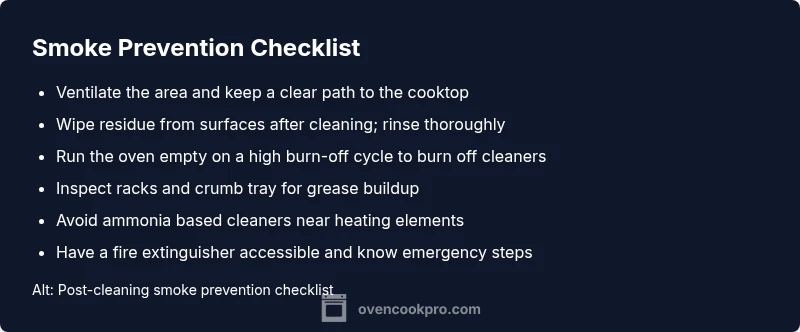
To minimize future smoke events, adopt a routine that prioritizes thorough rinsing, complete drying, and proper ventilation after each cleaning. Use non-abrasive cleaners and avoid solvents near heating elements. Oven Cook Pro recommends flushing the cavity with water and wiping dry to remove all traces of cleaner. Regularly check seals and vent health, keep racks grease-free, and never leave damp towels inside the oven during heating. Small habits pay off with a quieter, cleaner oven.
When to Call a Professional
If smoke recurs after a burn-off, smells persist, or you notice unusual noises, scorch marks, or melted seals, stop using the oven and contact a qualified appliance technician. Fire risk exists if insulation is damaged or wiring shows signs of overheating. A pro can inspect coils, thermistors, seals, and vent pathways and perform a safe, code compliant repair.
Quick Reference: Post-Cleaning Smoke Scenario
If you see smoke after cleaning, first ensure safety and air flow, then perform a burn-off without food. Check for chemical residues, moisture, and grease. If the issue persists, consult the diagnostic flow and consider professional service to prevent a repeat incident. Keep a simple post cleaning checklist and never ignore warning odors or persistent smoke.
Steps
Estimated time: 40-60 minutes
- 1
Power down and cool safely
Turn off the oven and unplug if possible. Allow it to cool completely before handling components or touching interior surfaces.
Tip: Use dry hands and wear oven mitts when handling racks. - 2
Remove racks and accessories
Take out racks, crumb tray, and any removable accessories. These parts can be cleaned separately to prevent carrying residues back into the oven.
Tip: Place items on a protected surface to avoid spreading grease. - 3
Wipe interior to remove residues
Wipe the interior with a damp cloth to remove cleaner residues. Rinse the cloth and wipe again to ensure no cleaner remains.
Tip: Avoid harsh scrubs that might damage enamel. - 4
Dry thoroughly
Dry the interior completely with a clean towel. Leave the door ajar for a while to ensure moisture evaporates.
Tip: A dry cavity reduces steam during initial heating. - 5
Run a burn-off cycle
With the oven empty, set a burn-off cycle at a high temperature for 15–20 minutes. Do not add food during this step.
Tip: Monitor for smoke and keep a safe distance; have a window open. - 6
Wait and inspect after burn-off
Turn off and allow to cool briefly. Inspect the interior for any remaining residue or odors before a test run.
Tip: If you smell burning after burn-off, repeat the cycle once more. - 7
Reassemble and test
Reinsert racks and accessories. Run a short test preheat to a normal cooking temperature to ensure no smoke returns.
Tip: Do a small test with a nonsticky item first. - 8
Document and resume cooking
Note what was cleaned, how long the burn-off was performed, and the outcome. Resume cooking only after a smoke-free test.
Tip: Maintain a simple cleaning log for future reference.
Diagnosis: Oven starts smoking after cleaning
Possible Causes
- highResidual cleaning chemicals burning on heating elements
- mediumMoisture trapped in seals or interior causing steam
- lowGrease or food debris left on racks or bottom
- lowBlocked vent or damaged insulation causing overheating
Fixes
- easyWipe interior thoroughly and remove any cleaner residue; run a burn-off cycle with the oven empty
- easyVentilate the space and dry interior completely; ensure door seals are dry before heating
- easyClean racks and crumb tray to remove grease; inspect for any stuck debris
- mediumInspect vent and seals; if smoke persists, contact a professional
Questions & Answers
Why is my oven smoking after cleaning?
Most often it is cleaning chemicals burning off or moisture trapped during heating. Thorough rinsing and a controlled burn-off usually resolves it. If smoke persists, inspect for grease or vent issues.
Likely cleaning residue or moisture causing smoke; rinse, burn off, and check vents.
Self-cleaning after cleaning helps remove residues?
Self-cleaning cycles are designed for heavy buildup, not residue cleanup after manual cleaning. Do not rely on self-cleaning to resolve fresh cleaning residues; address residues first and only use self-cleaning if appropriate for your model.
Self-cleaning is not a substitute for removing manual residues after cleaning.
Is it safe to run a burn-off cycle with food inside?
No. Burn-off should be done with the oven empty to avoid igniting fats or food debris. After the burn-off, you can resume cooking.
Burn off without food, then test with a small, clean item.
What cleaners should I avoid to prevent smoking?
Avoid ammonia based cleaners and highly caustic solvents near the heating elements. Use mild detergents and water or baking soda solutions for routine cleaning.
Avoid harsh cleaners that can vaporize when heated.
When should I call a professional?
If smoke returns after burn-off, odors persist, or you notice melted seals or unusual noises, stop using the oven and contact a technician for a full inspection.
Call a pro if smoke recurs or you notice damage.
How can I prevent smoking in the future?
Rinse and dry thoroughly after cleaning, ventilate during use, keep racks grease-free, and inspect seals and vent paths regularly to catch issues early.
Keep the oven clean and well ventilated to prevent smoke.
Watch Video
Main Points
- Identify the root cause before repeating heat cycles
- Always burn off residues with the oven empty
- Ventilate and monitor during burn-off
- Check seals and vent health regularly
- Keep a cleaning log to prevent recurring smoke