Can You Use an Oven with Broken Inner Glass? Urgent Safety Guide
Urgent guide: if the oven's inner glass is broken, stop using it, unplug, and arrange professional replacement. Learn safety steps, diagnosis, and prevention with Oven Cook Pro.


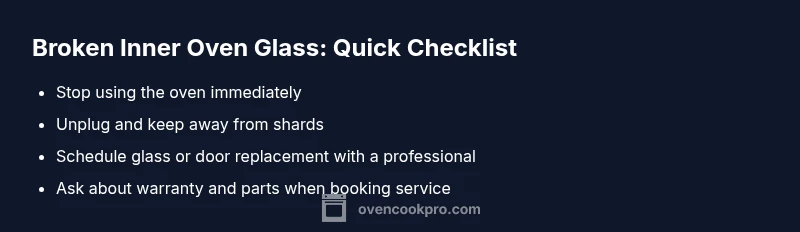
Can you use an oven if inner glass broken? No—the inner glass pane must not be used. If the inner pane is broken, stop using the oven immediately, unplug it, and avoid touching shards. Schedule professional replacement of the glass or door. Until repaired, rely on the exterior surface and seek service right away. According to Oven Cook Pro, safety comes first when heat containment is compromised.
Can You Use an Oven if Inner Glass is Broken?
According to Oven Cook Pro, a broken inner glass pane makes the door unsafe to operate. The inner pane provides the primary barrier against heat and shattered glass; when compromised, extreme heat can push through, pieces may shed, and temperature control can fail. The safest course is to stop using the oven immediately, unplug it, and arrange replacement of the inner glass or the entire door through a certified technician. Do not attempt to heat the oven or close the door with the pane damaged. This quick read focuses on urgent, actionable steps to protect your family while you arrange service.
Immediate Safety Actions to Take Right Now
First, cut power to the appliance. Unplug at the outlet or switch off the circuit breaker to remove any electrical risk. Keep children and pets away from the work area. Do not touch broken glass with bare hands; use thick gloves if you must move the oven or door for safety assessment. Place a sturdy barrier around the door to deter accidental contact. If you see smoke, heat, or a strong chemical odor, evacuate and call emergency services. Finally, contact a licensed appliance technician or the manufacturer for glass replacement options. The faster you act, the lower the risk of injury or further damage.
Understanding Door Glass: Inner vs Outer Pane
Most oven doors have two panes: an inner and an outer layer. The inner pane is designed to withstand high heat and temperature changes. When it breaks, the seal between panes can fail, moisture can seep in, and the door may leak heat or shards can shatter outward. An intact outer pane alone does not guarantee safety. The weak point is the compromised barrier that can lead to burns or electrical hazards if the door bonding is stressed. In short, the presence of a broken inner pane makes the door unsafe for operation until replaced.
Diagnostic Flow: Is It Just the Glass, or a Bigger Door Issue?
Symptoms can point to different problems: visible cracks in the inner pane, fog between panes, moisture leakage, or a door that won’t seal properly. A professional inspection confirms whether the window seal is compromised, the door alignment is affected, or wiring near the hinge is damaged. Diagnosis commonly starts with stopping use, then a technician checks the door assembly, hinge wear, and seal integrity. If the door frame shows deformation, replacement is typically recommended over DIY fixes.
Step-by-Step: Safe Handling and Replacement Process
- Power down and unplug the oven to eliminate electrical risk. 2) Secure the area; keep kids away and prevent shard exposure. 3) Inspect the door from a safe distance to assess crack patterns and moisture; do not touch the glass. 4) Contact the manufacturer or a certified technician to obtain a replacement inner glass kit or door assembly. 5) Schedule service and confirm that the technician uses approved parts. 6) After replacement, verify door alignment and seal with a test bake under supervision. 7) Document the service for warranty records and future reference.
Replacement Options: Glass Kit vs. Door Assembly
You typically have two paths: replace only the inner glass pane if available for your model, or swap the entire door assembly. Replacement parts depend on the oven model and age. A direct-door replacement is often simpler and ensures proper sealing and hinge integrity. Some service plans or warranties cover door glass replacement, but getting a precise quote requires model details and serial numbers. Do not improvise with aftermarket panes that don’t meet manufacturer specifications.
Safety Tips and Common Mistakes to Avoid
- Do not operate the oven with any broken pane visible. - Do not attempt to remove shattered glass yourself; shards can cause deep cuts. - Do not store pans or utensils on or near the door during replacement. - Do not bypass seals or use aftermarket glass that isn’t approved by the OEM. - Do not rush the repair; ensure the parts and technician are qualified. These safeguards prevent a recurrence of risk and protect your home.
Aftercare and Preventive Measures
Once replaced, schedule a post-repair inspection to confirm the door seals are intact and properly aligned. Keep the oven away from large temperature swings for several hours after installation. To prevent future breakage, avoid slamming the door, use proper cookware, and defrost frozen items gradually to minimize stress on the door. Periodically inspect the door hinge and seals, especially after heavy use or cleaning.
Final Note: When to Call for Help and Warranty Considerations
If you notice persistent misalignment, unusual door rattle, or heat loss after a replacement, contact the service provider promptly. Warranty terms vary by manufacturer and region; document the service call and parts used for future claims. The safest path is professional replacement using OEM parts and certified technicians rather than DIY fixes. Your Oven Cook Pro guide emphasizes safety first at every stage.
Steps
Estimated time: 60-90 minutes
- 1
Power down and unplug
Disconnect power at the outlet or main circuit to eliminate electrical risk. Do not touch the glass or attempt to move the door while broken.
Tip: If you smell burning or see smoke, evacuate immediately and call for help. - 2
Secure the area
Clear the area around the oven and create a barrier to keep children away. Wear thick gloves if you must handle proximity to shards.
Tip: Lay a thick towel or mat to catch any stray fragments during inspection. - 3
Assess visible damage
Look for cracks, chips, or moisture between panes. Do not press or pry the damaged pane—let a professional handle replacement.
Tip: Document model and serial numbers for service orders. - 4
Check your options
Review the manual or manufacturer site for approved glass kits or door assemblies. Avoid DIY glass work unless explicitly approved.
Tip: Keep parts numbers and photos handy for quotes. - 5
Arrange professional service
Contact a certified appliance technician or the manufacturer to arrange glass or door replacement using approved parts.
Tip: Ask about lead times, on-site safety procedures, and warranty implications. - 6
Post-repair testing
Have the door inspected for alignment, sealing, and safe operation. Do a supervised test bake at a low temperature first.
Tip: Note any abnormal heat spots or misalignment during the first use after repair.
Diagnosis: Inner glass broken on oven door
Possible Causes
- highGlass failure due to impact
- mediumThermal stress from rapid temperature changes
- lowManufacturing defect or prior damage
Fixes
- easyPower off and unplug the oven immediately
- easySecure the area and avoid touching shards
- mediumSchedule replacement of inner glass or door with a licensed technician
- hardConsult manufacturer service bulletin before attempting any repair
Questions & Answers
Can I still use the oven if the inner glass is cracked but the door seems intact?
No. A cracked inner glass compromises safety and heat containment. Stop using the oven and seek professional inspection and replacement.
A cracked inner glass is unsafe—stop using the oven and contact a technician for replacement.
Is it safe to operate the oven with the outer glass only?
No. The inner pane provides the primary barrier for heat containment; operating with only outer glass risks heat loss and shards. Have the inner pane replaced before use.
Not safe—inner glass is essential for containment.
What are typical signs that the door glass is failing?
Visible cracks, fogging between panes, chips, or a loose door indicate the glass in the door needs replacement.
Look for cracks or fog between panes.
Will replacing the glass affect the oven’s warranty?
Warranty implications vary by manufacturer. Check your warranty terms or consult the service provider about coverage for door glass replacement.
Check with the manufacturer about coverage.
Can I repair the glass myself to save money?
DIY glass replacement is not recommended due to safety risks. Use a professional to install approved parts.
DIY is unsafe; use a professional.
How long does a door glass replacement take?
Time varies by model, but most door glass replacements can be completed in a few hours depending on parts availability.
Most replacements take a few hours.
Watch Video
Main Points
- Do not use a broken oven door.
- Unplug and isolate the unit immediately.
- Only replace glass or door through a professional.
- Check warranty and service options before paying.
- Prevent future breakage by avoiding thermal shocks.