Teriyaki Chicken in Oven: A Step-by-Step Guide
Learn how to make tender teriyaki chicken in the oven with a glossy glaze, practical steps, timing, and safety tips. Perfect for quick weeknight dinners and family meals.


Why Oven-Cooked Teriyaki Chicken Delivers Juicy, Even Color
Cooking teriyaki chicken in the oven offers reliable results: tender meat, a glossy glaze, and minimal hands-on time. The method works well with both thighs and breasts, though thighs stay juicier in the oven. According to Oven Cook Pro, controlled heat produces even browning without drying out the surface. A well-prepped pan and proper glaze application help prevent sticking and uneven caramelization. In this guide you’ll learn the science, the best practices, and how to tailor the approach to your kitchen tools. Teriyaki in oven is a great fit for weeknights and meal-prep, especially when you want a consistent glaze that clings to every piece. This approach leverages a hot start, controlled simmer of the glaze, and a short rise in temperature to seal in juices while achieving that signature lacquered finish. By following a few fundamentals, you’ll be surprised at how forgiving this method can be when you’re short on time.
Key ingredients and substitutions
- Chicken thighs (bone-in or boneless) or breasts, skin removed for even cooking
- Teriyaki glaze: soy sauce, mirin (or a mix of honey and rice vinegar if mirin is unavailable), garlic, ginger, and a touch of brown sugar or honey
- Optional add-ins: sliced green onions, sesame seeds, pineapple chunks for sweetness balance
- Substitutions: use maple or agave instead of honey, coconut aminos for a soy-free option, and corn starch slurry to thicken the glaze if desired
- Thickening agents: a small amount of cornstarch slurry (1 tsp cornstarch mixed with 1 tbsp water) helps cling the glaze to the meat
This section is designed to help you tailor the glaze for your pantry and dietary needs while maintaining the glossy, restaurant-style finish. Remember to adjust saltiness by balancing soy with a touch of sugar so the glaze caramelizes rather than burns.
Equipment, prep, and mise en place
- Sheet pan with a rim (heavy gauge preferred) or a shallow baking tray
- Parchment paper or a silicone mat to prevent sticking
- Pastry brush or silicone brush for glaze application
- Oven-safe thermometer or instant-read thermometer for checking internal temp
- Mixing bowls for whisking glaze and marinating liquid
- Measuring spoons and cups for accurate ingredients
Prep steps:
- Pat dry the chicken to ensure the glaze adheres and browns evenly.
- Line your pan for easy cleanup and use parchment to prevent sticking. See Figure 1 for setup references.
- Pre-prep your glaze and keep ready for quick application during baking. This helps avoid overcooking while glaze caramelizes.
The science behind glaze caramelization
The teriyaki glaze achieves its lacquered shine through a combination of sugar caramelization and the Maillard reaction. At around 320–350°F (160–175°C) browning accelerates, creating complex flavors and a glossy surface. Beginning with a hot oven (425°F/220°C) ensures the surface browns rapidly, while finishing under a brief broil or high heat aids caramelization without drying the meat. The sugar in the glaze is critical: too much sugar will burn; too little will leave the glaze looking dull. A balanced glaze with soy for savoriness, sweeteners for gloss, and ginger/garlic for aroma works best. As you test, keep a close eye during the final minutes to avoid scorching. Open flame caretaking is unnecessary, as this is an oven-based method.
Step-by-step overview (high-level)
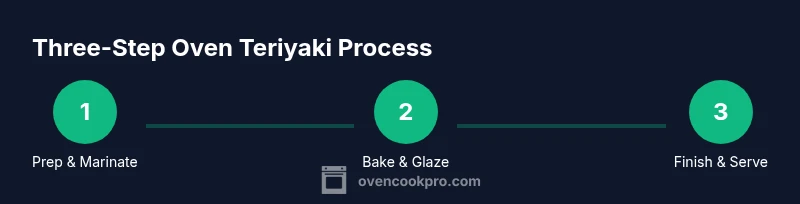
- The recipe begins with preheating and marinating or brushing on glaze to coat the chicken evenly.
- The chicken is arranged on a lined pan and partially baked to set the surface before a final glaze application.
- A final glaze and short broil finish creates a glossy, caramelized exterior with juicy interior.
Troubleshooting common issues
- If the glaze tastes too salty, balance with a splash of water or a touch more honey and adjust salt in subsequent batches. Keep a gentle simmer on the glaze so it stays glossy rather than burning.
- If the chicken dries out, check for overcooking; remove at 160°F and let rest to reach 165°F.
- If browning is uneven, rotate the pan halfway through baking and ensure chicken pieces are similar in size for even heat exposure.
- If glaze clumps or slides off, pat the chicken dry before coating and brush on a thin, even layer during baking.
Safety, serving, and leftovers
- Always verify an internal temperature of 165°F (74°C) using a thermometer in the thickest part of the meat.
- Let the chicken rest 5 minutes after removing from the oven to allow juices to redistribute.
- Store leftovers in an airtight container in the fridge for up to 3–4 days; reheat gently to preserve moisture.