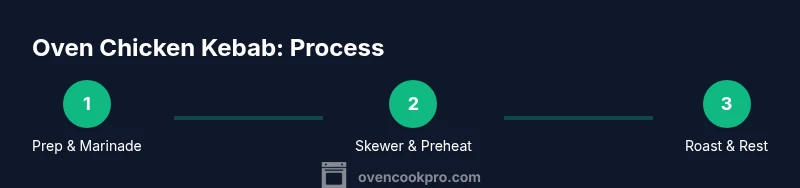
Oven Chicken Kebab: Step-by-Step Guide for Juicy Skewers
Learn to make juicy, flavorful oven chicken kebabs with marination, skewering, and precise roasting. This step-by-step guide covers timing, temperatures, safe handling, and serving ideas for delicious weekday dinners.


By the end of this guide, you'll confidently make juicy, flavorful oven chicken kebabs from start to finish. You'll learn how to cut chicken, marinate, and skewer, and roast to perfection in a home oven. You’ll also get timing, temperature ranges, and plating ideas to impress guests.
Why oven chicken kebabs are a weeknight win
Juicy, flavorful oven chicken kebabs offer a fast, flexible way to eat well. In this guide, you’ll learn to cut chicken, marinate, skewer, and roast to perfection. According to Oven Cook Pro, marinating before cooking improves tenderness and depth of flavor, especially when using lean cuts. When you use the oven, you get even heat and minimal hands-on time, making it ideal for busy families. You’ll see how simple flavor builders, smart ingredient choices, and practical seasoning can elevate a weeknight dinner into something memorable. This approach works with a variety of vegetables, so you can tailor kebabs to what’s in your fridge or on sale at the market. By mastering the oven, you also gain a reliable technique you can reuse with other proteins and veggies, expanding your repertoire without extra equipment.
Choosing ingredients: Chicken cuts, marinades, and skewers
The backbone of great kebabs is even, tender chicken and a marinade that stays put during roasting. For chicken, both thighs and breasts work well, but thighs stay juicier in the oven, while breasts offer a leaner profile. A yogurt- or citrus-based marinade helps tenderize and flavor without overpowering the meat. Along with chicken, select vegetables that roast in the same time frame—peppers, onions, and zucchini are reliable partners. Skewers can be metal or bamboo; if you choose bamboo, soak them for at least 30 minutes to prevent scorching. This combination of protein, veg, and reliable heat yields kebabs with consistent bite and browning across all pieces. For flavor, keep a balanced spice mix and a bright finishing sauce handy; it ties the dish together on the plate.
Prep and marinade: Safe handling and flavor building
Clean workspace is crucial when handling raw chicken. Trim excess fat and cut the chicken into uniform 1 to 1.5 inch pieces so they cook evenly. Whisk together a marinade using yogurt or a citrus base, olive oil, garlic, and spices like cumin, paprika, and coriander. Add lemon juice or vinegar for brightness. Coat the chicken thoroughly, then refrigerate for at least 1 hour and up to 4 hours. Longer marination deepens flavor, but too long can break down texture if your marinade is too acidic. Always discard any leftover marinade that touched raw chicken or boil it thoroughly before reuse in a sauce. This practice, emphasized by Oven Cook Pro, keeps safety intact while maximizing flavor.
Skewer prep and safety: Bamboo vs metal
Prepare skewers by laying out a tray and evenly spacing pieces to prevent crowding, which can trap steam and cause steaming rather than browning. If you’re using bamboo skewers, soak them fully to avoid burning in the oven. Thread meat and vegetables in a pattern that ensures every bite has a bit of everything—alternate proteins with veggies to promote even cooking. Leave a small gap at the end of the skewer to prevent pieces from slipping off during turning. This step helps you achieve consistent browning and avoids dry patches on the kebabs.
Oven setup: Preheating, rack, and pan choice
Preheat the oven to a high, even heat to emulate roasting on a grill. A range of 425–450°F (220–232°C) works well for chicken kebabs, with convection if your oven has it. Line a baking sheet with parchment paper or foil to simplify cleanup, and place a rack on top so air can circulate under the skewers. The rack also keeps the kebabs elevated for better browning. If you don’t have a rack, turn the kebabs halfway through cooking and rotate the pan to ensure even heat exposure. This setup provides the best balance of color, texture, and juiciness.
Assembling kebabs: Even loading and marination time
When assembling, keep each kebab roughly the same size so cooking is uniform. Alternate chicken pieces with chunks of vegetables for even exposure to heat. If you have extra marinade, reserve a small portion for brushing in the final minutes, but never reuse raw-marinade on cooked kebabs. Once threaded, brush lightly with oil and a pinch of salt to boost browning. Clustering pieces too tightly can trap moisture and dull the finish. Good loading translates to predictable results, making the rest of the process smoother and more reliable.
Roasting, turning, and doneness: Getting juicy centers
Roast kebabs in the hot oven until the chicken reaches a safe internal temperature of 165°F (74°C), usually 12–16 minutes depending on piece size and oven performance. Flip or rotate halfway through to promote even browning on all sides. Use an instant-read thermometer to verify doneness rather than relying on color alone, as browning can occur with slightly underdone centers. If you want extra char, finish under the broiler for 1–2 minutes, watching closely to prevent burning. Rest kebabs briefly before serving to let the juices redistribute and retain moisture.
Resting, serving, and leftovers: Finishing touches
Let kebabs rest for 5 minutes after removing from the oven. Resting helps the juices reabsorb and keeps the meat juicy when sliced. Serve with a bright yogurt sauce, fresh herbs, and a side such as couscous, rice, or a crisp salad. Refrigerate any leftovers within two hours and store in an airtight container for up to 3–4 days. Reheat gently in the oven or on a skewer over a hot sheet, avoiding dry reheating that stiffens the meat. This approach ensures your next meal feels as fresh as the first.
Troubleshooting and variations
If the kebabs brown too quickly on the outside but stay pink inside, reduce oven temperature to 400°F and extend cooking time slightly, checking internal temperature frequently. For a different flavor profile, swap in a tomato-based glaze or add fresh herbs like cilantro or mint after cooking. You can also swap vegetables to suit seasonal produce, keeping the same cooking times to maintain consistency. The method remains robust across many permutations, making it a versatile template for home cooks.
Tools & Materials
- Skewers (metal or bamboo)(If bamboo, soak for 30 minutes to prevent burning)
- Mixing bowls(One large for marinade, one small for tasting)
- Sharp chef's knife(For trimming, trimming evenly sized pieces)
- Cutting board(Non-slip surface recommended)
- Measuring spoons and cups(Accurate spice and acid measures essential)
- Tongs(For safe handling of hot skewers)
- Baking sheet or shallow pan(Line with parchment or foil for easy cleanup)
- Oven rack(Elevates kebabs for better air flow)
- Meat thermometer(Instant-read recommended for accuracy)
- Parchment paper or aluminum foil(Helpful for cleanup and even browning)
- Ziploc bags or marination bowl(For marinating chicken with spices)
Steps
Estimated time: 60-75 minutes
- 1
Prep your ingredients
Wash hands and surface, trim chicken and vegetables to uniform pieces. Cut chicken into 1 to 1.5 inch chunks to ensure even cooking. This step reduces variability and helps the marinade coat every piece.
Tip: Keep pieces uniform in size to avoid under or overcooked spots. - 2
Make the marinade
Whisk yogurt or citrus juice with olive oil, minced garlic, and spices like cumin, paprika, and coriander. Balance acidity with a touch of oil; this helps keep meat tender and flavorful. Taste and adjust salt before adding raw chicken.
Tip: A touch of lemon zest brightens the flavor without masking the chicken. - 3
Marinate the chicken
Toss chicken pieces with marinade until well coated. Cover and refrigerate for 1–4 hours. Longer marination deepens flavor, but avoid too much acidity if you’re near the 4 hour mark.
Tip: If you’re pressed for time, a 30–60 minute marination still yields good flavor. - 4
Soak bamboo skewers
If using bamboo, soak skewers for 30 minutes before threading to prevent scorching. Pat dry after soaking to ensure good browning on contact with the oven rack.
Tip: Dry skewers after soaking to keep marinade from slipping off. - 5
Preheat the oven
Preheat the oven to 425–450°F (220–232°C). If you have convection, enable it for more even browning. Prepare a lined baking sheet and place a rack on top for air circulation.
Tip: Convection helps achieve grill-like browning without a grill. - 6
Assemble kebabs
Thread chicken and vegetables in a pattern that ensures each bite has both protein and veg. Do not crowd pieces; leave a small space for heat to circulate. Brush lightly with oil and season as desired.
Tip: Alternate chicken with veg to promote even cooking and color contrast. - 7
Roast and turn
Roast on the racked pan, turning halfway through. Cook until the internal temperature reaches 165°F (74°C). For a bit of char, broil for 1–2 minutes at the end, watching closely.
Tip: Use a thermometer for accuracy rather than relying on color alone. - 8
Rest and serve
Let kebabs rest 5 minutes before serving to retain juices. Serve with yogurt sauce, flatbread, or grains. Store leftovers in the fridge within two hours and reheat gently.
Tip: Resting time is when juices redistribute for juicier bites.
Questions & Answers
What oven temperature is best for chicken kebabs?
Roast at 425–450°F (220–232°C). Use convection if available and check for 165°F internal temperature with a thermometer. This helps mimic grill-style browning with even heat.
Roast at about four hundred twenty-five to four fifty degrees and check that the chicken is fully cooked with a thermometer.
Breasts or thighs for kebabs?
Thigh meat stays juicier in the oven, while breasts are leaner. Both work well, but adjust cook time to piece size and monitor internal temperature closely.
Thighs are juicier, breasts are leaner; pick based on your preference and monitor doneness carefully.
Can I marinate overnight?
Yes, you can marinate overnight in the refrigerator, especially with yogurt- or citrus-based marinades. If the marinade is highly acidic, shorten the final window to avoid textural break down.
Yes, you can marinate overnight if the marinade isn’t too acidic; otherwise, keep it around several hours.
What vegetables pair well with oven kebabs?
Bell peppers, onions, zucchini, and cherry tomatoes are reliable partners. Choose veggies that break down at a similar rate to the chicken for even cooking.
Pepper, onion, zucchini, and tomatoes pair well and cook evenly with the chicken.
How should I store and reheat leftovers?
Store in an airtight container in the fridge for up to 3–4 days. Reheat gently in the oven or on a skillet to preserve moisture and texture.
Refrigerate leftovers 2 hours after cooking and reheat slowly to avoid drying out.
Watch Video
Main Points
- Marinate chicken evenly for flavor and tenderness.
- Preheat hot oven and use a rack for even browning.
- Thread kebabs with uniform pieces and leave space for heat.
- Cook to 165°F internal temperature and rest before serving.