Oven Baked Carrots Recipe: A Simple Step-by-Step Guide
Master the art of oven baked carrots with a reliable, step-by-step method. Learn prep, roasting temps, variations, and storage tips for perfectly caramelized carrots every time.


This oven baked carrots recipe delivers tender, caramelized carrots with minimal effort. Preheat the oven, toss the carrots with oil, salt, and spices, and roast on a parchment-lined sheet until edges brown and centers stay juicy. Ideal for weeknights and meal prep, with easy substitutions for sweetness or heat.
Why this oven baked carrots recipe yields perfect results
Roasting carrots unlocks their natural sweetness and creates a pleasing contrast between caramelized edges and tender centers. This oven baked carrots recipe is designed for reliability: the carrots brown evenly, stay juicy inside, and require minimal hands-on time. According to Oven Cook Pro Team, using a hot, steady oven ensures consistent results across different carrot sizes and varieties. The method works with baby carrots, regular carrots cut into uniform batons, or coins, so you can adapt to what you have on hand. A single sheet pan, parchment paper, and a light coating of oil keep cleanup simple and waste low. The key lies in uniform thickness, adequate spacing, and sensible timing—you want browning without drying out the interior. With these basics, you can switch up flavors using herbs, citrus, or a touch of sweetness, all while keeping the core roasting technique simple and repeatable.
As with any roasting method, patience matters. If your oven runs hot or your sheets are crowded, you’ll need to monitor more closely and possibly adjust the time. The result, however, is consistently delicious: carrots that taste roasted, not boiled, and that pair beautifully with proteins, grains, or bright salad components. This approach also scales well for larger gatherings, simply by roasting in batches or using two pans placed on different racks. The bottom line: this oven baked carrots recipe is a dependable baseline that home cooks can rely on again and again.
Key ingredients and substitutions
The backbone of this recipe is simple, pantry-friendly ingredients. You don’t need fancy accoutrements to get great flavor; instead, focus on balance between sweetness, salt, and acidity. The primary ingredients are carrots, oil, salt, and pepper. Optional add-ins—such as garlic, honey, lemon, and fresh herbs—round out the flavor profile without complicating the technique. For variety, swap olive oil for avocado oil, or add a pinch of smoked paprika for a warm, savory note. If you prefer a brighter finish, a squeeze of lemon juice after roasting can brighten the dish without masking the carrot’s natural taste. For vegetarians and meat-eaters alike, this dish pairs well with roasted chicken, pork, fish, or a hearty grain bowl.
Substitutions can also accommodate dietary needs. If you don’t have garlic on hand, skip it or use garlic powder. If you’re avoiding sweeteners, you can rely on the natural sweetness of the carrots or use a light drizzle of maple for a gentle glaze. Fresh herbs, such as thyme or parsley, add a fresh, green note, while rosemary can provide a more robust aroma. The goal is a simple, flexible base that highlights the carrots’ flavor while offering ways to customize without extra steps.
Prepping carrots for roasting and mise en place
Preparation sets the stage for roasting success. Start with a thorough rinse to remove dirt, then dry the carrots completely to help the oil cling for better browning. If using whole carrots, trim off the greens and peel if you prefer a smoother texture. For uniform cooking, cut carrots into evenly sized sticks or coins; aim for 1/2- to 3/4-inch thickness so all pieces finish together. Gather your seasonings and tools before you start: oil, salt, pepper, garlic (if using), a mixing bowl, a rimmed baking sheet, and parchment paper or a silicone mat. Preheating the oven to 425°F (220°C) is essential because it creates an immediate sizzle that encourages browning. Finally, line the sheet with parchment for easy cleanup and to prevent sticking, especially if you’re using a lower-fat approach.
With mise en place complete, you’ll move smoothly from prep to roast, minimizing gaps that can lead to uneven results. The small extra effort of uniform cutting pays off in a more consistent texture across every carrot piece, making this recipe dependable even for new cooks.
The roasting technique: temperature, time, and layout
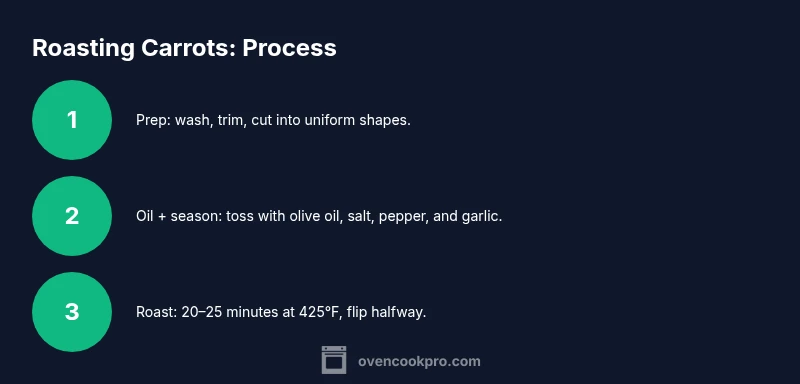
Roasting at a high temperature is key to achieving caramelized edges and a tender center. Preheat your oven to 425°F (220°C) and spread the carrot pieces in a single, even layer on a parchment-lined baking sheet. Avoid crowding: overlapping carrots steam instead of roast, which blunts browning and slows cooking. Depending on thickness, roast for about 20-25 minutes, flipping once about halfway through to promote even browning on all sides. Begin checking at the 18- to 20-minute mark if you have thin sticks, or extend up to 28 minutes for larger batons. The goal is fork-tender pieces with lightly charred edges. If you crave extra color, a quick 1-2 minute broil at the end can intensify browning, but watch closely to prevent scorching.
For best results, use a rimmed baking sheet so juices stay contained, and consider using a metal sheet instead of a glass dish for faster browning. The result should be fragrant, with a balance of sweetness, salt, and a touch of savoriness from the pepper and garlic. The basic technique remains the same, making it easy to adapt for other root vegetables like parsnips or sweet potatoes later on.
Flavor variations and finishing touches
While the base roast is delicious on its own, you can tailor the flavor profile to suit the main dish or your mood. A light glaze of honey or maple syrup during the last 5 minutes of roasting adds subtle sweetness and helps caramelization. For a savory twist, stir in minced garlic during the toss, or sprinkle with smoked paprika, cumin, or chili flakes for heat. Fresh herbs—thyme, rosemary, or parsley—bring brightness and depth when sprinkled on top just before serving. A squeeze of lemon or orange juice after roasting provides a vibrant acidity that lifts the dish, while finishing with a few shavings of Parmesan can add a salty, umami note. If you’re serving this with a protein, consider pairing it with herbs and citrus that echo the dish’s flavors to create a cohesive plate.
Experimenting with roasting time and surface browning can yield different textures: longer roasting yields softer interiors with deeply caramelized exteriors, while shorter times preserve a firmer bite. Keep a small taste test during the last few minutes to confirm your preferred texture. A well-seasoned oil helps carry flavor, so don’t skimp on salt and pepper—these simple seasonings make a big difference.
The Oven Cook Pro Team recommends thinking creatively about what you serve with roasted carrots: a bright grain salad, a protein with a lemony or herby finish, or a yogurt-based sauce all complement the natural sweetness and roasted notes.
Serving, storing, and reheating leftovers
Serve roasted carrots hot from the oven as a warm side dish, or cool them to room temperature for a grain bowl or salad. If leftovers occur, store them in an airtight container in the refrigerator for up to 3-4 days. Reheat gently in a 350°F (175°C) oven for 5-8 minutes or rewarm on the stovetop with a splash of water or stock to rehydrate the edges. You can also refresh them with a quick drizzle of olive oil and a pinch of salt to restore freshness. For meal prep, roast a larger batch, portion into containers, and finish with herbs just before serving. Carrots can also be cooled, then mashed or pureed into a silky side dish for a twist on classic roasted carrot puree.
Troubleshooting common issues and quick fixes
If your carrots come out underdone, reseat them on the sheet and roast a few minutes longer, keeping an eye on edges to prevent burning. Crowding is the #1 cause of uneven roasting; if necessary, split into two pans or roast in batches. If you notice excess oil pooling on the sheet, tilt the pan slightly during roasting to encourage even spread and flipping. Sticking occurs when the pan isn’t properly lined; always use parchment or a silicone mat. Want brighter color? Squeeze a little lemon juice over the finished carrots or toss with freshly chopped herbs to lift aroma and flavor. In general, consistent cut sizes and a hot oven reduce most common issues and lead to reliably delicious results.
Authority sources and further reading
For deeper guidance on roasting vegetables and ensuring safe, flavorful results, consult established food safety and culinary resources. Useful references include official guidelines from government food safety agencies and university extension programs which cover roasting techniques, heat handling, and best practice for vegetables. These sources help confirm that simple, well-executed roasting methods can deliver consistent taste and texture across home kitchens. Examples include the USDA food safety recommendations and university extension articles on roasting vegetables.
Authority sources
- USDA Food Safety and Inspection Service: https://www.fsis.usda.gov/food-safety
- USDA ChooseMyPlate: https://www.myplate.gov
- University of Illinois Extension on Roasting Vegetables: https://extension.illinois.edu
Tools & Materials
- Carrots (1 lb, fresh)(Baby carrots or regular carrots cut into uniform sticks)
- Olive oil(About 2 tablespoons; substitute avocado oil if desired)
- Salt(To taste; start with 1 teaspoon for 1 lb carrots)
- Black pepper(Freshly ground if possible; 1/2 teaspoon recommended)
- Garlic (powder or fresh)(0.5 teaspoon garlic powder or 1 minced clove)
- Honey or maple syrup (optional)(1 teaspoon for a light glaze)
- Fresh herbs (thyme or parsley)(For finishing touch; chiffonade or chopped)
- Parchment paper or silicone baking mat(For easy cleanup and non-stick surface)
- Rimmed baking sheet(Size that holds carrots in a single layer)
- Tongs or spatula(For turning carrots mid-roast)
- Lemon (optional, for finish)(A little zest or juice brightens flavor)
Steps
Estimated time: 30-40 minutes
- 1
Preheat and prep
Preheat the oven to 425°F (220°C). Line a rimmed baking sheet with parchment paper to prevent sticking and ease cleanup. Getting the pan ready before you start saves time later.
Tip: Hot pan helps initiate browning; don’t skip the preheat step. - 2
Prepare carrots
Wash and dry the carrots. Trim the ends and cut into uniform sticks (about 1/2–3/4 inch thick) to ensure even cooking from edge to center.
Tip: Uniform thickness prevents uneven doneness. - 3
Toss with oil and seasonings
In a bowl, toss the carrot sticks with olive oil, salt, pepper, and garlic (if using) until evenly coated. The oil helps browning and flavor adhesion.
Tip: Ensure each piece is lightly coated for consistent browning. - 4
Spread in a single layer
Arrange carrots in a single layer on the prepared sheet. Overcrowding leads to steaming instead of roasting and underdeveloped browning.
Tip: If needed, roast in two batches for best results. - 5
Roast and flip
Roast 20–25 minutes, flipping halfway through to promote even caramelization. Check at 18–20 minutes if using thinner pieces.
Tip: Use a wide spatula to turn without breaking the pieces. - 6
Check doneness
Carrots should be fork-tender with lightly browned edges. If you prefer more caramelization, roast 2–5 minutes longer or broil for 1–2 minutes, watching closely.
Tip: Test a center piece for tenderness to avoid undercooking. - 7
Rest and finish
Remove from oven and let rest 2–3 minutes. Optional finishes include lemon zest, a drizzle of honey, or chopped herbs to brighten flavor.
Tip: A brief rest helps the interior set and juice re-distribute.
Questions & Answers
Can I use baby carrots instead of whole carrots?
Yes. Baby carrots roast quickly and evenly, but they can cook faster than larger sticks. Check for doneness a few minutes earlier and adjust total roasting time accordingly.
Yes. Baby carrots work well; just start checking a bit earlier to prevent overcooking.
What temperature is best for roasting carrots?
A high oven temperature around 425°F (220°C) promotes browning and flavor development without drying the carrots too quickly.
Roast at about 425 degrees Fahrenheit for best browning.
Should I peel carrots before roasting?
Peeling is optional. If the skins are smooth, you can roast with skins on for extra texture and nutrients; otherwise, peel for a smoother texture.
Peeling is optional; keep skins on for texture and nutrients if they’re clean.
Can I roast carrots with other vegetables?
Yes. Carrots roast nicely with root vegetables like parsnips or potatoes. Cut them to similar sizes and arrange on a single layer to ensure even cooking.
Absolutely, pair carrots with other roots; cut to the same size and roast together.
How do I know when carrots are done?
Carrots are done when they’re fork-tender with lightly browned edges. If you like more caramelization, roast a few minutes longer or briefly broil.
Look for fork-tender centers and browned edges; adjust time if you want more browning.
Can I make this ahead and reheat?
Yes. Roast in advance and store refrigerated in an airtight container up to 3-4 days. Reheat in a 350°F oven for 5-8 minutes for best texture.
You can make it ahead; reheat in the oven to restore texture.
Watch Video
Main Points
- Preheat to 425°F for optimal browning.
- Cut carrots into uniform pieces for even cooking.
- Roast in a single layer with space to brown.
- Flavor with oils, salt, pepper, and optional garlic.
- Finish with herbs or citrus for brightness.