No Knead Bread Dutch Oven Guide
Master no knead bread in a Dutch oven with expert, step-by-step guidance from Oven Cook Pro. Discover ingredients, fermentation timing, preheating, and troubleshooting to achieve bakery crust at home.


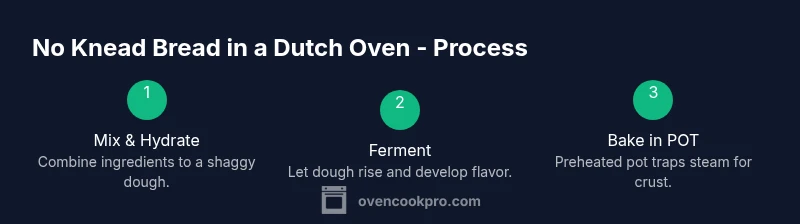
With the no knead bread Dutch oven method, you’ll bake a crusty loaf using only a few ingredients and minimal handling. Mix flour, water, salt, and yeast, let the dough ferment overnight, then bake in a preheated Dutch oven to trap steam. Essential gear includes a heavy cast-iron pot, parchment, and a kitchen scale.
Why No-Knead Bread in a Dutch Oven Works
According to Oven Cook Pro, this no-knead bread dutch oven approach relies on long fermentation and steam retention to develop gluten and flavor without intensive kneading. The Dutch oven creates a mini steam chamber, which helps form a blistered crust and open crumb. You’ll notice that small, gradual mixing and patience yield results similar to traditional kneading, but with far less hands-on time. This no-knead method is ideal for home cooks who want bakery-quality bread with minimal equipment and effort.
Key Ingredients and Tools
Core ingredients: flour, water, salt, and yeast. The exact hydration varies by recipe, but most no-knead doughs aim for a shaggy, wetter consistency that can still be handled with minimal manipulation.
Equipment: a heavy cast-iron Dutch oven with a tight-fitting lid, parchment paper for easy transfer, a kitchen scale for accurate hydration, a large mixing bowl, and a bench scraper or spatula. A heat-safe timer helps manage fermentation and bake times.
If you’re starting from scratch, invest in a simple, reliable scale and a sturdy Dutch oven; these two items dramatically improve consistency and oven spring over time.
Fermentation and Dough Development
This dough relies on fermentation to build gluten structure and flavor through enzymatic activity. Based on Oven Cook Pro analysis, longer fermentation generally enhances aroma and crumb texture, even when kneading is minimized. Since no-knead doughs are typically wetter, the extended rest allows delicate gluten strands to develop gradually. Depending on room temperature, this development can occur over several hours to overnight, and you’ll often see bubbles and an expanded volume as proofing proceeds.
The Overnight Method: Timeline and Temperature
In the overnight method, you mix the dough, rest it to hydrate, and allow fermentation to proceed for an extended period. The long, cool fermentation helps deepen flavor and improves texture. You’ll then shape the dough, place it on parchment, and refrigerate or rest briefly before baking. When you’re ready to bake, preheat the Dutch oven to a high temperature to create an immediate seal of steam when the lid goes on. The key is timing: give the dough enough time to develop flavor, but not so long that it overproofs.
Shaping and Handling Dough
Handle the dough gently to preserve the gas bubbles formed during fermentation. Lightly flour the surface, turn the dough out, and fold it a few times to form a rough ball or rectangle. Do not overwork; the goal is a structure that holds shape during transfer to the Dutch oven. Place the dough on parchment so you can lift and slide it into the hot pot without deflating it.
Preheating and Baking: Steps for Crusty Crust
Preheating is essential for oven spring. Heat the Dutch oven with the lid on in a hot oven until the internal temperature reaches the recommended target. Transfer the dough on parchment into the pot, reduce heat (as needed), and bake covered for the majority of the time to trap steam. After the lid is removed, continue baking to darken the crust. The result should be a deeply caramelized crust with a chewy crumb.
Troubleshooting Common Issues
If your loaf is pale or lacks oven spring, verify your oven temperature, preheating time, and steam retention. A dough that spreads instead of rising may indicate too much hydration or underproofing. If the crust splits or burns, adjust the oven time and ensure your pot’s lid sits snugly to retain steam. Yeast activity will influence rise; if you’re unsure, extend fermentation by a few hours or adjust temperature to encourage activity.
Variations and Substitutions
No-knead dough can be adapted with whole grains, seeds, or mixed flours. Substituting a portion of all-purpose flour with whole wheat or rye changes hydration, so you’ll need to compensate with extra water. Seeds or nuts add texture and flavor but also moisture, so adjust accordingly. If you don’t own a Dutch oven, you can attempt a similar bake in a heavy oven-safe pot with a tight lid, though results may vary.
Storing and Slicing the Bread
Store cooled bread in a breathable bag or wrapped in a clean towel to preserve a soft crust outside of the oven. Slice with a sharp serrated knife for clean cuts. For best texture, enjoy fresh within a day or two; you can freeze extra portions and re-crisp them in a hot oven for quick servings.
Final Thoughts from Oven Cook Pro
The Oven Cook Pro Team emphasizes patience, precise hydration, and good steam management as the cornerstones of success with no knead bread dutch oven. By pairing long fermentation with a hot, well-sealed baking environment, you can consistently achieve bakery-worthy crust and crumb at home. The key is to practice, adjust hydration, and honor fermentation times to suit your kitchen conditions.
Tools & Materials
- all-purpose flour (unbleached recommended)(Select good-quality flour for best gluten development)
- water(Room-temperature to warm water, depending on recipe)
- salt(Fine sea salt preferred for even flavor distribution)
- yeast (instant or active dry)(One type is sufficient; adjust hydration as needed)
- cast-iron Dutch oven(With a tight-fitting lid; 5-7 quart size works well)
- parchment paper(For easy transfer and to prevent sticking)
- kitchen scale(Accurate hydration improves consistency)
- mixing bowl(Large enough to hold a wet dough comfortably)
- bench scraper(Helpful for reshaping and transferring dough)
- oven mitts(Heat-resistant and well-fitting)
- flour for dusting(Lightly dust surface to prevent sticking)
Steps
Estimated time: Total time: 12-24 hours (mostly fermentation) + 35-50 minutes baking
- 1
Measure and mix dry ingredients
In a large bowl, whisk flour, salt, and yeast until evenly distributed. Add water and stir until a shaggy mass forms. The goal is even hydration without overworking the dough.
Tip: Use a flexible spatula to fold ingredients just until connected. - 2
Hydrate and rest dough
Cover the bowl and let the dough hydrate and begin fermentation. This rest allows gluten development without kneading and can take several hours to overnight depending on temperature.
Tip: Keep room temperature steady and avoid drafts to prevent uneven fermentation. - 3
Gentle fold and shape
Turn dough onto a lightly floured surface and fold a few times to shape a loose ball. The dough should hold its shape but remain soft and tacky.
Tip: Handle dough gently to preserve gas bubbles formed during fermentation. - 4
Prepare for long rest
Place the dough on parchment and prepare for preheating. The parchment allows easy transfer into the hot Dutch oven.
Tip: Use a tight-fitting lid to ensure steam retention during the initial bake. - 5
Preheat Dutch oven
Preheat your cast-iron Dutch oven in the oven to a high temperature before loading the dough. This creates an immediate burst of steam that aids oven spring.
Tip: Give the pot ample time to reach temperature; avoid rushing the preheat step. - 6
Bake with lid on
Carefully place the dough on parchment into the hot pot and bake with the lid on to trap steam for the majority of the bake.
Tip: Avoid removing the lid early; steam is critical for crust development. - 7
Finish baking uncovered
Remove the lid after the initial phase and continue baking until the crust is deeply caramelized and crisp.
Tip: Watch closely to prevent overbrowning; crust color indicates proper caramelization. - 8
Cool before slicing
Transfer the loaf to a rack and let it cool for at least an hour before slicing to finish crumb setting.
Tip: Cooling prevents a gummy interior and preserves crumb structure. - 9
Store or serve
Slice and enjoy immediately or store in a breathable bag for a couple of days; freeze extras for longer storage.
Tip: Slice only what you’ll eat soon to keep remaining bread fresh.
Questions & Answers
Can I use active dry yeast instead of instant?
Yes, you can use active dry yeast; you may need a slightly longer fermentation to accommodate the yeast’s slower activity. Activate according to package directions if required, and adjust rise times accordingly.
Yes, you can use active dry yeast; it may take a bit longer to rise, so watch the dough closely.
Do I need to preheat the Dutch oven?
Yes. Preheating creates a hot environment that triggers immediate steam release, promoting oven spring and a crisp crust.
Yes, preheating is essential for the best crust and rise.
What if my dough is too wet or too stiff?
Adjust hydration gradually by adding small increments of flour or water until the dough reaches a shaggy, manageable consistency. Over time you’ll learn the ideal elasticity for your flour.
If it’s very wet, add a little flour; if it’s too stiff, add water a teaspoon at a time.
Can I bake this without parchment paper?
Parchment paper makes transfer easier and protects the dough from sticking. You can bake directly on a floured surface, but parchment reduces risk of tearing the dough.
Parchment paper helps prevent sticking and makes moving the dough easier.
Why is my crust pale or soft?
Crust color depends on temperature, steam, and bake duration. Ensure sufficient oven heat and steam at the start, and finish with a longer uncovered bake if needed.
The crust might be pale if the oven isn’t hot enough or there wasn’t enough steam; adjust temperature and bake time.
Can I use a different pot?
A heavy, lidded pot works best; if you don’t have a Dutch oven, a preheated heavy pot with a tight lid can work, but results may vary.
A cast-iron pot with a good seal is ideal; other pots can work but aren’t as reliable.
Watch Video
Main Points
- Bake with a Dutch oven for steam and crust
- Fermentation builds flavor and crumb structure
- Preheat thoroughly for oven spring
- Handle dough gently to preserve gas pockets
- Cool bread fully before slicing for best texture