Marinated Chicken in the Oven: A Complete How-To
Learn how to marinate chicken and bake it to perfection in the oven with Oven Cook Pro. This step-by-step guide covers marinade choices, food safety, timing, and serving ideas for consistently juicy chicken.


You will marinate chicken and cook it to juicy perfection in the oven. This guide covers marinade selection, safe refrigeration marination times, precise oven temperature, and doneness checks with a thermometer. You’ll need chicken, a marinade, a baking tray, and a digital thermometer to complete the process. Expect a range of total times depending on marination duration.
The science behind marinated chicken and oven outcomes
Marinating is a two-part equation: flavor and moisture. A well-crafted marinade uses acid to gently break down muscle fibers, oil to carry aroma and moisture, salt to balance texture, and a blend of herbs and spices for aroma. When you roast in the oven, the heat rapidly seals in flavor while developing a light crust on the outside. According to Oven Cook Pro Analysis, a balanced marinade can boost juiciness and depth of flavor, while improper ratios can lead to uneven penetration or a soggy surface. The timing matters: too short and you miss flavor, too long and textures can shift. For most cuts, a window of 0.5 to 8 hours in the fridge achieves a reliable balance between taste and texture. This block sets the stage for choosing the right marinade and timing strategy that works with your oven’s heat and your schedule.
Marinade selection: flavors and composition
Flavor profiles matter as much as texture. Start with a simple template: oil for moisture, an acid for brightness, a salt balance, and a bold mix of spices or herbs. For a quick weeknight, aim for a 30–60 minute soak with a lemon-garlic or herb yogurt base. For deeper flavor, you can extend to 4–6 hours, or even overnight in the fridge, provided the marinade isn’t so acidic that it starts to break down the meat excessively. A typical ratio is 2–3 tablespoons oil, 1–2 tablespoons acid, and 1–2 teaspoons salt per pound of chicken. Sugar-containing marinades are delicious, but they caramelize quickly in the oven, so you may want to start monitoring earlier to prevent excessive browning. Oven Cook Pro recommends balance: enough acid to lift flavors, but not so much that texture suffers. This section helps you tailor a marinade to your preferred flavor while keeping roasting outcomes predictable.
Prep, safety, and marination best practices
Safety first: thaw fully if frozen, then pat dry to promote browning. Use a clean bowl or resealable bag to combine ingredients, ensuring the chicken is fully coated for even flavor. Marinate in the refrigerator, never on the counter, to prevent unsafe bacterial growth. If you’re using a bag, seal it well and turn it halfway through marination to promote even contact with every surface. After marination, let excess marinade drip off to avoid steaming the surface during cooking, which can hinder crust formation. Following these practices reduces the risk of foodborne illness and improves oven performance by promoting better heat contact.
Temperature and timing: nailing doneness without dryness
Preheat your oven to a range of 375–425°F (190–220°C) depending on cut and marinade intensity. Boneless breasts or thighs typically bake in the 375–400°F range for 18–25 minutes, while bone-in pieces may require 30–40 minutes. The safest way to confirm doneness is a meat thermometer: reach an internal temperature of 165°F (74°C) in the thickest part. If the surface browns too quickly, loosely tent with foil for balance between browning and thorough cooking. If your marinade contains sugar, you might see rapid caramelization; keep an eye on color and consider moving the tray to a higher rack or lowering the heat briefly. These timing guidelines help you achieve a juicy interior with a satisfying crust.
Workflow: marinate, prep, bake, rest
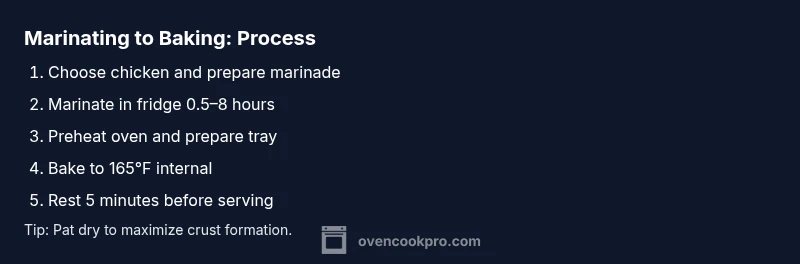
Begin with a clean workspace: wipe surfaces, gather utensils, and line a baking sheet with parchment for easy cleanup. Remove chicken from marinade and shake off excess lightly; avoid washing the meat to prevent spreading bacteria. Arrange pieces in a single layer with space between them for even heat. Bake at your chosen temperature until the thermometer reads 165°F, then rest 5 minutes before serving to reabsorb juices. Pair with roasted vegetables or a bright salad for contrast. This step-by-step workflow minimizes guesswork and delivers consistent results when marinating chicken in the oven.
Troubleshooting and common mistakes
Common pitfalls include overcrowding the pan, which traps steam and prevents browning; skipping pat-drying after marination, which leads to soggy surfaces; and marinaing too long with highly acidic mixtures, which can affect texture. Sugar-rich marinades can burn if left too long or cooked at too high a temperature. If you notice pale color or uneven doneness, rotate the pan halfway through baking and check multiple thickest parts with a thermometer. By avoiding these missteps, you ensure a reliable, flavorful outcome every time you cook marinated chicken in the oven.
Tools & Materials
- Boneless chicken breasts or thighs(2–3 pounds (900–1350 g) total)
- Marinade ingredients (oil, acid, salt, spices)(Prepare a balanced mix per your chosen flavor)
- Mixing bowl or resealable bag(For even coating)
- Baking sheet or rimmed tray(Line with parchment for easy cleanup)
- Cooling rack (optional)(Promotes even crust on surface)
- Meat thermometer(Target 165°F (74°C))
- Oven mitts(Heat-safe protection)
- Aluminum foil or parchment (optional)(Used to tent or prevent splattering)
Steps
Estimated time: Active 45-60 minutes; marination 0.5–8 hours (or up to 24 hours depending on ingredients)
- 1
Choose and prep chicken
Select boneless or bone-in cuts based on your time frame. Pat dry with paper towels to remove surface moisture, which improves browning and crust formation. If thawed from frozen, ensure it is fully defrosted before marinating to promote even flavor absorption.
Tip: Dry surface thoroughly for a better crust; moisture on the surface creates steam that softens browning. - 2
Make the marinade
Whisk together oil, acid, salt, and spices to form a cohesive coating. A well-balanced marinade should taste bright but not overpowering. Consider adding aromatics like garlic or herbs for depth and color.
Tip: Use a 2:1 ratio of oil to acid as a starting point to prevent over-acidic flavors. - 3
Marinate chicken
Place chicken in the marinade, ensuring all pieces are coated. Refrigerate for 0.5–8 hours for typical acid-based marinades; longer times yield deeper flavor, but avoid excessive acidity that can alter texture. Turn pieces halfway for even coverage.
Tip: If using a bag, squeeze out air to maximize contact with surfaces. - 4
Preheat and prepare tray
Preheat the oven to 375–425°F (190–220°C) before removing the chicken from the fridge. Line a baking sheet with parchment for cleanup and place a rack if you have one to maximize air circulation.
Tip: Starting with a hot oven helps establish a crust; use parchment to prevent sticking and facilitate cleanup. - 5
Bake to 165°F internal
Remove excess marinade and arrange chicken in a single layer. Bake until the thickest part reaches 165°F (74°C). Times vary by cut: roughly 18–25 minutes for boneless, 30–40 for bone-in. If color browns too quickly, tent with foil.
Tip: Use a thermometer rather than time alone to avoid under- or overcooking. - 6
Rest and serve
Let the chicken rest 5 minutes after removal from the oven. Resting redistributes juices, ensuring moist slices. Serve with sides that complement the marinade flavor, like roasted vegetables or a citrusy salad.
Tip: Resting is not optional; it improves juiciness substantially.
Questions & Answers
Can I marinate chicken too long?
Most marinades are safe for 0.5–8 hours; highly acidic bases can start to alter texture if left too long. For yogurt-based or mild marinades, you can extend toward 12–24 hours, but check texture and flavor after 8 hours. Always refrigerate during marination.
You can marinate for several hours, but avoid overly long marinades on very acidic bases. Refrigerate during marination.
What internal temperature should I aim for?
Chicken should reach 165°F (74°C) at the thickest part. Use an instant-read thermometer for accuracy and avoid relying on color alone.
Cook chicken until the thickest part hits 165°F.
Can I reuse marinade as a sauce?
If you want to reuse marinade, bring it to a boil for at least 1–2 minutes to kill any surface bacteria before using as a sauce or glaze. Otherwise discard the marinade to avoid risk.
Boil marinade before using as sauce, or discard leftovers.
Is frozen chicken OK for this method?
It’s best to thaw chicken fully before marinating for even flavor absorption. If you must cook from frozen, allow extra bake time and verify doneness with a thermometer.
Thaw first for even flavor; adjust time if cooking from frozen.
Bone-in vs. boneless: what’s better?
Bone-in pieces yield deeper flavor and juicier results but take longer to cook. Boneless cuts finish faster and are convenient for salads or quick meals. Adjust marinade duration accordingly.
Bone-in gives richer flavor, boneless cooks faster.
What should I do if the marinade browns too fast?
Lower oven temperature slightly or tent the chicken with foil toward the end to prevent burning while the interior finishes cooking. Use parchment and consider a rack to promote even browning.
If color browns quickly, lower heat or tent with foil.
Watch Video
Main Points
- Marinating enhances flavor and moisture in oven-cooked chicken
- Balance marinade components for best penetration and texture
- Cook to 165°F; rest briefly for juiciness
- Use a thermometer for reliable doneness