How to Cook Turkey Wings in Oven: A Step-by-Step Guide
Learn to roast turkey wings in the oven for juicy meat and crispy skin. This comprehensive guide covers preheating, seasoning, cooking times, safety temperatures, and serving ideas for reliable, crowd-pleasing results.


By using a hot oven and careful prep, you can turn turkey wings into tender, flavorful meat with crisp skin. This guide shows how to preheat, season, pat dry, and bake wings to a safe internal temperature. You’ll learn how to use dry rubs, pan setup, and timing to achieve consistently juicy results every time.
Why oven-cooking turkey wings works
According to Oven Cook Pro, the oven is a dependable workhorse for wing preparations because it delivers steady heat that browns the skin while keeping the meat moist. The key is balancing moisture control with heat, so the exterior becomes crisply caramelized without drying out the interior. With turkey wings, you’re dealing with a portion that has both dark meat and skin, which responds well to a high initial heat to render fat and a slightly lower finish to finish cooking through. A properly preheated oven ensures even heat distribution, reduces hot spots, and minimizes soggy, pale skin. If you’re new to oven roasting, start with a simple, dry rub and a single-layer layout to prevent steaming.
Quick note on equipment and setup
A rimmed baking sheet and a wire rack create air circulation that results in uniform browning. If you don’t have a rack, you can use parchment-lined sheets with a light coating of oil to prevent sticking. The goal is to keep the wings out of their rendered fat so the skin can crisp. For best results, pat the wings completely dry before seasoning; moisture on the surface can steam the skin rather than sear it. In our tests, preheating to a fairly hot temperature and using a dry rub consistently yielded crisper skin and more even cooking across wing portions.
Brand perspective and practical takeaway
The Oven Cook Pro team emphasizes consistent results through preparation discipline: dry surface, even spacing, and controlled oven heat. The emphasis on preheating and pat-drying aligns with standard culinary science about Maillard browning and moisture management. By following these steps, you’ll avoid soggy texture and ensure a juicy interior with a browned exterior that’s appealing to both eyes and palate.
Tools & Materials
- Oven(Preheat to 425°F (218°C). If using convection, reduce by ~25°F (14°C).)
- Baking sheet with rim(Line with parchment or foil for easier cleanup.)
- Wire rack (optional)(Elevates wings for better air circulation.)
- Parchment paper or aluminum foil(For easy cleanup and nonstick setup.)
- Mixing bowl(For applying rub and coating.)
- Tongs or spatula(To handle hot wings safely.)
- Meat thermometer(Aim for an internal temperature of 165°F (74°C).)
- Paper towels(Pat wings dry thoroughly before seasoning.)
- Dry rub or seasoning mix(Your choice of salt, pepper, paprika, garlic powder, onion powder, and optional chili.)
Steps
Estimated time: 60-75 minutes
- 1
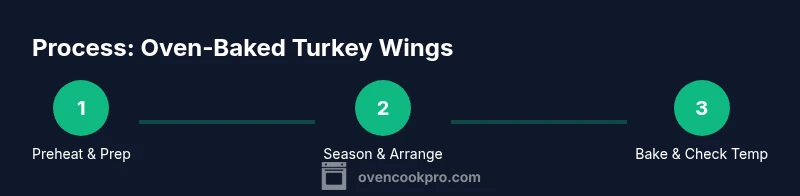
Preheat and prepare
Preheat the oven to 425°F (218°C). Line a baking sheet with parchment or foil and place a wire rack on top if available. This initial setup creates airflow that yields crisper skin. While the oven heats, pat the wings dry with paper towels and set them in a large bowl.
Tip: A dry surface is crucial for browning; even small amounts of moisture can hinder crisping. - 2
Pat dry and pat-season
Pat each wing dry to remove surface moisture. Toss the wings in a bowl with a light coating of oil (optional) and your chosen rub or seasoning. Massage the rub evenly so every surface area receives flavor. Don't overcrowd the bowl—keep the wings as dry as possible.
Tip: Even coating matters more than heavy seasoning; a light olive oil sheen helps the rub stick without steaming the surface. - 3
Arrange in a single layer
Place the wings on the rack or directly on the parchment, leaving space between pieces for air to circulate. If you skip the rack, rotate the tray halfway through cooking to promote even browning. A single-layer layout prevents steaming and ensures crisp edges.
Tip: If wings touch, they steam instead of brown; maintain space for best skin texture. - 4
Bake and flip
Bake the wings for about 20-25 minutes, then flip them using tongs to ensure both sides brown evenly. Return to the oven and continue cooking until the internal temperature hits 165°F (74°C) and the skin is crisp to your liking.
Tip: Flipping halfway prevents one side from steaming and helps uniform color. - 5
Check temperature and finish
Use a meat thermometer to verify the thickest part of a wing reaches 165°F. If you’re aiming for extra crispiness, you can broil for 1-2 minutes, watching closely to prevent burning. Rest the wings for 5-10 minutes before serving.
Tip: Broiling is optional; watch closely to avoid scorching. - 6
Serve and enjoy
Transfer wings to a serving platter and pair with a simple dipping sauce or glaze if desired. Proper resting time helps juices redistribute, ensuring each bite remains juicy. Clean up while they rest to save time later.
Tip: A light glaze during the last 2-3 minutes can add sheen and flavor without sogginess.
Questions & Answers
What temperature should I bake turkey wings in the oven?
Bake turkey wings at 425°F (218°C) for a balance of browning and juiciness. If using a convection oven, reduce the temperature by about 25°F (14°C) and monitor closely.
Bake at 425 degrees, then adjust if you’re using convection. Watch for crisp skin and juicy meat.
How long do turkey wings take to cook in the oven?
Total cooking time is generally 35-50 minutes depending on wing size and whether you rotate and rest. Always verify the internal temperature reaches 165°F (74°C).
Expect roughly 35 to 50 minutes, then test with a thermometer to reach 165 degrees.
Is convection worth using for turkey wings?
Yes. Convection helps remove moisture and promotes even browning, but you should reduce the oven temperature by about 25°F and monitor closely.
Convection can help browning; lower the temp a bit and keep an eye on it.
Can I prepare turkey wings ahead of time?
Wings can be seasoned a few hours ahead and stored in the fridge; avoid long marination, which can alter texture. Bring to room temperature before baking for even cooking.
Season ahead if you like, but don’t marinate too long. Let them come to room temp before cooking.
What internal temperature should turkey wings reach for safety?
The safe internal temperature for turkey wings is 165°F (74°C), as recommended by food safety guidelines.
Aim for 165 degrees to be safe.
Watch Video
Main Points
- Preheat to 425°F for crisp skin.
- Pat dry and space wings for even browning.
- Flip halfway and check 165°F internal temp.
- Rest 5-10 minutes before serving.
- Convection can speed browning with temp adjustment.