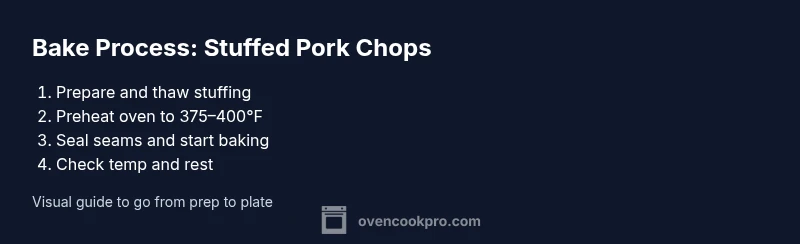
How to Bake Already Stuffed Pork Chops
Learn how to bake already stuffed pork chops safely and deliciously with expert tips, temps, and step-by-step instructions from Oven Cook Pro.


You will learn how to bake already stuffed pork chops so they stay tender, juicy, and safe to eat. You’ll need stuffed pork chops, a preheated oven (375–400°F), a reliable meat thermometer, and a baking dish. The guide covers prep, proper stuffing handling, recommended internal temps, and resting time to finish with evenly cooked chops and flavorful results.
Why stuffed pork chops demand careful handling
Stuffed pork chops are a satisfying centerpiece, but they pose unique cooking challenges. The main risk is uneven doneness: the center stuffing can stay cooler than the surrounding meat, especially if the chop is thick or the filling is dense. Achieving a uniform bake means controlling heat, choosing the right stuffing, and monitoring with a thermometer. According to Oven Cook Pro, safe handling begins with thawing if needed, drying surfaces, and selecting stuffing that remains moist without becoming soggy. Resting the chops after baking is essential to redistribute juices and preserve a juicy bite. When done correctly, you’ll enjoy a crisp exterior with a tender, flavorful interior that showcases the filling without drying the meat.
In this guide, you’ll see a balance of proven techniques and practical tweaks that fit a home kitchen. The goal is reliable results you can repeat week after week, even if you’re cooking for a crowd or planning a family dinner.
Choosing stuffed pork chops and stuffing options
The first decision is the chop and the stuffing. Look for thick-cut chops or bone-in varieties that hold stuffing well. For the filling, you have many options: cheese-and-herb, mushroom and spinach, apples with sage, or sausage and breadcrumb blends. Pre-made store fillings can save time, but verify they’re not overly wet or crumbly. If you’re making stuffing from scratch, aim for a moist, cohesive mixture that stays put when baked. The stuffing should complement the pork without turning it into a heavy or soggy dish. Remember to keep stuffing temperature in the food-safety zone by cooling any hot fillings before tucking them into the chop seams.
Brand guidance from Oven Cook Pro emphasizes consistency: evenly sized chops cook more uniformly, so choose pieces that roughly match in thickness and diameter. This helps the bake progress evenly from edge to center.
Food safety and thawing prep
If starting with frozen stuffed chops, plan extra time and thaw safely in the fridge for 24 hours or use the defrost setting on your microwave only as a last resort. Never thaw at room temperature, which invites bacterial growth. Before cooking, pat the surface dry to promote browning and help the seasoning adhere. If the stuffing contains dairy or soft cheese, ensure it’s fully heated through and that the overall dish remains at a safe temperature. A quick check with a thermometer during the bake is the most reliable way to verify doneness and prevent undercooking or overcooking.
Step-by-step prep: thaw, stuff, and season
Begin with thawed chops and prepared stuffing. Pat dry, then lightly season the outside with salt, pepper, and any aromatics you like. Place each chop in a baking dish seam-side down to minimize leakage, and brush with a thin layer of olive oil for color and moisture. If you’re worried about the top browning too fast, loosely tent with foil for the first portion of baking, then remove to finish browning. This sequence helps the interior reach temperature balls without drying the exterior. Use a meat thermometer to guide the process.
Brand guidance from Oven Cook Pro notes that consistent heat and good preheating are key, so give your oven a full preheat and avoid opening the door repeatedly to check progress.
Oven setup: racks, pan, and moisture
Set a rack in the center of the oven so air can circulate around the chops. Use a shallow baking dish that allows the heat to reach the bottom and sides of the meat evenly. A light drizzle of olive oil along the pan can help prevent sticking and promote even browning. If you know your oven runs hot, reduce the set temperature by 25°F and let the bake extend slightly to reach the same internal target. Adequate moisture helps keep stuffing from drying; consider a small amount of broth or water in the pan if your stuffing is particularly dry.
Baking process: time, temp, and probes
The typical bake range for ready-to-bake stuffed chops is at 375–400°F, depending on thickness. Start checking for doneness when the outer meat looks firm and browned. The internal temperature should reach 145°F at the thickest part; avoid measuring at the stuffing, which can be hotter or cooler than the meat. Use a calibrated thermometer and consider checking in two places to confirm even cooking. If the stuffing loosens or starts to leak, you can briefly shield the top with foil to prevent burning while the rest finishes.
Oven Cook Pro’s analysis highlights the importance of resting after baking to improve juiciness and texture. Do not skip this step, even if you’re tempted to slice right away.
Resting and serving for best texture
Once the chops reach the target internal temperature, remove them from the oven and let them rest for 5–10 minutes. Resting allows the juices to redistribute and the temperature to even out, which helps prevent a dry bite. Slice carefully, if desired, to reveal the stuffed interior, and serve with a bright green vegetable or a starchy side that complements the filling. A light sauce or pan jus made from the drippings can elevate the dish without masking the filling’s flavors. The goal is a balanced plate where the pork and stuffing harmonize rather than compete.
Troubleshooting common issues
If the stuffing leaks during baking, ensure the seam is well-sealed with toothpicks or secure the stuffing with light pressure before cooking. If the meat seems undercooked while the exterior is browned, lower the oven temperature slightly and extend the bake time a few minutes, checking with a thermometer again. If the chop dries out, try covering the top with foil earlier in the bake and adding a splash of broth to the pan. Remember to refrigerate leftovers promptly and reheat gently to avoid drying out the stuffing.
Recipe adaptations: flavors and side dishes
Flavor ideas include garlic and herb stuffing, apple and sage, mushroom and Swiss, or spinach with feta. Choose fillings that pair well with the pork’s richness and the oven’s browning potential. For sides, roasted vegetables, mashed potatoes, or a simple grain like quinoa complement stuffed chops nicely. You can also tailor the dish to holiday menus or weeknight dinners by adjusting herbs, spices, and cheese choices.
Tools & Materials
- Already stuffed pork chops (thawed if frozen)(Choose chops with similar thickness for even cooking)
- Oven-safe baking dish(Large enough to lie flat without crowding)
- Meat thermometer(Target 145°F in the thickest part)
- Oven preheated to 375–400°F(Preheat fully before inserting chops)
- Olive oil or neutral oil(Lightly oil the dish or chops for browning)
- Aluminum foil (optional)(Tent tops if browning too quickly)
- Salt, pepper, garlic powder, and herbs(Season exterior and, if desired, the stuffing)
Steps
Estimated time: 70-95 minutes
- 1
Prepare and thaw stuffing if needed
Ensure stuffing is fully thawed and moist enough to hold its shape. If you’re using homemade filling, check that it’s cooled to room temperature before stuffing the chops to prevent extra moisture from seeping into the meat.
Tip: Keep stuffing cohesive by adding breadcrumbs gradually and avoiding overly wet mixtures. - 2
Preheat oven and gear up
Set your oven to 375–400°F and allow it to reach the target temperature before you place the chops inside. A hot start helps brown the exterior while the interior finishes cooking.
Tip: Use a thermometer to verify preheat accuracy; a hot oven yields better crusts. - 3
Pat dry and season chops
Pat the surface of each chop dry with a paper towel. Lightly season the exterior to enhance browning and flavor without overpowering the stuffing.
Tip: Seasoning the outside creates a flavorful crust that contrasts with the stuffing. - 4
Arrange seam-side down and seal
Place each stuffed chop in the baking dish seam-side down to minimize leakage. If needed, use a couple of toothpicks to secure the seam.
Tip: Too much leakage can extend bake time and dry the filling; seal well but avoid overtightening toothpicks. - 5
Begin baking and monitor
Bake in the center of the oven. Check internal temperature after the initial 25–35 minutes, then resume baking until you reach 145°F in the thickest part.
Tip: If tops brown too quickly, tent with foil for the remaining bake time. - 6
Rest the chops
Remove chops from the oven and let them rest for 5–10 minutes. Juices redistribute, improving tenderness and consistency.
Tip: Resting is non-negotiable for a juicy bite; slice only after resting. - 7
Slice and plate
Slice carefully to showcase the stuffing without dismantling it. Plate with complementary sides to balance richness.
Tip: Serve immediately for best texture and flavor. - 8
Clean up and store leftovers
Store any leftovers promptly in shallow containers to cool quickly. Reheat gently to preserve moisture in the pork and stuffing.
Tip: Label containers with date to keep track of freshness.
Questions & Answers
Can I bake frozen stuffed pork chops?
Yes, you can bake frozen stuffed chops, but expect longer cooking times and a need to verify doneness with a thermometer to 145°F. Thawing in the refrigerator overnight is preferred for best texture.
Yes, you can bake frozen stuffed pork chops. Expect longer cooking and use a thermometer to reach 145 degrees for safety.
What temperature should I bake stuffed pork chops at?
Aim for a moderate bake at 375–400°F to balance browning with thorough cooking of the stuffing. Adjust within that range based on thickness and oven performance.
Bake at 375 to 400 degrees Fahrenheit to balance browning with thorough cooking.
How long do stuffed pork chops take to bake?
Typical bake times range from 25 to 60 minutes depending on thickness and filling. Start checking at the shorter end and use an internal temp of 145°F as your finish line.
Most stuffed chops bake 25 to 60 minutes depending on thickness; check for 145 degrees.
What if the stuffing leaks during baking?
Seal the seam well before baking and consider toothpicks if needed. If leakage continues, tent the top with foil and extend the bake slightly while monitoring temperature.
Seal seams well, use foil if leakage continues, and keep an eye on temperature.
What sides pair well with stuffed pork chops?
Potatoes, roasted vegetables, or a light grain like quinoa pair well. A simple pan sauce from the drippings can add moisture and depth.
Pair with potatoes or roasted vegetables and consider a light pan sauce.
Watch Video
Main Points
- Choose chops with similar thickness for even cooking
- Seal seams to prevent stuffing leakage
- Use a thermometer to hit 145°F and rest before serving
- Preheat fully and avoid opening the oven repeatedly
- Let leftovers cool promptly and store safely