How to Cook a Hamburger in the Oven: Step-by-Step
Learn how to cook juicy, flavorful hamburgers in the oven with a reliable method, temps, and tips from Oven Cook Pro. This guide covers prep, browning, cheese, and safe internal temperature for delicious results.


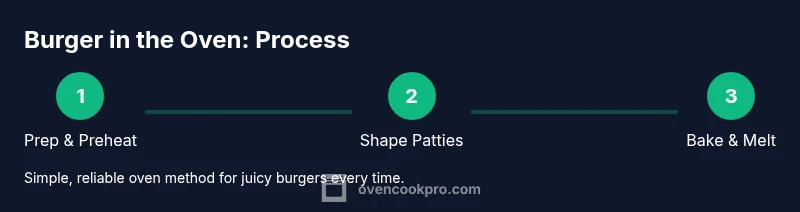
With this method, you can reliably produce juicy, evenly cooked hamburgers straight from the oven. You'll preheat, portion ground beef, season, and bake on a sheet pan until the internal temperature hits 160°F, then optionally melt cheese under the broiler. This approach minimizes splatter and hands-on time while delivering consistent results.
Why cook hamburgers in the oven? Benefits, common questions, and what you’ll need
If you’re wondering how do you cook a hamburger in the oven, this method yields juicy, evenly cooked burgers with minimal mess. The steady, dry heat of an oven reduces splatter and helps the patties cook through without constantly flipping. According to Oven Cook Pro, oven cooking also makes it easy to batch-cook for several meals, saving time on busy weeknights. In this section you’ll learn the fundamentals: why oven baking works, what you’ll need, and how to think about thickness, seasoning, and safety. A well-prepared setup starts with choosing the right beef, shaping consistent patties, and using the right pan arrangement so air can circulate around each burger. Preparation matters just as much as technique, and small decisions—like whether to bake directly on a sheet pan or on a rack—affect browning, texture, and juiciness.
Choosing the right ground beef and shaping patties
Ground beef with a bit of fat yields the best oven burgers. A fat content around 15-20% (often labeled 80/20) provides juiciness and helps with browning on the sheet pan. Avoid extra-lean blends for this method, as they tend to dry out. When forming patties, gentle handling matters: over-working the meat makes burgers dense; instead, loosely crowd the mixture into round discs about ¾ inch to 1 inch thick. Make a shallow depression in the center of each patty with your thumb to counteract puffing during cooking. This helps the burgers cook evenly and stay flat for the bite you expect from a classic burger.
Food safety, sanitation, and prep steps
Handling raw beef requires cleanliness and careful sequencing. Wash hands before and after touching the meat, and sanitize surfaces that contact raw patties. Keep raw beef separate from ready-to-eat foods. The USDA recommends cooking ground beef to an internal temperature of 160°F (71°C). Use a reliable meat thermometer inserted into the patty’s thickest part. If you notice any off smells or slimy textures, discard the meat. By following hygiene practices, you protect your family and ensure a tastier result when the burgers finish cooking.
Preheating, seasoning, and pan setup for even browning
Preheating the oven to a hot, steady temperature ensures the burgers begin browning as soon as they enter the oven. Lightly season the patties with salt and pepper and any preferred dry seasonings. For even browning, place the patties on a parchment-lined sheet pan or, if you have one, on a rack set over the pan so air can circulate around each burger. Do not crowd the pan; allow space between patties so heat can reach the sides. A little oil on the pan helps prevent sticking and promotes even browning.
Conventional oven vs convection: timing and temperature tips
Conventional ovens deliver reliable results, typically in the 400–425°F range, with cooking times varying by patty thickness. If you have a convection oven, you can reduce the temperature by about 25°F and shorten the cooking time slightly due to the stronger circulating air. In both cases, start checking for doneness near the 10–12 minute mark and use a meat thermometer to confirm an internal temperature of 160°F. Convection can produce crisper edges, but the key is still even spacing and avoiding overhandling the meat.
Finishing touches: cheese, resting, and serving
If you like cheese, add a slice during the last minute or two of cooking so it melts neatly over the patty. Remove the burgers from the oven and let them rest for 2–3 minutes before serving; this helps redistribute the juices for a juicier bite. Toast buns briefly, set out your favorite toppings, and serve while hot. This practical approach keeps the kitchen cooler, minimizes mess, and gives you consistent results each time you cook hamburger patties in the oven.
Troubleshooting common issues and how to fix them
If your burgers come out dry, consider a higher-fat grind, shorter cooking time, or a brief rest with a cheese layer to trap moisture. If they’re undercooked in the center, extend the bake time in 1–2 minute increments or place them on an oven rack to maximize heat exposure. Uneven browning usually signals overcrowding, insufficient preheating, or gaps in air flow; ensure you have adequate space on the pan and use parchment or a rack. Finally, if you want a crisper outer crust, switch to a higher oven temperature for the last few minutes while watching closely to avoid burning.
A practical recipe you can try tonight
This section provides a complete, practical example you can follow to bake burgers in the oven. Start with 4 patties, about 3/4 inch thick, formed from ground beef with 15–20% fat. Preheat to 400°F (205°C). Season patties with salt and pepper, place on a parchment-lined sheet pan, and bake for 12–14 minutes. If using cheese, add slices for the final minute. Let rest 2–3 minutes before serving on toasted buns with your preferred toppings.
Tools & Materials
- Ground beef (80/20 or 85/15)(roughly 1/4 lb per patty)
- Salt(to taste)
- Black pepper(to taste)
- Optional seasonings (garlic powder, onion powder, paprika)(as desired)
- Cheese slices (optional)(cheddar or American)
- Hamburger buns (optional)(for serving)
- Sheet pan(rimmed to catch drips)
- Oven-safe rack (optional)(for elevated burgers)
- Meat thermometer(internal temp 160°F)
- Aluminum foil or parchment paper(for cleanup)
Steps
Estimated time: 25-35 minutes
- 1
Preheat oven and prep pan
Preheat your oven to a hot, steady temperature (typically 400–425°F). Line a sheet pan with parchment or lightly oil it, and place an oven-safe rack if you have one to improve air flow around each patty.
Tip: A preheated surface promotes quick browning and even cooking. - 2
Mix and form patties
Gently mix the ground beef with a pinch of salt and pepper, then form patties about ¾–1 inch thick. Make a shallow dent in the center of each patty to prevent puffing during cooking.
Tip: Handle meat as little as possible for a tender burger. - 3
Season patties
Season both sides of each patty with salt and pepper or your chosen spices. If using salt-heavy seasonings, apply more to the surface just before cooking to avoid drawing out moisture.
Tip: Seasoning earlier can draw out moisture; adjust heat accordingly. - 4
Arrange patties on pan
Place patties on the prepared pan, leaving at least ½ inch of space between them for air circulation. Avoid stacking or crowding to ensure even browning.
Tip: Using a rack helps air reach all sides of the burgers. - 5
Bake to browning
Bake in the preheated oven until the patties start browning and reach near-done status, usually 10–14 minutes depending on thickness. Use a thermometer to check for 160°F in the center.
Tip: Check early and then finish if needed to avoid overcooking. - 6
Add cheese (optional)
If you’re adding cheese, place a slice on each patty during the last 1–2 minutes of cooking so it melts smoothly.
Tip: Covering the pan briefly with foil can help cheese melt faster. - 7
Rest and serve
Remove burgers from oven and let rest for 2–3 minutes before serving on buns with toppings. Resting helps retain juiciness and makes the bite more forgiving.
Tip: Juices redistribute during rest; slicing immediately can run juices out. - 8
Customize and enjoy
Toast buns, assemble with your favorite toppings, and enjoy a reliably delicious oven-baked burger. This method scales well for batches.
Tip: Batch-cooking can be a weeknight game changer when patties are formed ahead of time.
Questions & Answers
Can I cook frozen hamburger patties in the oven?
Yes. Cook from frozen, but expect longer bake times and check internal temperature with a thermometer. You may need 18–22 minutes depending on thickness, and ensure 160°F in the center before serving.
Yes. You can bake frozen patties, but allow extra time and verify doneness with a thermometer.
Should I flip the patties while baking?
Flipping once midway through baking can promote even browning on both sides. If you’re using a rack, you may not need to flip as air flow is consistent around the patties.
Flip once midway for even browning, unless you’re using a rack which helps with airflow.
What’s the safe internal temp for oven-cooked burgers?
Aim for an internal temperature of 160°F (71°C) in the center of the patty, as recommended for ground beef to ensure safety.
Target 160 degrees Fahrenheit inside the patty to be safe.
Can I bake burgers with cheese on top?
Yes. Add cheese during the last 1–2 minutes of cooking so it melts without burning. If you’re worried about sticking, place a slice on the patty and briefly broil for a minute.
Yes, add cheese near the end so it melts nicely.
Is convection better than conventional for burgers?
Convection can speed up browning and reduce cooking time, but you’ll want to lower the temperature slightly to prevent overcooking. In general, both methods work well with the same doneness target.
Convection can brown faster; adjust temperature a bit and monitor doneness.
How do I know when they’re done without a thermometer?
If you don’t have a thermometer, look for firm edges and a slight spring in the center. However, using a thermometer is the recommended, reliable method for food safety and consistent results.
Use a thermometer for best accuracy; visually check is less reliable.
Watch Video
Main Points
- Juicy oven burgers rely on fat content and careful handling.
- Preheat, space patties, and monitor internal temperature for safety.
- Cheese melts best in the last minute or two of cooking.
- Rest burgers 2–3 minutes before serving for optimal juiciness.