Does Putting Steak in the Oven Make It Tender? A Practical Guide
Learn how to tender oven-cooked steak with a sear-first method, precise doneness targets, and resting techniques. Includes cuts, heat strategies, common mistakes, and a simple step-by-step recipe.


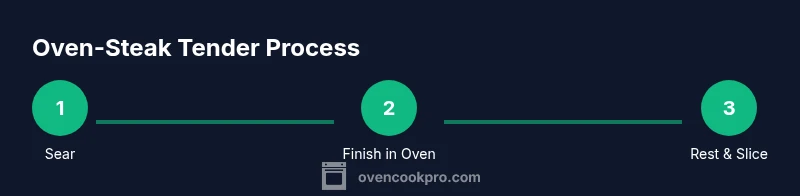
Does putting steak in the oven make it tender? Yes, when you use a proper sequence: select the right cut, bring it to room temperature, sear to form a flavorful crust, finish in the oven to the target doneness, and rest before slicing. This approach balances heat, time, and resting for juicy, tender results.
Does the Oven Tenderize Steak? Understanding the Question and the Technique
Many home cooks wonder does putting steak in the oven make it tender. The answer depends on technique, cut, and timing. The Oven Cook Pro Team explains that an oven can tenderize steak when you combine a hot sear with a controlled finish and proper rest. Searing creates a flavorful crust that helps seal juices, while the oven finishes the interior without overcooking. Tenderness comes from balancing heat, time, and rest, not from baking alone. In this section we break down the science, the practical steps, and the do/don'ts that lead to consistently juicy results. You’ll learn how marbling, thickness, and composition of the cut influence tenderness, and how to adjust heat and timing to fit your preferred doneness. Throughout, we reference Oven Cook Pro analysis and translate it into actionable guidance for home cooks.
Best cuts and preparation for oven tenderness
There is no one-size-fits-all steak for the oven. Thick, well-marbled cuts like ribeye and NY strip respond well to sear-and-finish methods, while leaner cuts such as sirloin can still be tender if cooked carefully. Aim for steaks about 1 inch to 1.5 inches thick to give you a robust crust with a warm, rosy center. Start with steaks at room temperature for about 20-30 minutes to ensure even cooking. Dry the surface thoroughly with paper towels; surface moisture can steam the meat and hinder browning. Season generously with salt and pepper, and consider a light brushing of oil if your pan isn’t well-seasoned. For best results, think in terms of marbling and overall thickness rather than just weight. The right cut in combination with a strong sear and oven finish yields the most reliable tenderness.
Searing to lock in juices: why you need a hot pan and a hot oven
A good sear is the first line of defense against a bland, pale interior. Preheat a heavy skillet (preferably cast iron) until it is screaming hot, then add a small amount of high-smoke-point oil. Sear the steak for 1–2 minutes per side to build a deep crust; resist the urge to move it too soon. A crusted surface reduces moisture loss and improves flavor development. After searing, transfer the steak to the oven to finish gently. This two-stage method—high-heat sear followed by even oven heat—maximizes tenderness by sealing juices while slowly bringing the interior to doneness.
Finishing in the oven: timing, temperature, and doneness targets
Finish in a preheated oven at a moderate to hot range, typically around 375–425°F (190–220°C), depending on thickness. Use an instant-read thermometer to monitor internal temperature and pull the steak when it’s a few degrees from your target doneness. For most home cooks, aiming for a warm pink center (about 125–135°F/52–57°C for the range of doneness) yields tender results that remain juicy after resting. Remember that carryover cooking will raise the final temperature a few degrees, so plan accordingly. If you’re wondering how does putting steak in the oven make it tender, the answer lies in precise oven finishing that respects carryover heat and interior texture.
Convection vs conventional baking: does it affect tenderness?
Convection ovens can cook more evenly and can shorten cooking times by circulating air. This can help reduce the risk of overcooking the outer layer while the inside remains underdone. If you use convection, reduce the time by about 5–10 minutes and monitor with a thermometer. Conventional baking is perfectly fine for tender results; the key is managing the internal temperature and ensuring an even crust with a strong sear before the oven finish.
Common mistakes and how to avoid them
Avoid overly thick blankets of fat or large amounts of liquid around the steak, which can steam rather than brown. Do not pierce the meat to check doneness during cooking, as this releases juices. Do not skip resting, as it allows juices to redistribute and improves tenderness. Finally, don’t neglect seasoning; salt enhances crust formation and moisture retention. Following these practices helps ensure a tender, flavorful result when cooking steak in the oven.
A simple, reliable oven-steak recipe you can copy tonight
Ingredients: 1 steak (about 1–1.5 inches thick), kosher salt, black pepper, 1 teaspoon high-smoke-point oil (optional), 1 clove garlic smashed (optional), a small pat of butter (optional). Method: 1) Bring steak to room temperature for 20–30 minutes. 2) Preheat cast-iron skillet and season steak generously. 3) Sear 1–2 minutes per side until a deep crust forms. 4) Transfer to a preheated oven at 400°F for 5–8 minutes, or until the thermometer reads your target. 5) Rest 5–10 minutes, tented loosely with foil. 6) Slice against the grain and serve.
Final note on tenderness and texture
Tenderness from oven-cooked steak results from a synergy of proper cut selection, a crisp crust, precise oven finish, and a well-timed rest. With practice, you’ll learn to judge doneness by feel as well as temperature, producing consistently tender results every time.
Tools & Materials
- Cast-iron skillet(Preheat on high heat for a strong sear.)
- Oven-safe rack or baking sheet(Elevate steak for even air circulation in oven.)
- Tongs(Gentle turns to preserve crust.)
- Instant-read thermometer(Probe-style preferred for accurate reading.)
- Chef’s knife and cutting board(For resting and slicing.)
- Aluminum foil(Light tent during resting if needed.)
- Oil with high smoke point(Use sparingly for searing.)
Steps
Estimated time: 45-60 minutes
- 1
Prepare the steak
Remove the steak from the fridge and pat dry. Let it come to room temperature for 20–30 minutes, then season generously with salt and pepper. This step helps ensure an even cook and better crust.
Tip: Pat dry thoroughly before seasoning to promote browning. - 2
Preheat pan and oven
Place a cast-iron skillet on the stove and heat until very hot. Preheat the oven to 400°F (205°C) to set up for a quick finish after searing.
Tip: A hot pan is essential for a crust that seals juices later in the oven. - 3
Sear the steak
Add a thin coat of high-smoke-point oil to the pan. Sear the steak 1–2 minutes per side without moving it, until a deep brown crust forms. Do not overcrowd the pan.
Tip: Use tongs to flip; avoid using a fork that pierces juices. - 4
Finish in the oven
Transfer the skillet to the oven and cook until the internal temperature reaches your target (approximately 5–8 minutes for 1 inch, fewer if thinner).
Tip: Check with a thermometer; carryover heat will finish the cook. - 5
Rest the steak
Remove from heat and rest on a cutting board for 5–10 minutes, loosely tented with foil. Resting allows juices to redistribute for a tender bite.
Tip: If you slice too soon, juices run out and the steak can seem less tender. - 6
Slice and serve
Slice against the grain for maximum tenderness and serve promptly.
Tip: Cutting across the muscle fibers yields shorter strands and a more tender bite.
Questions & Answers
What cuts work best for oven-tender steak?
Thick, well-marbled cuts like ribeye and NY strip are forgiving in the oven. Filet can be tender but lacks fat, so careful timing is key. Thickness and marbling play a major role in tenderness.
Thick, marbled cuts like ribeye or NY strip work best; filet is tender but lean, so timing matters.
Can I marinate steak to tenderize before oven cooking?
Marinating can add flavor and can help tenderize tougher cuts; for tender cuts, marinating is optional. A simple salt-heavy rub often yields excellent crust and tenderness.
Marinating can help, especially for tougher cuts, but is optional for tender misses. A good salt rub also helps.
Is resting the steak after cooking important?
Yes. Resting for 5–10 minutes allows juices to redistribute and improves tenderness when you slice.
Resting is essential; it redistributes juices and keeps the steak tender.
What temperature should the oven be when finishing steak?
Finish in a hot oven, typically 375–425°F (190–220°C), depending on thickness. Use a thermometer to avoid overcooking.
Finish in a hot oven around 375 to 425 degrees, and watch the internal temperature closely.
Does convection heat change tenderness?
Convection can cook more evenly and sometimes faster, which helps control doneness. If using convection, shorten time slightly and monitor doneness.
Convection helps even cooking; shorten time a bit and monitor doneness.
How thick should a steak be for oven finishing?
Thicker steaks (about 1 inch or more) finish more evenly in the oven; thin cuts can overcook quickly, so adjust time accordingly.
Thicker steaks finish better in the oven; thinner cuts cook faster, so time it carefully.
Watch Video
Main Points
- Choose well-marbled cuts for the best oven tenderness.
- A good sear plus oven finish yields a juicy crust and tender interior.
- Thick steaks need precise temperature and rest for optimal tenderness.
- Resting after cooking is essential to maximize juiciness and tenderness.