Corned Beef and Cabbage in Oven: Step-by-Step Guide
Master oven-braised corned beef and cabbage with our comprehensive, step-by-step guide. Learn prep, braising, timing, and serving tips for tender, flavorful results every time.


Learn to make tender corned beef and cabbage in the oven with a simple, reliable method. This guide covers trimming, seasoning, braising in flavorful liquid, and finishing for a crisp edge. You’ll preheat, sear, slow-roast, and rest, with practical timing and safety tips for a perfect result every time. It explains common mistakes and how to fix them.
Overview: Oven-Cooked Corned Beef and Cabbage
An oven-baked corned beef and cabbage is a comforting, crowd-friendly dish that bakes in one pot, balancing meat with gently braised vegetables. This method yields tender beef with cabbage that retains structure rather than turning to mush. The beef braises in its own seasoned liquid, while onions, carrots, and cabbage absorb and release comforting flavors. According to Oven Cook Pro, starting with a well-trimmed cut and a snug lid or foil is key to even heat and moisture retention. When done, the meat should be sliceable and juicy, and the cabbage should be tender but not fallen apart. Plan on a quiet, low simmer in the oven so you can focus on timing the rest of the meal.
Why the Oven Method Works
The oven provides consistent heat all around the dish, which is ideal for braising cuts like corned beef. A slow, steady bake lets collagen break down gradually, keeping the meat moist. The braising liquid creates a flavorful steam bath that flavors the meat and vegetables without drying them. The cabbage, if added toward the middle of the bake, will hold its texture while absorbing the savory juices. The approach also simplifies weeknight meal planning by keeping everything in one pan. Oven Cook Pro Analysis, 2026 shows that low-and-slow braising improves tenderness and moisture retention in braised meats like corned beef.
Essential ingredients and substitutions
- Corned beef brisket (3–4 pounds)
- Cabbage (one head), cut into wedges
- Onions (2 medium), quartered
- Carrots (2–3), thickly sliced
- Beef broth or beer mixed with water (3–4 cups total)
- Garlic cloves (2–3, crushed, optional)
- Bay leaves or fresh thyme (optional)
- Olive oil or butter (for browning)
- Salt and pepper (to taste)
If you cannot find a traditional spice packet, you can season with a mix of peppercorns, mustard seeds, garlic powder, and a pinch of smoked paprika to mimic depth. Use a broth you enjoy, as the braising liquid will flavor both beef and vegetables. } ,
Tools & Materials
- Dutch oven or heavy lidded casserole(6-8 qt size is ideal for the beef and vegetables)
- Aluminum foil(for covering or tenting during braise)
- Sharp chef's knife(for trimming, slicing, and prep)
- Cutting board(protect surfaces during prep)
- Measuring cups and spoons(for liquids and seasonings)
- Beef broth or beer(braising liquid; choose a flavor you enjoy)
- Cabbage, onions, carrots(wash and prepare as indicated)
- Meat thermometer(optional for verifying doneness)
Steps
Estimated time: 2 hours 15 minutes
- 1
Gather ingredients and prep
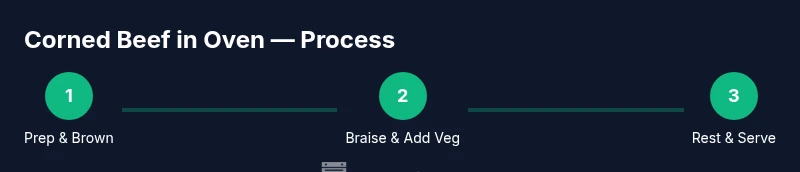
Set out all ingredients and trim the corned beef, removing excess fat. Slice onions and carrots into uniform pieces and cut the cabbage into wedges. This ensures even cooking and predictable timing.
Tip: Room-temperature meat browns more evenly; trim fat cap to avoid greasiness. - 2
Preheat oven and assemble braise
Heat your oven to a steady 300–325°F (150–165°C). Place the beef in a heavy pot, season well, and arrange aromatics around it. Pour in enough braising liquid to come halfway up the beef.
Tip: Low, steady heat promotes tenderization without drying. - 3
Sear and start braising
Sear the beef on all sides until a rich brown crust forms. Return aromatics, then cover tightly and transfer to the oven. Let the beef begin slowly braising as flavors mingle.
Tip: Searing adds depth of flavor; avoid overcrowding the pan. - 4
Add cabbage and finish braising
After about 60–75 minutes, nestle cabbage wedges around the beef. The cabbage will absorb the braise and finish tender. Re-cover and continue to bake until the meat is fork-tender.
Tip: Add cabbage later to prevent over-softening. - 5
Check tenderness and moisture
Test the beef with a fork; it should pull apart easily. If needed, bake longer in 15-minute increments. Keep the liquid at a gentle simmer inside the pot.
Tip: Keeping juices contained prevents drying and ensures flavor is even. - 6
Rest, slice, and serve
Remove from oven and let rest for 10–15 minutes before slicing. Slice against the grain for tenderness, and plate with cabbage and braised vegetables.
Tip: Resting allows juices to redistribute for juicier slices.
Questions & Answers
Can I cook corned beef and cabbage in the oven without a lid?
Using a lid or tightly wrapped foil keeps moisture in and prevents the beef from drying out. Without a lid, the braising liquid can evaporate faster, leading to tougher meat.
Yes, but a lid or foil helps keep moisture in for a tender result.
When should I add the cabbage?
Add cabbage wedges after the beef has started braising, about an hour into cooking, so they stay tender and flavorful without losing structure.
Add the cabbage after the beef has begun braising to keep its texture.
What liquid should I use for braising?
Beef broth works well, or a mix of beer and water. Choose a liquid you enjoy, as it flavors both meat and vegetables.
Beef broth or a beer and water mix works well for braising.
Can I freeze leftovers?
Yes, cool promptly and freeze in airtight containers. Reheat gently to preserve texture.
Leftovers freeze well; reheat slowly to keep texture.
Is this method suitable for small ovens?
Yes. Use a smaller Dutch oven or a compact casserole and monitor liquid levels closely to prevent scorching.
It works in small ovens with careful liquid management.
How do I know when the beef is tender?
The beef should pull apart easily with a fork and slice smoothly. If needed, continue braising in short increments.
Fork should slide in easily and meat should slice well.
Watch Video
Main Points
- Preheat properly for even cooking.
- Braise at a low temperature to maximize tenderness.
- Add cabbage mid-cook to maintain texture.
- Rest the beef before slicing for juicier results.
- Finish with a flavorful braising liquid for depth.