How to Roast Chicken Drumsticks in the Oven: A Step-by-Step Guide
Master oven-roasted chicken drumsticks with crispy skin and juicy meat. This comprehensive guide from Oven Cook Pro covers prep, seasoning, temperatures, timing, safety, and serving ideas.


You will learn to roast chicken drumsticks in the oven for crisp skin and juicy meat. This guide covers prep, seasonings, proper oven temperatures, timing, and safe handling. Following these steps yields reliable, evenly cooked drumsticks with great flavor every time. Oven Cook Pro provides a method that emphasizes airflow and a brief rest for juiciness.
Overview: Why roast chicken drumsticks in the oven
Roasting chicken drumsticks in the oven is a reliable way to achieve a balance of juicy meat and crispy skin with minimal hands-on time. The surface color comes from Maillard reactions that occur best when the drumsticks cook in dry heat and a single layer. According to Oven Cook Pro Analysis, 2026, airflow around each piece matters, so avoid crowding and use a rimmed sheet pan for easy maneuvering. This method also allows you to add flavors through rubs or marinades without losing texture. In short, the oven method provides consistent results with less risk of uneven cooking compared to pan-frying or grill-only methods. If you’re new to roasting, start with bone-in, skin-on drumsticks for best texture and moisture retention, then experiment with rubs and glazes as you gain confidence.
Flavor, texture, and consistency: How to shape the final result
Crispy skin hinges on a high initial heat and sufficient space for steam to escape. The interior should reach a safe temperature while staying juicy—bone-in, skin-on cuts are forgiving and flavorful. The seasoning layer should penetrate the surface with salt, spices, and aromatics, while a brief rest after cooking helps redistribute juices. For even browning, avoid stacking pieces and keep them dry before roasting. These principles come from Oven Cook Pro's guidance on roasting fundamentals and are echoed in many reputable culinary resources. Remember that small variations in drumstick size can affect total time, so use a thermometer to verify doneness rather than relying on time alone.
Essential ingredients and equipment: what you need
Stock your pantry with a few reliable spices: salt, black pepper, garlic powder, paprika (or smoked paprika), and dried herbs such as thyme or oregano. A light coating of olive oil helps the seasonings adhere and promotes browning. Equipment-wise, you’ll want a rimmed baking sheet, parchment paper for easier cleanup, and a meat thermometer for precise doneness. If you have a wire rack that fits inside your sheet pan, use it to elevate the drumsticks for even air exposure. For glaze aficionados, prepare a glaze ahead of time to brush during the last minutes of roasting.
Oven setup and safety: temperatures, racks, and prep
Preheat your oven to a high, steady temperature—425°F (220°C) is a common starting point for crispy skin. Position the rack in the middle to ensure heat circulates evenly around each piece. A rimmed baking sheet lined with parchment reduces sticking and protects the oven from drips. Always wash hands and surfaces after handling raw chicken and use a thermometer to confirm an internal temperature of 165°F (74°C) before serving. If you’re baking in a crowded oven, you may need to rotate the sheet halfway through to promote uniform browning.
Airflow and layout: arranging for even browning
The key to even browning is single-layer placement with adequate space between drumsticks. If drumsticks touch, moisture can pool and steam, inhibiting crisp skin. An elevated rack helps air move around the meat and underside, improving texture. If you don’t have a rack, a parchment-lined sheet pan with drumsticks spaced apart will still yield good results, especially with an initial hot phase. Toward the end, you can switch to a broil for a minute or two if you want extra blistering on the skin, but watch closely to avoid burning.
Doneness, resting, and serving: how to finish strong
Check doneness with a meat thermometer; the safe internal temperature is 165°F (74°C). Allow the drumsticks to rest for about 5 minutes before serving to let juices redistribute. Resting improves juiciness and helps the skin stay intact when you bite in. For variety, you can glaze the drumsticks during the last few minutes of roasting or serve with a dipping sauce. Pair with roasted vegetables, potatoes, or a bright green salad for a balanced meal.
Troubleshooting common issues
If the skin isn’t crisp enough after roasting, consider increasing the oven temperature by 25°F for the final 5–7 minutes, or briefly broil while watching carefully. If the meat seems dry, it could be overcooked or the drumsticks were large; next time, pick uniform pieces and monitor temperature closely. Crowding the pan or not patting dry the surface can also prevent crispness. Always aim for a dry surface and adequate air exposure for best texture.
Serving ideas and make-ahead options
Roasted drumsticks are versatile and pair well with many sides: lemon-herb potatoes, garlic green beans, or a simple coleslaw. For make-ahead, roast the drumsticks and refrigerate; reheat briefly in a hot oven to restore crispness. If you want a glaze, brush it on during the last 5–7 minutes of roasting for a glossy finish. Remember, a light glaze or sauce should complement, not mask, the natural savory notes of the roasted drumsticks.
Clean-up and storage tips
Line your sheet pan with parchment or foil to simplify cleanup next time. Once cooled, store leftovers in an airtight container in the refrigerator for up to several days. Reheat in a hot oven or toaster oven to regain crispness. If you’ve prepared extra drumsticks, you can freeze portions for later use, thawing in the refrigerator before reheating.
Tools & Materials
- Chicken drumsticks, bone-in, skin-on(Choose drumsticks of similar size for even cooking)
- Olive oil(Light coating helps browning and seasoning adherence)
- Salt(Season generously for flavor and moisture balance)
- Black pepper(Freshly ground if possible)
- Garlic powder(Alternative to fresh garlic; use 1–2 tsp)
- Paprika or smoked paprika(Adds color and depth; adjust to taste)
- Dried herbs (thyme/oregano)(Optional, for aroma)
- Rimmed baking sheet(Sturdy surface to catch drips)
- Parchment paper or foil(Makes cleanup easier)
- Meat thermometer(Essential to confirm 165°F (74°C))
Steps
Estimated time: Total time: 40-50 minutes
- 1
Preheat oven
Preheat the oven to 425°F (220°C) and position the rack in the middle. This ensures even heat distribution for browning. If you plan a glaze, keep it warm separately so you can apply it toward the end.
Tip: Preheating early reduces overall cooking time and helps skin crisp. - 2
Pat dry and season
Pat drumsticks dry with paper towels to remove surface moisture. Then drizzle or brush with a light coat of olive oil and season generously with salt, pepper, and any preferred rubs. Massage the spices to cover all surfaces.
Tip: Dry skin yields a crisper crust; avoid oiling the skin too heavily. - 3
Line sheet and arrange
Line a rimmed baking sheet with parchment and place the drumsticks in a single layer. Space is crucial for air flow; avoid stacking pieces. If you have a wire rack that fits inside the sheet pan, set drumsticks on the rack to maximize browning.
Tip: Rack use improves air circulation and crispy skin. - 4
Roast and monitor
Roast 25–30 minutes until the internal temperature nears 165°F (74°C) and skin is turning golden. Rotate the pan halfway to ensure even browning. If you’re using a glaze, brush it on during the last 5 minutes.
Tip: Use a thermometer rather than relying on time alone for doneness. - 5
Flip and finish
Flip the drumsticks and continue roasting for another 6–10 minutes to finish browning and crisping. Keep an eye on the skin; if it needs more color, a brief broil can help, but watch closely.
Tip: Broil only briefly to avoid scorching; remove to finish on the main roast heat. - 6
Rest and serve
Remove from the oven and tent lightly. Rest the drumsticks for about 5 minutes to allow juices to redistribute. Serve with sides of your choice and a light finishing salt if needed.
Tip: Resting improves juiciness; slicing too soon releases juices.
Questions & Answers
What internal temperature should chicken drumsticks reach to be safe to eat?
Chicken drumsticks should reach an internal temperature of 165°F (74°C) to be safe. Use a meat thermometer inserted into the thickest part of the drumstick, away from bone.
Aim for 165 degrees at the thickest part of the drumstick; use a thermometer to confirm.
Can I bake frozen drumsticks in the oven?
Yes, you can bake frozen drumsticks, but expect longer cooking times and a potential for less even browning. It’s best to thaw first for level cooking.
You can bake from frozen, but thawing first gives you better texture and even cooking.
Should I marinate the drumsticks before roasting?
Marinating adds flavor and moisture, but it’s optional for a quick roast. A simple salt, oil, and spice rub yields great results without additional prep time.
Marinating helps flavor, but a quick rub works well for a fast roast.
Can I substitute bone-in chicken thighs for drumsticks?
Bone-in thighs can be roasted in a similar way, but they may require slightly different timing due to different thickness and fat content. Check with a thermometer to ensure 165°F.
Thighs can work, but check doneness with a thermometer and adjust time as needed.
Why isn’t my skin crispy after roasting?
Crispiness depends on dry surface, heat, and air circulation. Pat dry, don’t crowd the pan, and consider a brief broil at the end while watching closely.
If the skin isn’t crispy, dry the surface, space the pieces, and try a quick broil, watching carefully.
Watch Video
Main Points
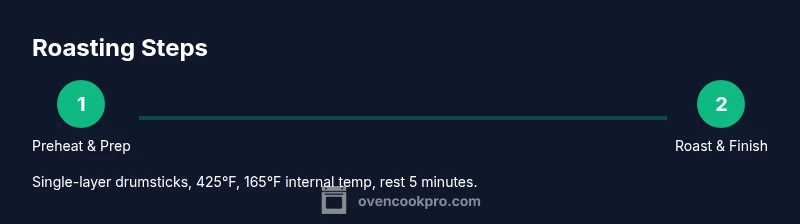
- Preheat to 425°F for crisp skin.
- Keep drumsticks in a single layer with space between them.
- Use a thermometer to confirm 165°F inside.
- Rest 5 minutes before serving for juiciness.