Broccoli Oven Recipe: Easy Roasted Veggies for Weeknights
Master a simple broccoli oven recipe with crispy edges and tender centers. This step-by-step guide offers flavor boosters, variations, and quick tips for perfect weeknight roasting.


Learn to make a reliable broccoli oven recipe that yields crisp-tender florets with minimal effort. You’ll need a hot oven, dry broccoli, and simple seasonings. According to Oven Cook Pro, roasting broccoli at high heat with a single sheet pan delivers even browning and great flavor in under 30 minutes.
Why this broccoli oven recipe works
Roasting broccoli in the oven is a simple, dependable technique that delivers consistently tasty results. High heat encourages caramelization at the edges while keeping the tender, bright-green centers intact. The result is florets with a crisp edge and a soft interior, not the soggy spears some pan-roasted methods produce. This approach is forgiving: you can switch up seasonings, scale the recipe for a crowd, or turn it into a base for other vegetables. The Oven Cook Pro team notes that starting with dry broccoli and giving the florets space on the sheet pan is the key to success. Excess moisture steam browns poorly, so a quick pat-dry after washing is worth the extra minute. A hot oven and a single-layer layout promote even browning rather than steaming. With these steps, your broccoli becomes a versatile side dish, topping, or component in bowls, salads, or grain bowls.
This method is well suited for meal prep. You can roast a large quantity, store it, and reheat without losing too much texture. The balance of oil, heat, and time means you can customize the flavor profile with simple additions such as lemon zest, garlic, or Parmesan. According to Oven Cook Pro analysis, the core principles—dry florets, high heat, and even spacing—remain constant across variations, making the approach robust for beginners and reliable for experienced cooks.
Choosing broccoli and flavor options
Fresh broccoli is best for roasting; look for firm stalks, dark green crowns, and tight florets. Avoid overly yellowed stems or soft spots. If you buy pre-cut florets, ensure they are evenly sized so they roast uniformly. Flavor options are flexible: a light coat of olive oil with salt and pepper works beautifully, or you can build layers with garlic, lemon zest, chili flakes, or grated Parmesan. The versatility is a major strength of this broccoli oven recipe, allowing you to tailor the dish to different meals or dietary needs. For vegan variations, skip cheese and lean into nutritional yeast or miso for depth. The oven’s high heat will highlight the broccoli’s natural sweetness, so simple seasonings often bring the best results.
Oven Cook Pro recommends considering the final plate context. If broccoli is going to mingle with grains or proteins, keep flavors balanced and avoid overpowering additions that might clash with other components of the meal.
Prep: washing, trimming, and drying
Begin by rinsing the broccoli under cold water to remove any dirt or dust. Trim the stem and cut the crowns into florets of uniform size; if the stem is thick, peel the outer layer and slice into thin coins so it roasts evenly. Dry everything thoroughly with a clean towel or paper towels—surface moisture inhibits browning by creating steam on the surface. Uniform pieces ensure even exposure to heat, producing consistent browning on all sides. If your broccoli crowns are particularly large, consider cutting them into slightly smaller pieces to avoid undercooked centers.
Drying and uniform sizing are small steps with disproportionate payoff: they directly influence texture, browning, and overall mouthfeel of the finished dish.
Seasoning and coating for even coverage
Toss the broccoli pieces in a bowl with a light coating of olive oil to help browning and flavor distribution. Add salt and pepper, then incorporate additional seasonings if desired—garlic powder, paprika, red pepper flakes, or a touch of lemon zest. The goal is a thin, even glaze that clings to each piece rather than pooling on the pan. If you plan to finish with cheese, wait until the last few minutes of roasting to prevent overmelting. Finishing with lemon juice or zest brightens the dish and balances the oils and fats. The right amount of oil combined with direct heat is what yields those characteristic crisp edges.
Flavor boosters should be used judiciously to avoid overpowering the broccoli’s natural profile. A light hand often yields the best balance between savoriness and freshness.
Roasting fundamentals: heat, timing, and layout
Preheat the oven to about 425°F (220°C). Line the baking sheet with parchment paper to prevent sticking and simplify cleanup. Arrange broccoli in a single layer with space between pieces to ensure even browning; overcrowding leads to steaming and limp texture. Roast for roughly 15-20 minutes, flipping once about halfway through to brown all sides. If you are using a convection oven, lower the time by about 5-7 minutes because circulating air accelerates browning. The goal is lightly charred edges with a crisp-t tender interior. For very small florets, check a bit earlier to avoid overcooking.
Heat, timing, and layout are the triad of success for this recipe. Small adjustments, like an extra minute or two or a quick pan rotate, can dramatically affect texture.
Serving ideas and make-ahead options
Hot roasted broccoli shines as a side dish but also plays nicely in bowls, pasta, or grain-based salads. Add toasted nuts, crumbled feta or grated Parmesan, and a drizzle of lemon juice for a quick flavor boost. Make-ahead option: roast broccoli and store it in an airtight container for up to 3-4 days; reheat in the oven to restore some of the crispness. Cold broccoli also makes a vibrant addition to salads and grain bowls. Pair with proteins such as grilled chicken, salmon, or beans for a balanced meal, or use as a bright contrast to richer dishes.
Storing and reheating tips help maintain texture and flavor so you can enjoy roasted broccoli beyond the initial serving.
Troubleshooting and common mistakes
If the broccoli comes out soggy, moisture is likely the culprit—pat pieces dry, ensure the pan is not crowded, and consider increasing the oven temperature slightly or roasting a minute longer if color is still pale. For uneven browning, rotate the pan or switch to two sheets to maximize surface area exposure. If edges are burnt or overly crispy while centers remain undercooked, reduce heat by 25 degrees or shorten roasting time, then test again. Seasoning missteps are common; if flavor is flat, add a touch more salt, a squeeze of lemon, or a grate of cheese to bring brightness and depth. The key is observing the color and texture rather than relying solely on time.
Variations: beyond broccoli
This roasting method adapts well to other vegetables with similar cooking times, such as cauliflower, Brussels sprouts, or thinly sliced zucchini. Keep to a single layer on a hot sheet for best browning. For heartier meals, combine with chickpeas or cooked quinoa, or serve as a base for a sheet-pan supper where protein and starches accompany the broccoli. The same high-heat approach can be used to create a variety of roasted vegetable medleys, each with a unique mix of herbs and toppings.
Tools & Materials
- Rimmed baking sheet (18x13 inches or larger)(A single layer helps browning)
- Parchment paper or silicone baking mat(For easy release and cleanup)
- Olive oil (extra-virgin preferred)(About 1-2 tablespoons for 1 large head)
- Kosher salt(To taste; optional sea salt finish)
- Ground black pepper(Freshly ground if possible)
- Garlic powder or minced garlic(Optional for flavor)
- Lemon zest or lemon juice(Bright finish)
- Parmesan cheese (grated)(Optional finish)
- Tongs or spatula(For turning florets safely)
Steps
Estimated time: 30-40 minutes
- 1
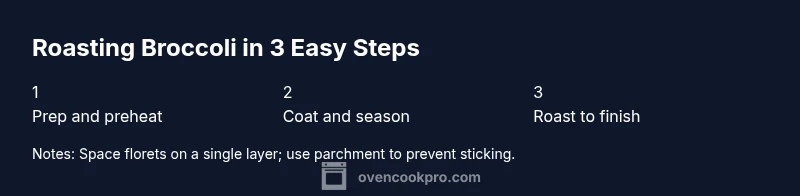
Preheat and prepare
Heat the oven to 425°F (220°C) and line a sheet pan with parchment. Gather broccoli, oil, and seasonings. This upfront setup ensures even browning and minimizes last-minute scrambles.
Tip: Preheating is essential; a hot surface starts browning on contact. - 2
Wash, trim, and cut florets
Rinse broccoli, trim the stalks, and cut crowns into uniform florets. Uniform size helps all pieces roast at the same rate, preventing undercooked centers or overly dry edges.
Tip: If the stem is thick, shave or slice it so it cooks evenly. - 3
Dry and coat evenly
Pat florets completely dry and toss with a light coating of oil and salt. Add optional garlic, paprika, or lemon zest for deeper flavor. The thin oil coating matters for browning rather than pooling on the sheet.
Tip: A thin, even glaze is better than a heavy coating that prevents browning. - 4
Spread on sheet in single layer
Arrange broccoli in a single layer with space between pieces. Overcrowding causes steaming, which dulls color and texture. If needed, use two pans for a crowd.
Tip: If pieces stick together, loosen with a quick flip before roasting begins. - 5
Roast and flip halfway
Roast for 15-20 minutes, flipping once at the halfway point for even browning. Watch for color changes; remove when edges are lightly charred and centers are tender.
Tip: Convection ovens may require 5-7 minutes less; monitor closely to avoid burning. - 6
Finish and serve
Remove from oven and finish with lemon juice or zest, and optional parmesan. Serve hot as a side or incorporation into bowls and salads.
Tip: Taste and adjust salt before serving; a squeeze of lemon elevates brightness.
Questions & Answers
Can I use frozen broccoli for this recipe?
Yes, but it releases more moisture. Thaw and pat dry before roasting to improve browning and texture.
You can use frozen broccoli, but thaw and dry it well to avoid soggy results.
What temperature should I roast broccoli at?
Roast at 425 degrees Fahrenheit (220 Celsius). If using a convection oven, you can reduce time slightly and watch color closely.
Roast at four hundred twenty five degrees, convection may reduce time a bit.
How long does broccoli take to roast?
Typically 15-20 minutes, depending on floret size and desired tenderness. Check at the 15-minute mark for best texture.
About 15 to 20 minutes, depending on size and how tender you want it.
Can I add other vegetables in the same pan?
Yes, add vegetables with similar cooking times and cut to similar sizes. Keep in a single layer for even browning.
Absolutely, just make sure they are similar in size and cook time.
What are good finishing touches?
Finish with a squeeze of lemon, a sprinkle of parmesan, garlic, or chili flakes for extra depth and brightness.
Finish with lemon and a touch of parmesan or garlic for depth.
How should I store leftovers?
Store in an airtight container for 3-4 days. Reheat in the oven to regain crispness, or enjoy cold in salads.
Store in an airtight container for a few days and reheat in the oven if possible.
Watch Video
Main Points
- Roast broccoli at high heat for crisp edges
- Dry florets well to prevent steaming
- Space florets in a single layer on parchment
- Season boldly or finish with cheese for depth
- Use make-ahead and reheat to preserve texture