Brick Baking Oven: Build and Bake at Home
Master a brick baking oven at home with this step-by-step guide. Learn design, materials, safety, preheating, baking techniques, and maintenance for authentic, oven-fired results.


By the end of this guide, you will be able to plan, assemble, and operate a brick baking oven for authentic breads, pizzas, and roasted dishes. You’ll learn essential safety steps, material choices, and a practical preheating routine. According to Oven Cook Pro, a well-built brick oven delivers superior heat retention and flavor when foods are baked with care.
What is a brick baking oven and why it matters
A brick baking oven is a purpose-built cooking chamber formed from fired bricks, mortar, and insulation, designed to retain and radiate heat for long periods. Unlike modern gas or electric ovens, brick ovens rely on a mass of firebrick and dense masonry to store heat, creating a stable, high-heat environment ideal for bread, pizza, and roasted vegetables. For home cooks, the appeal lies in flavor, texture, and the unique crust created by radiant heat and steam. The brick baking oven is also a versatile tool that allows you to shift from intense high-heat searing to slower, even baking, using a carefully managed fire and a-shaped dome to optimize air flow. According to Oven Cook Pro, investing in a well-planned brick oven not only upgrades your kitchen, but also builds a focal point for family meals and weekend cooking projects. The key is to understand the heat mass, insulation, and safe operation. Before you begin, outline your space, desired cooking outcomes, and budget: this will guide your design choices and prevent common mistakes.
How brick ovens differ from conventional ovens
Brick baking ovens store heat in their massive masonry, creating a thermal mass that slowly releases warmth during cooking. This results in highly even heat distribution, superior crust formation, and moisture retention that is difficult to achieve with standard metal ovens. Insulation mass reduces heat loss, enabling longer bake windows and more control over moisture during bread and pizza fermentation. In contrast, conventional ovens heat quickly but cool faster when the door opens or when batches are swapped. For serious home bakers, this means you can bake multiple pizzas or loaves with steady results without constant temperature cycling. The improved heat continuity is especially valuable for artisanal breads where steam and crust development are critical. Oven Cook Pro notes that learning to manage flame, airflow, and insulation is the key to reliable results.
Design principles and core components
A successful brick oven design starts with a solid foundation and a level hearth. The dome shape dictates airflow and heat distribution, while the mouth opening controls heat escape and crust formation. Core components include a firebrick floor, a thick masonry dome, insulation (such as ceramic fibers or mineral wool), a weather-tight outer shell, and a properly sized flue or chimney to create good draft. Each element affects heat retention, moisture management, and safety. The foundation should bear the oven’s weight, with a raised base to prevent ground moisture from seeping into the structure. A well-sealed door or damper helps maintain heat when you’re not actively baking. Understanding these principles early saves time during construction and leads to more predictable baking results. Oven Cook Pro’s guidance emphasizes planning for access, ventilation, and easy maintenance.
Materials and construction considerations
Choosing the right bricks is critical: fire bricks resist high temperatures and minimize cracking under bake stress, while standard bricks can fail under repeated heating. Mortar must be rated for high heat and durability, and insulating layers between the inner oven and outer wall reduce heat loss. A reinforced hearth, appropriate chimney height, and a moisture barrier are essential for longevity. For a home project, create a detailed materials list with quantities, and consider local building codes and ventilation needs. Avoid shortcuts that compromise safety or heat retention. If you’re unsure about mortar selection or brick orientation, consult a masonry guide or local expert. Oven Cook Pro highlights that proper insulation and heat mass are what separate a good brick oven from an average one.
Preheating, firing, and baking techniques
Preheating is the most critical step, as it sets the oven’s thermal mass for the bake. Start with a controlled fire using dry hardwoods and gradually build to a high, steady flame. A common goal is to reach a stable baking temperature and maintain it for extended periods, typically during bread fermentation or pizza baking. Manage airflow with the damper to avoid smoky flavors and uneven heat. Once the oven reaches temperature, pause long enough for the interior to stabilize before loading food. Cooking times vary by dish, but expect longer bake windows for breads and slower roasts compared to conventional ovens. A careful routine includes testing crust formation, moisture release, and internal temperature with a probe. Oven Cook Pro emphasizes patience during curing and heat stabilization for best results.
Troubleshooting common issues and safety reminders
Even heat distribution can be challenging at first. Cold spots may appear if the dome isn’t fully heated or if insulation is compromised. Excess smoke indicates insufficient draft or improper fire management. Cracking can occur if the oven surface experiences thermal shock; gradual heating and proper curing reduce this risk. Always maintain clearances from combustibles, install a functional chimney, and use heat-resistant gloves when handling hot bricks. Regular cleaning of ash and soot helps maintain airflow and heat efficiency. If a problem persists, reassess the dome geometry and insulation thickness, and consider a temporary setback in bake plans to avoid damaging the oven.
Maintenance, care, and seasonal use
Keep a maintenance log for structural checks, chimney cleaning, and moisture management. After each bake, brush away ash and inspect for cracks or mortar wear. Seal exposed surfaces with appropriate protective coatings to withstand weather if the oven remains outdoors. In cold or wet seasons, use a cover or shelter to reduce moisture ingress. Good maintenance preserves heat mass and extends oven life, ensuring many future bakes, from rustic loaves to roasts. The Oven Cook Pro team recommends annual inspections and documenting any repairs.
Quick-start recipe ideas to test your brick oven
A practical test bake is a simple loaf and a single pizza with minimal toppings. Use a well-floured surface and keep steam in the early bake to promote crust development. Start with a basic white bread dough and a classic Margherita pizza to gauge oven performance, crust texture, and cheese melt. As you gain confidence, experiment with longer fermentation, higher hydration doughs, and stone-ground ingredients to showcase the oven’s heat retention and moisture control. The goal of this initial session is to verify heat stability, accurate temperature hold, and even browning across the surface.
Tools & Materials
- Masonry trowel(For applying mortar and shaping bricks)
- Mallet or rubber hammer(Gently tap bricks into place without cracking them)
- Level and straightedge(Check horizontal/vertical alignment as you build)
- Fire bricks(High-heat bricks for the oven floor and hot zones)
- Common clay bricks(For the dome and exterior walls (insulated))
- Heat-resistant mortar(High-temperature mortar rated for ovens)
- Shovel or hoe(Mix mortar and move materials safely)
- Water and brush(For curing and cleaning surfaces during build)
- Gloves and eye protection(Personal safety during construction)
- Infrared thermometer(Optional tool to monitor surface temps during burn-in)
Steps
Estimated time: 5-14 days (build and initial curing)
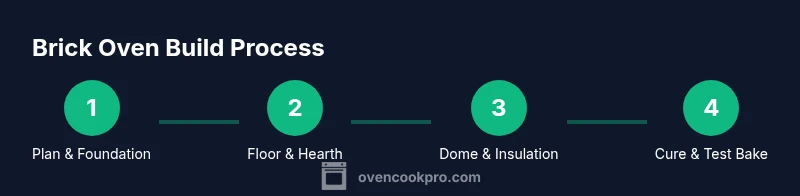
- 1
Plan site and footprint
Choose a stable, level site with adequate ventilation and access. Sketch the oven footprint, noting clearance from walls and any existing utilities. This planning reduces rework later and ensures safe operation.
Tip: Take photos and measure space before buying bricks. - 2
Pour foundation and base
Prepare a solid, cured foundation capable of supporting the oven’s weight. Build a base that stays dry and resist moisture wicking from the ground. A plinth helps avoid dampness and frost damage.
Tip: Use a damp-proof membrane if building on soil. - 3
Lay the hearth base
Install the firebrick floor with tight joints and a flat, level surface. The hearth should be slightly higher than the surrounding ground for easy loading and cleaning.
Tip: Leave small gaps at the door for heat control. - 4
Assemble the dome form and install fire bricks
Set the dome bricks in a rounded pattern to optimize airflow. Maintain consistent mortar thickness and ensure the dome is well-supported to prevent collapse during curing.
Tip: Check for even curvature; small deviations affect heat flow. - 5
Add insulation and wind protection
Pack insulation around the dome and sides, then seal with an outer shell. Adequate insulation minimizes heat loss and keeps the exterior safe to touch.
Tip: Avoid gaps; air pockets reduce efficiency. - 6
Install chimney and flue
Attach a properly sized chimney to establish draft and vents for smoke. A clean-out access helps maintenance and prevents blockage from ash.
Tip: Test draft with a small, controlled fire first. - 7
Cure the oven
Dry and cure the oven gradually by burning small fires and slowly increasing heat over several days. This process reduces thermal shock and structural stress.
Tip: Keep temperatures low initially and gradually raise heat. - 8
Season and test bake
Bake a couple of bread loaves or a simple pizza to test heat distribution and moisture release. Adjust air flow and loading technique based on results.
Tip: Record temperature holds and crust quality for future reference. - 9
Document and maintain
Create a simple maintenance log, schedule periodic cleaning, and check mortar integrity. Regular checks extend oven life and ensure safety.
Tip: Set reminder for annual inspection.
Questions & Answers
Can I build a brick baking oven indoors?
Building an indoor brick oven is possible with proper ventilation, fire safety clearance, and a suitable exhaust system. Outdoors is generally safer due to smoke and heat management.
Yes, but you’ll need a robust ventilation plan and clearance.
What is the typical curing time for a brick oven?
Curing times vary, but plan for several days of gradual heating and drying. This helps prevent thermal cracking and ensures stable heat.
Expect several days of careful, staged heating.
Which bricks should I use for the oven floor?
Use fire bricks for the oven floor because they tolerate high heat and resist cracking. Regular bricks are prone to damage under sustained temperatures.
Fire bricks handle heat better and are safer for the floor.
Do I need a chimney for a brick oven?
A chimney or flue is essential to provide proper draft and to vent smoke away from the cooking area. A clean-out access is helpful for maintenance.
Yes, a chimney is important for safe, effective operation.
Can I cook with a brick oven year-round?
Yes, with proper weather protection and moisture control for outdoor setups. Indoor installations require robust ventilation and climate control.
You can, with shelter and proper insulation.
Watch Video
Main Points
- Plan space and budget before building
- Choose fire bricks and proper insulation
- Cure the oven thoroughly before first bake
- Preheat gradually to prevent cracks
- Maintain routine cleaning after every use