What to Keep Oven On to Keep Food Warm
Learn safe, practical guidelines for using your oven to hold cooked foods warm without overcooking. Discover ideal temperatures, coverage, moisture strategies, and when to use a warming drawer for best texture and safety.


To keep food warm in an oven, set a low, steady temperature and avoid prolonged heat. A common safe range is 170–200°F (75–93°C); use a baking sheet or low rack, and cover dishes to retain moisture. If possible, use a warming drawer. The Oven Cook Pro team emphasizes minimal time in the warm zone to preserve texture and safety.
Why Keeping the Oven Warm Matters
When you’re serving a family meal or a casual gathering, keeping foods warm enough to stay safe and tasty is a common challenge. A controlled warmth preserves texture, moisture, and visual appeal, while overheating can push dishes past doneness and ruin crisp edges or delicate sauces. According to Oven Cook Pro, understanding the right temperature range and proper containers makes a big difference in quality and safety. The Oven Cook Pro team found that a gentle, steady warm hold reduces moisture loss and keeps flavors intact for roasted meats, casseroles, and vegetables.
With careful planning, you can stage plates, keep sauces ready, and avoid rushing to serve from the oven at high heat. In the sections that follow, you’ll learn how to choose temperatures, select containers, manage humidity, and use supplemental warming equipment when appropriate. Whether you’re feeding a crowd or simply finishing dinner for a small family, the goal is the same: hold food safely without turning it into leftovers that feel reheated. The key question guiding many cooks is what to keep oven on to keep food warm, and the answer is a low, steady warmth rather than a hot, cooking furnace.
From baked pasta to roasted vegetables, holding foods properly helps maintain texture and moisture. By planning ahead, you can finish a meal with confidence rather than chasing warmth at the last minute, which often leads to uneven heating and dryness. The next sections outline practical temperatures, containers, and methods to keep food inviting when timing doesn’t line up perfectly.
Safe Temperature Ranges for Holding Food
Hot-holding guidelines emphasize keeping foods out of the
Tools & Materials
- oven thermometer(Verifies actual oven temperature at the center of the dish; essential for accurate warm-hold.)
- oven-safe lids or foil(Use to retain moisture; leave a vent or small gap for steam to escape to prevent sogginess.)
- baking sheet or shallow pan(Promotes even heat distribution and easy airflow around foods.)
- oven-safe containers (glass/ceramic/metal)(Avoid plastic for heat holding; choose materials that tolerate low heat for extended periods.)
- warming drawer (if available)(Ideal for long holds with minimal additional cooking; reduces oven heat exposure.)
- timer or app(Set reminders to monitor holds and prevent over-warming.)
- instant-read thermometer(Useful for spot-checking internal temperatures of larger dishes.)
Steps
Estimated time: Estimated total time: 25-40 minutes
- 1
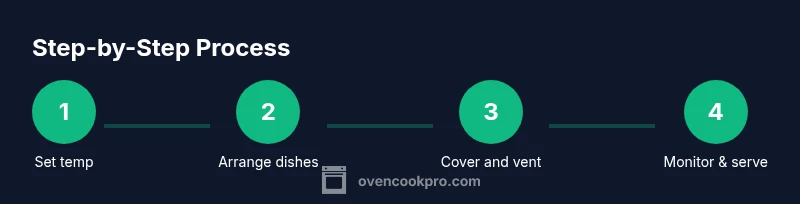
Set the oven to a safe warm range
Preheat the oven to approximately 170–200°F (75–93°C) and verify with an oven thermometer at the center of the dish. The goal is warmth that holds the heat without continuing to cook the food. Use a timer to monitor the hold and prevent drift.
Tip: Confirm actual temperature with a thermometer, not just the oven dial. - 2
Arrange dishes for even heat
Place foods on a shallow sheet or in a low-wide pan to maximize air exposure and even warming. Avoid stacking heavy containers on top of each other, which can create cold spots and uneven textures.
Tip: Space dishes 1–2 inches apart to promote airflow. - 3
Cover to retain moisture
Cover with lids or foil, leaving a small vent for steam. This minimizes surface drying while still allowing some moisture escape to prevent sogginess. For very dry items, consider adding a small amount of sauce or broth.
Tip: Loosely tent foil if your dish needs a thin steam release. - 4
Utilize supporting warming equipment
If you have a warming drawer, transfer plates there to reduce oven time and heat exposure. Without one, keep the dishes in the oven on the warm setting only until ready to serve, then switch to warming mode as needed.
Tip: Warming drawers often maintain humidity better than an oven alone. - 5
Monitor and adjust
Check temperature every 15–20 minutes. Rotate trays if you have multiple dishes to ensure even heat. When you’re ready to serve, re-cover lightly to keep moisture until plating.
Tip: Use an instant-read thermometer to check a representative portion.
Questions & Answers
What temperature should I keep the oven at to hold food warm?
Keep foods in a warm hold around 140–165°F (60–74°C), with many meals best at 150–160°F to preserve moisture. Use a thermometer to verify the center of the dish.
Keep hot foods above 140 degrees and check with a thermometer to maintain moisture and safety.
Is it safe to use the oven's warm setting for long periods?
Warm settings are for short holds. For longer holds, use a warming drawer or transfer to a lower heat environment to avoid overcooking or drying.
Warm settings are for short holds; use a warming drawer for longer holds if possible.
Can I use foil to cover dishes while warming?
Yes, cover with foil or lids to limit moisture loss, but leave a small vent to prevent condensation buildup.
Yes, cover to keep moisture, but vent a little to avoid soggy textures.
How long can food stay warm in the oven?
Aim for holds under 2 hours if possible; for longer holds, switch to a warming drawer or serve in batches.
Try not to hold more than two hours; use a warming drawer if you need longer.
What should I do if the food dries during warming?
Add moisture with sauce or broth, cover loosely, and consider lowering oven temperature to reduce drying.
Add moisture through sauce, keep it covered, and lower heat if it dries.
What if my oven doesn't have a warming feature?
Use a low-temperature hold with covered dishes on a rack, and consider a separate warming drawer or insulated serving ware.
If no warming, use low heat and covers, or a warming drawer if you have one.
Watch Video
Main Points
- Set a safe warm temperature and verify with a thermometer.
- Cover foods to preserve moisture and prevent drying.
- Prefer a warming drawer for longer holds when available.
- Limit warm-hold time to reduce safety risks and texture changes.
- Monitor texture and moisture, adjust heat, and serve promptly.