Is Oven or Microwave Safe? A Guide for Home Cooks
Learn how to distinguish oven-safe from microwave-safe cookware, what labeling means, and how to choose the right tool for each task to keep your kitchen safe and your cookware in good condition.


If you’ve ever wondered whether a piece of cookware labeled oven-safe can also be used in the microwave, you’re not alone. The quick answer is no: oven-safe items are designed for high oven temperatures, while microwave-safe items are engineered to withstand microwave energy. Labeling and materials matter, and using the wrong tool can cause damage or hazards. When unsure, replace with properly rated ware. When in doubt, consult the manufacturer.
Why this question matters
If you’ve ever found a dish labeled as oven-safe but wondered if it can go in the microwave, you’ve touched on a core kitchen safety issue: is oven or microwave safe. The answer has practical consequences for how you prepare meals, how long cookware lasts, and how you handle hot dishes. In many homes, people reach for a dish labeled oven-safe without considering whether the same dish is suitable for microwaving. This oversight can lead to cracking, warping, or even dangerous fumes. According to Oven Cook Pro, understanding the difference helps prevent common kitchen mishaps, protect your cookware, and ensure your meals heat evenly. In practice, recognizing which appliance is appropriate for a given piece of ware helps you save time and avoid cleanup headaches.
By framing the question around labeling, material, and intended use, you’ll build a simple mental rule set you can apply every day. The goal is not to complicate cooking but to minimize risk while preserving food quality. Whether you’re reheating leftovers, baking a casserole, or melting cheese on a crust, the principle remains: match the ware to the appliance as intended.
Defining oven-safe vs microwave-safe
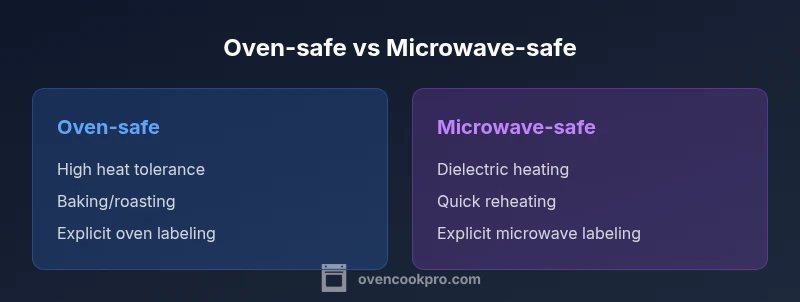
Oven-safe and microwave-safe are not interchangeable labels. Oven-safe means a dish or pan can withstand high oven temperatures for baking, roasting, or broiling without degrading. Microwave-safe means the ware will not heat unevenly, melt, or release harmful substances when exposed to microwave energy. These definitions are about two different heat environments: convection and dry heat versus dielectric heating. Materials like tempered glass, stoneware, and many metals have clear oven guidance, while plastics and ceramics designed for microwaves carry microwave-safe certifications. A piece that is oven-safe is not automatically microwave-safe, and vice versa. Knowing this distinction helps you avoid safe use assumptions that can damage cookware or compromise food safety.
A critical nuance is temperature tolerance and glaze integrity. Some glass or ceramic pieces tolerate oven heat but have glazes that crack or release micro-particles under microwave conditions. Conversely, some plastics tolerate microwaves but can deform in the oven. The bottom line is to check the labeling and follow manufacturer guidance for each appliance.
How labeling works and what to trust
Labeling is your first line of defense. Look for explicit terms such as “oven-safe,” sometimes with a temperature range, or “microwave-safe.” Some items come with dual labels (e.g., “oven-safe up to 450°F / microwave-safe”). Beware vague terms like “not for microwave” that don’t tell you the exact limits. Labels are most trustworthy when provided by the manufacturer and supported by tested certifications from recognized bodies. In the absence of clear labels, consider the material and glazing. For example, metal ware is typically not microwave-safe, while many glass and ceramic pieces are microwave-safe if labeled accordingly. When Oven Cook Pro analyses kitchen labeling, we find that clearly labeled ware reduces guesswork and risk in everyday cooking.
Always examine the bottom of the dish for symbols and printer marks, and check accompanying care instructions. If any doubt remains, contact the maker or replace with ware that carries explicit oven or microwave ratings. Using unlabeled pieces raises the risk of thermal shock, chemical leaching, or structural failure under heat.
Common materials: glass, ceramic, metal, plastic
The material itself largely determines whether something is oven-safe or microwave-safe. Glass and lead-free ceramic ware often tolerate oven temperatures well, but only if they are properly glazed and labeled for oven use. Some glassware is specifically marketed as oven-safe and can withstand roasting or broiling temperatures; however, it may not be safe for the microwave if the glaze contains metals or if the piece is not microwave-rated. Metals are almost universally problematic in microwaves, though certain cookware and accessories (like microwave-safe metal racks) are designed for the oven. Plastics offer the widest variance: many plastics are microwavable but not oven-safe, and others are built to endure high oven heat but may warp or release plasticizers in the microwave. Silicone often handles both environments but still requires manufacturer confirmation. When selecting ware, aim for pieces that clearly state an appliance-specific rating, or select separate sets tailored for oven and microwave use. Always consider heat distribution and potential hotspots that can affect cooking results and safety.
The big misfits: things that are oven-safe but not microwave-safe, and vice versa
Some wares excel in the oven but are poor choices for microwaves. Thick stoneware may tolerate high oven heat but can crack or retain heat unevenly in the microwave, leading to hotspots and potential burns. Dishes with metallic trim or decorative gold/silver accents are almost always unsafe in microwaves. On the flip side, many plastics labeled microwave-safe are not designed for oven heat; they can warp, melt, or release chemicals if pushed into the high temperatures typical of baking and roasting. Similarly, ceramics with metal glazes may behave unpredictably under microwave energy. In practice, if a piece lacks explicit dual-label safety or a trusted certification, treat it as not microwave-safe or oven-safe and avoid cross-usage. Always prioritize the appliance-specific instruction and consider replacing questionable pieces with ware explicitly rated for both environments if your cooking habits require versatility.
Practical testing and guidelines
Testing is not a substitute for manufacturer labels, but it can inform safe use when you’re sure the ware is properly rated. Start with the manufacturer’s guidelines first. If you need to perform a test, keep safety at the forefront: never test set pieces near open flames or on hot surfaces without cooling, and avoid pushing any item beyond its usual operating limits. A cautious approach is to test in small increments using a controlled method, such as verifying visibility of markings, ensuring the item remains cool after heating, and checking for glaze crazing or warping after use. Never expose unlabeled ceramics or plastics to oven or microwave heat in hopes of a quick answer. If you ever notice cracking, unusual odors, or discoloration after heating, discontinue use and retire the piece. Oven Cook Pro recommends replacing items with clear labeling and certifications to prevent repeated trial-and-error hazards in the kitchen.
In a practical kitchen setting, treat any ware with mixed or unclear ratings as single-use for its most conservative environment and replace if you need to reuse it across appliances.
Real-world cooking scenarios: when to use oven vs microwave
For routine reheating, the microwave is often faster and energy-efficient, but it can yield uneven heating, fashioning hot and cold spots. For foods that benefit from browning, crisping, or long simmers, the oven is superior. A casserole assembled in a microwave-safe dish may taste better when finished in the oven to restore texture. Conversely, if you’re reheating leftovers that won’t tolerate a long bake, a microwave-safe dish is ideal. When planning a multi-dish meal, separate your wares by appliance to ensure safe heating schedules and consistent results. Understanding your ware’s explicit ratings slows down mistakes and supports better meal outcomes. If needed, designate separate sets of dishes for oven and microwave use to minimize cross-contamination risk and extend the life of your cookware. The goal is efficiency without sacrificing safety or quality.
Safety tips for handling and cleaning
Always handle hot ware with oven mitts that provide a secure grip and protect against steam burns. Allow dishes to cool before washing, especially after oven use, to minimize thermal shock. Clean per manufacturer directions; some glazes require hand washing, while others are dishwasher-safe. Avoid abrasive cleaners on glazed surfaces that could remove protective coatings. In the microwave, never heat plastic containers not labeled for microwave use, and avoid stacking food directly on metal or foil. After cooking, inspect ware for cracks or crazing, which could harbor bacteria or fail during future uses. Proper storage in a dry, cool place reduces the risk of moisture-induced damage that can compromise safety over time.
Special cases: vented plastics, lids, and accessories
Not all plastic lids or vented containers are safe in both appliances. Some vented microwavable containers allow steam to escape but may not withstand oven heat. Lids with metal components are generally unsuitable for microwaves. If a product includes a metal vent or trim, keep it out of the microwave and use the lid only on the oven or not at all if the manufacturer specifies. Accessories such as steam vents, silicone rings, and racks must be checked for explicit ratings. When in doubt, use dedicated ovenware or microwave-safe sets and avoid mixing accessories that lack clear guidance. Consistent labeling and cautious handling keep your kitchen safer and more efficient.
Quick-start checklist for your kitchen
- Verify each dish’s labeling before use in a specific appliance.
- Maintain separate sets for oven and microwave tasks.
- Avoid metal in microwaves; avoid plastics without explicit oven labeling.
- Inspect cookware for cracks, chips, or glaze damage before reuse.
- Follow manufacturer guidelines for dishwasher and cleaning to preserve ratings.
- When in doubt, replace with clearly rated ware and store items properly to extend their life.
Putting it all together: a practical decision framework
The core decision framework is straightforward: read the label, match the ware to the appliance, and avoid cross-application unless explicitly rated for both environments. When labels are unclear, favor the most conservative approach. Oven-safe items are for long, dry-heat cooking; microwave-safe items are for quick, dielectric heating. By keeping these distinctions in mind, you’ll reduce risk, maintain cookware integrity, and achieve more predictable cooking results. The Oven Cook Pro team emphasizes a disciplined labeling and usage routine to keep your kitchen safe and efficient.
Comparison
| Feature | Oven-safe cookware | Microwave-safe cookware |
|---|---|---|
| Heat tolerance | High heat tolerance for long bake/roast | Designed for microwave energy, not sustained oven heat |
| Primary use | Baking, roasting, broiling, browning | Reheating and quick cooking |
| Labeling guidance | Explicit oven-safe label with temperature range | Explicit microwave-safe label |
| Materials | Glass, ceramic with oven-rated glaze, some metals | Microwave-safe plastics, glass, ceramics with microwave rating |
| Care & cleaning | Dishwasher safe if rated; glaze integrity matters | Dishwasher safe plastics/glass signaled by label; avoid overheating |
| Common pitfalls | Using metal in microwave; glazed ceramics without rating | Using non-microwave-safe plastics in microwave; poor heat distribution |
The Good
- Clear safety guidance reduces kitchen mishaps
- Helps protect cookware from improper use
- Improves cooking results by using appropriate appliance
- Can save energy by choosing the right mode
Drawbacks
- Labeling can be confusing or inconsistently applied
- Specialty pieces may lack explicit ratings
- Over-reliance on labels may discourage versatile ware
Use the appliance the ware is rated for; avoid cross-use unless explicitly rated for both.
Follow manufacturer labels. If a piece isn’t clearly rated for both, treat it as single-appliance ware and replace uncertain items with clearly labeled options to maximize safety and performance.
Questions & Answers
What does it mean if a dish is labeled 'oven-safe' but not 'microwave-safe'?
It means the dish is designed to withstand oven temperatures but may not tolerate microwave energy. Do not use it in the microwave unless the manufacturer explicitly states it is safe for both appliances.
An item labeled oven-safe but not microwave-safe should not be used in the microwave. Look for dual labeling or seek a microwave-rated alternative.
Can I heat metal cookware in the microwave if it’s labeled microwave-safe?
Some modern metalware is designed for microwaves, but metal in general can cause arcing. Always verify the manufacturer’s guidance for any metal piece and avoid metals unless explicitly approved for microwave use.
Only use microwave-approved metal if the manufacturer says so. If unsure, do not use metal in the microwave.
Are there foods or containers that are safe in both appliances?
Some glass and plain ceramic dishes can be rated for both appliances, but you must confirm dual labeling. For mixed-use meals, select ware explicitly rated for both oven and microwave.
Look for dual-rated ware if you plan to switch between ovens and microwaves frequently.
What about plastic wrap and lids?
Only use plastics labeled microwave-safe. Plastic wrap or containers not rated for microwaves can melt or leach chemicals when heated. Remove lids or vent them as required by the label.
Use only microwave-safe plastics and vent or remove lids to prevent pressure buildup.
Is the 'water test' a valid way to check safety?
No. The water test is not a reliable safety indicator and can mislead you about a ware's real ratings. Always rely on official labeling and manufacturer guidance.
Don’t rely on water-based tests; stick to manufacturer ratings for safety.
Why do some labels include temperature ranges?
Some oven-safe ware comes with a maximum temperature range to protect glaze integrity and material strength. Microwaves rarely require a temperature spec, but labeling may indicate safe power levels or durations.
Temperature ranges help prevent glaze damage and warping in the oven; always respect them.
Main Points
- Read and trust explicit labeling for each appliance
- Avoid metal in microwaves and un-rated plastics in ovens
- Use separate ware for oven and microwave tasks when possible
- Inspect ware for damage before reuse
- When in doubt, replace with clearly rated pieces