How to Know If Pyrex Is Oven Safe
Learn how to determine whether Pyrex glassware is oven safe, including labeling checks, temperature guidance, care, and safe handling to prevent cracks during baking.


Understanding Pyrex Oven Safety
If you’re wondering how to know if Pyrex is oven safe, you’re asking about whether glassware can withstand hot air without cracking. According to Oven Cook Pro, the safest starting point is to treat oven-safety as a product-specific claim rather than a blanket rule. Look for explicit labeling on the piece itself—often on the bottom or lid—that states oven tolerance or temperature, and verify that the model number matches the documentation you received at purchase. In many cases, Pyrex glassware sold for baking is designed to endure conventional baking conditions, but the exact limits can vary by line and era. Lids, plastic knobs, or composite handles can change heat distribution and even disqualify a dish from oven use. If you cannot locate any clear label, don’t assume that the piece is oven safe; instead seek guidance from the manufacturer’s official website using the exact model number. Safety also depends on how you use the dish: never expose glassware to direct flame, never place it on a hot burner, and avoid rapid temperature change from freezer to hot oven. This disciplined approach reduces the risk of cracks and catastrophic failure during cooking.
Reading Labels and Manufacturer Guidelines
The label is your first zero-risk signal. Look for phrases such as “oven safe,” “temperature resistant,” or a heat-symbol printed on the bottom, lid, or packaging. The exact language can vary by era and product line, so cross-check with the manual or the brand’s official support site. If you own multiple Pyrex pieces, verify each item because tolerance can differ between a simple dish and a dish with a lid or a combined handle. The Oven Cook Pro team reminds readers that model-specific data matters far more than a generic assumption about Pyrex as a brand. When in doubt, record the model number and search the manufacturer’s site for the official guidance. If your product lacks a clear label, contact customer support for confirmation before oven use. Remember: labeling is there to prevent damage from misuse, so treat any ambiguity as a cue to look up the official specs.
Temperature Tolerance and Thermal Shock
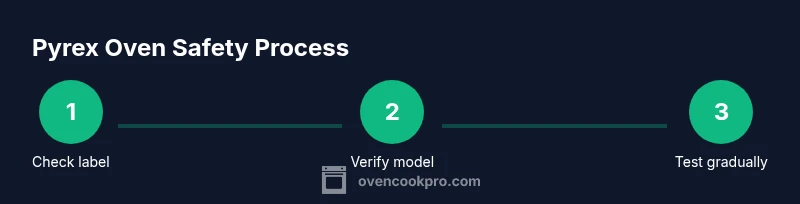
Oven safety hinges on both the maximum temperature and the glass’s resistance to thermal shock. Even if a Pyrex piece is labeled oven safe, exposing it to rapid changes—like transferring from a cold countertop or refrigerator directly into a hot oven—can cause microfractures or full cracks. A steady, predictable heating process reduces risk. Manufacturer guidance commonly emphasizes avoiding freezing cold glass in a hot oven, and avoiding preheating with an empty dish in some lines. The principle is straightforward: heat gradually, stay within the specified range, and never jump between extreme temperatures. If your piece has a lid, consider removing it during baking to prevent lid-related stress. Keeping a simple routine—check labeling, verify with the model, and heat gradually—will dramatically lower the chance of surprises in the oven.
How to Test Pyrex Without Risk
Testing for oven safety should be deliberate and conservative. Begin by placing the Pyrex dish on a rack in a cold oven and allow both to come up to temperature together, rather than preheating the oven with the dish inside. This minimizes thermal stress. Start with shorter, lighter bakes before attempting longer or hotter cooking sessions. If the product is brand-new or recently purchased, follow the manufacturer’s recommended temperature step-down approach rather than pushing the dish to its limits in one go. Use oven mitts to handle the dish, and never rely on instinct alone—official guidance is there to prevent accidents. Over time you’ll build a mental checklist: labeling confirmed, model checked, and gradual heating observed.
Common Pitfalls and Misconceptions
Many home cooks assume that all Pyrex is equally safe. The reality is more nuanced: some Pyrex pieces (especially bowls with plastic parts or certain lids) may be suitable for oven use, while others are not. Another frequent mistake is ignoring labels after purchase, assuming newer Pyrex pieces are automatically safer than older ones. In addition, using Pyrex on direct heat sources, broiling, or under high flame can compromise the glass, regardless of labeling. Always compare the exact item against the official documentation and avoid experimenting with unverified pieces. And if a piece is chipped, cracked, or scratched, retire it from oven use—even if it previously carried an oven-safe label.
Caring for Pyrex in the Oven
Careful handling extends the life of Pyrex. Let the dish cool gradually on a rack before washing. Avoid sudden temperature shifts between the oven and sink or fridge. Use a mild detergent and warm water rather than abrasive cleaners, which may scratch the glass and reduce resilience. When storing, ensure the dish sits on a padded shelf or with spacers to defend against impacts. Finally, keep your Pyrex pieces weathered-free by avoiding exposure to abrupt temperature changes in the kitchen, especially around entertaining or large family meals.
Authority sources and Additional Guidance
Authority guidance helps verify Pyrex oven safety across different lines and eras. You can consult the official brand manuals and credible educational resources for baking safety, which reduce ambiguity and misinterpretation. For more rigorous guidance, see these sources:
- https://www.cpsc.gov (CPSC safety guidelines for heat-resistant glassware)
- https://extension.uga.edu/ (University of Georgia Extension: safe use of kitchenware)
- https://www.nist.gov (National Institute of Standards and Technology on materials resilience)
Keep these sources in mind as you verify any Pyrex piece. They provide a framework for understanding heat tolerance, safe use, and material behavior in the oven.
Putting It All Together: A Quick Check Before You Bake
Before you bake, run through a concise checklist to confirm oven safety: confirm labeling, confirm model, verify the manual, ensure no cracks or chips, and plan a gradual heating approach with a rack in the middle of the oven. Practicing this routine helps you bake with confidence and reduces the risk of glass failure.
Quick Practical Checklists
- Check for explicit oven-safe labeling on the Pyrex item.
- Verify the exact model number matches the manual.
- Remove lids if they aren’t designed for oven use.
- Preheat with the dish on a rack in the center of the oven, not directly on a baking sheet.
- Use oven-safe gloves and allow the dish to cool gradually after baking.